
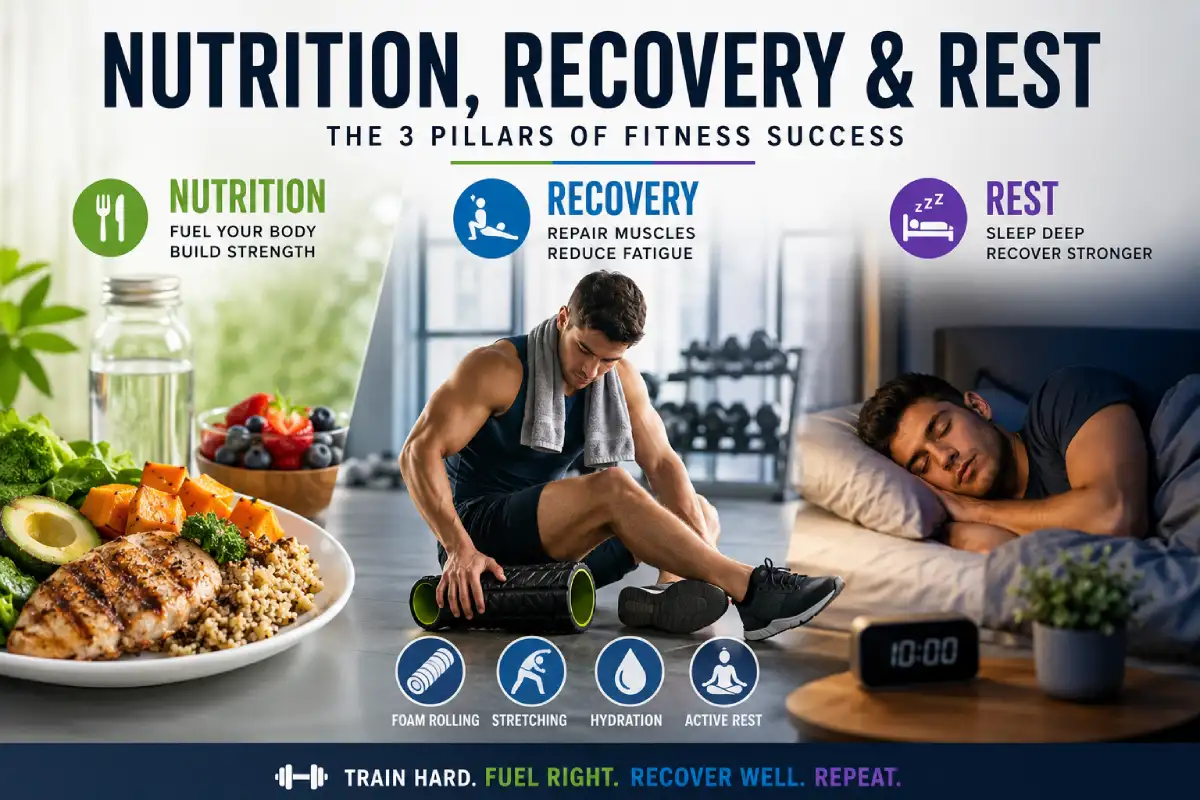
Introduction
Many people concentrate a lot on training. Ignore the things that happen outside the gym. While workouts give the body the push to change, nutrition, recovery and rest are the things that let the body adapt and get better.
Whether you want to build muscle get faster. Stay fit Consistently eating, hydrating and recovering well can definitely add up. Understanding how these building blocks work together allows you to build a more resilient body that can with-stand high volumes long-term – reducing your risk for burnout and overtraining. Nutrition is a key component of any successful training program and works alongside a structured workout routine. For a complete overview, visit our 6-Day Gym Workout Schedule.
Why Nutrition, Recovery & Rest Matter
Exercise creates stress, on the muscles, joints and energy systems. That stress is needed for adaptation. The improvements occur during recovery periods not during the exercise itself. Improvements are seen after the workout during rest.
Key benefits include:
- Improved muscle repair and growth
- Better workout performance
- Reduced fatigue
- Lower risk of injury
- Enhanced energy levels
- Improved immune function
- Better long-term consistency
If recovery is forgotten, the results will lag even behind a sound workout plan. Your eating plan should compliment the work that you do each week and the amount that you need to recover. Learn more in our Training Structure.
The Relationship Between Training and Recovery
| Training Component | Recovery Requirement | Potential Benefit |
| Strength Training | Protein intake and sleep | Muscle growth |
| Cardio Workouts | Hydration and carbohydrate replenishment | Endurance improvement |
| High-Intensity Training | Active recovery and rest days | Reduced fatigue |
| Sports Performance | Balanced nutrition plan | Faster adaptation |
| Weight Training | Recovery nutrition | Strength development |
This shows you why recovery needs to be part of the training process, and not just an afterthought.
Pre Workout Nutrition: Fuel for Performance
Preworkout Nutrition, which provides your muscles with a little fuel for your workout, you’re body can gain so much energy from your pre-workout meal you’ll not only increase performance levels, decrease early fatigue, and find yourself with a greater level of focus.
Practical Examples
| Meal Option | Timing Before Workout |
| Oatmeal with fruit | 2–3 hours |
| Chicken and rice | 2–3 hours |
| Greek yoghurt and berries | 1–2 hours |
| Banana with peanut butter | 30–60 minutes |
Expectations Management
Nutrition might not replace proper sleep recovery practices or routine exercises. Regardless of whether your workout plan calls for individual or team sessions, you will need a diet that will keep you both fit and focused. Explore our Group Workout Guide.
Post Workout Nutrition for Recovery
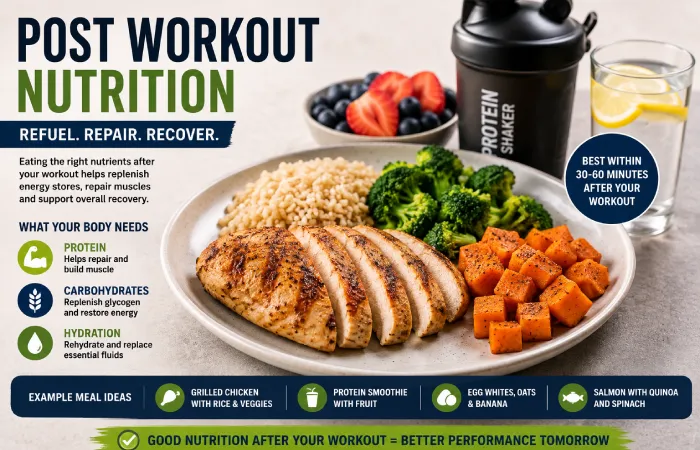
Post Workout Nutrition After a long and intense exercise session it helps your body get rid of waste products and it replenishes the carbohydrate in you body stores called glycogen
Why Post Workout Nutrition Matters
Once you’re done, the body starts to repair muscle tissue and restore glycogen levels. You should consider ingesting nutrients soon afterwards to help with this.
Important Recovery Nutrients
Protein
Protein provides amino acids used in muscle repair.
Examples include:
- Chicken breast
- Fish
- Eggs
- Dairy products
- Tofu
- Protein shakes
Carbohydrates
Carbohydrates help replenish glycogen stores used during exercise.
Examples include:
- Rice
- Potatoes
- Oats
- Whole grain bread
- Fruit
Fluids
Post- workout hydration is essential to help rehydrate the body after workout. For the beginner, you could see more dramatic results when you couple a regular training plan with nutrition. Read our Beginner 6-Day Workout Guide.
Protein for Muscle Growth
Fitness commonly discusses protein as it is vital to muscle recovery and adaptations.
How Protein Supports Recovery
With muscle building, relatively tiny amounts of muscular tissue breakdown with resistance. Protein facilitates the rebuild.
Common Protein Sources
| Protein Source | Approximate Protein Content |
| Chicken Breast (100g) | 31g |
| Greek Yoghurt (170g) | 17g |
| Eggs (2 large) | 12g |
| Salmon (100g) | 22g |
| Tofu (100g) | 8g |
Practical Guidance
Most people engaging in a lot of activity are going to fare better having their protein throughout the entire day, in smaller servings in each meal, rather than having one massive serving at one given meal.
Building a Sustainable Muscle Gain Diet
You should look at nutrition, in order to support your muscle-gain diet, not just calorie intake alone.
Key Components
Adequate Calories
Muscle growth generally requires sufficient energy intake.
Consistent Protein
You will be wanting to consume protein throughout the day.
Quality Carbohydrates
Your bodies needs Carbs to work hard during training and also to repair them afterwards. Protein intake, calorie balance, and nutrient timing all play a major role in muscle growth. Learn more in our Muscle Building Guide.
Example Daily Structure
- Breakfast with protein and carbohydrates
- Mid-morning snack
- Balanced lunch
- Pre-workout meal
- Post-workout recovery meal
- Evening meal
Sleep and Muscle Recovery
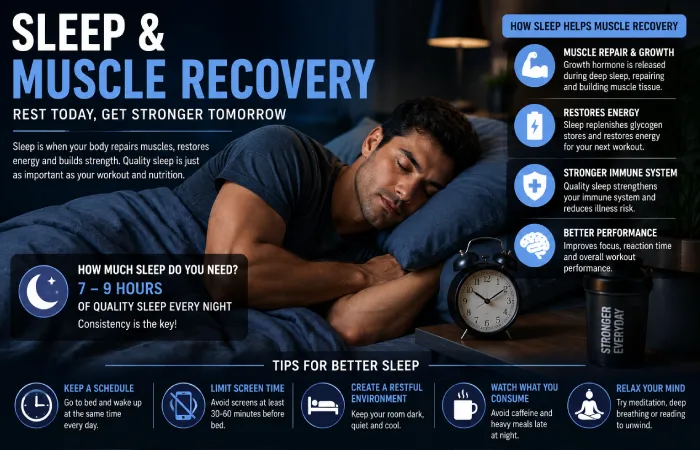
Among all recovery strategies, sleep may have the greatest overall impact.
Why Sleep Matters
During sleep, the body performs many recovery processes, including:
- Tissue repair
- Hormone regulation
- Immune system support
- Nervous system recovery
Recommended Sleep Duration
| Age Group | Suggested Sleep Range |
| Teenagers | 8–10 hours |
| Adults | 7–9 hours |
| Older Adults | 7–8 hours |
Improving Sleep Quality
Consider:
- Consistent sleep schedule
- Reduced screen exposure before bed
- Comfortable sleeping environment
- Limited caffeine late in the day
Recovery Methods Beyond Nutrition
Recovery involves more than food and sleep.
Active Recovery
Low-intensity activities such as:
- Walking
- Cycling
- Stretching
- Mobility work
may help maintain movement without excessive stress.
Rest Days
Rest days allow the body to recover from accumulated training demands.
Benefits of Scheduled Rest
- Reduced fatigue
- Improved motivation
- Better performance in future sessions
- Lower injury risk
Common Recovery Mistakes
Avoid these all-too-common, unintentionally self-sabotaging recovery mistakes that many gym addicts make.
Frequent Issues
- Skipping meals after training
- Inadequate protein intake
- Poor hydration habits
- Insufficient sleep
- Excessive training volume
- Ignoring rest days
Most often these factors offer more benefit than simply adding more training sessions. A nutritional consideration when trying to gain muscle versus burn bodyfat versus building endurance versus becoming stronger are different. Explore our Goal-Based Workout.
Comparing Good Recovery vs Poor Recovery Habits
| Factor | Good Recovery Habits | Poor Recovery Habits |
| Sleep | 7–9 hours nightly | Irregular sleep patterns |
| Protein Intake | Consistent daily intake | Frequently missed |
| Hydration | Regular fluid consumption | Chronic dehydration |
| Rest Days | Scheduled recovery | Constant training |
| Nutrition Quality | Balanced meals | Highly inconsistent eating |
Who Benefits Most from Recovery-Focused Strategies?
Recovery strategies can help:
- Beginner gym members
- Strength athletes
- Bodybuilders
- Endurance athletes
- Recreational exercisers
- Older adults maintaining fitness
The exact approach may vary, but the underlying principles remain similar.
Realistic Expectations for Results
Nutrition, Recovery & Rest are powerful foundations, but results depend on several factors.
These include:
- Training consistency
- Genetics
- Lifestyle habits
- Stress levels
- Training experience
- Overall health status
Most individuals notice improvements gradually rather than immediately.
Conclusion
If you want to see results from your fitness programme you cannot ignore nutrition, recovery and rest. Training is what tells your body to change. Recovery is what actually makes your body stronger. I have learned that you need to focus on the things to see a big difference. You should pay attention to pre workout nutrition and post workout nutrition to fuel your efforts. Make sure you eat protein, for muscle growth and stay on top of workout hydration. Following a muscle gain diet and building good quality sleep and muscle recovery habits will help you stay healthy for a long time.