
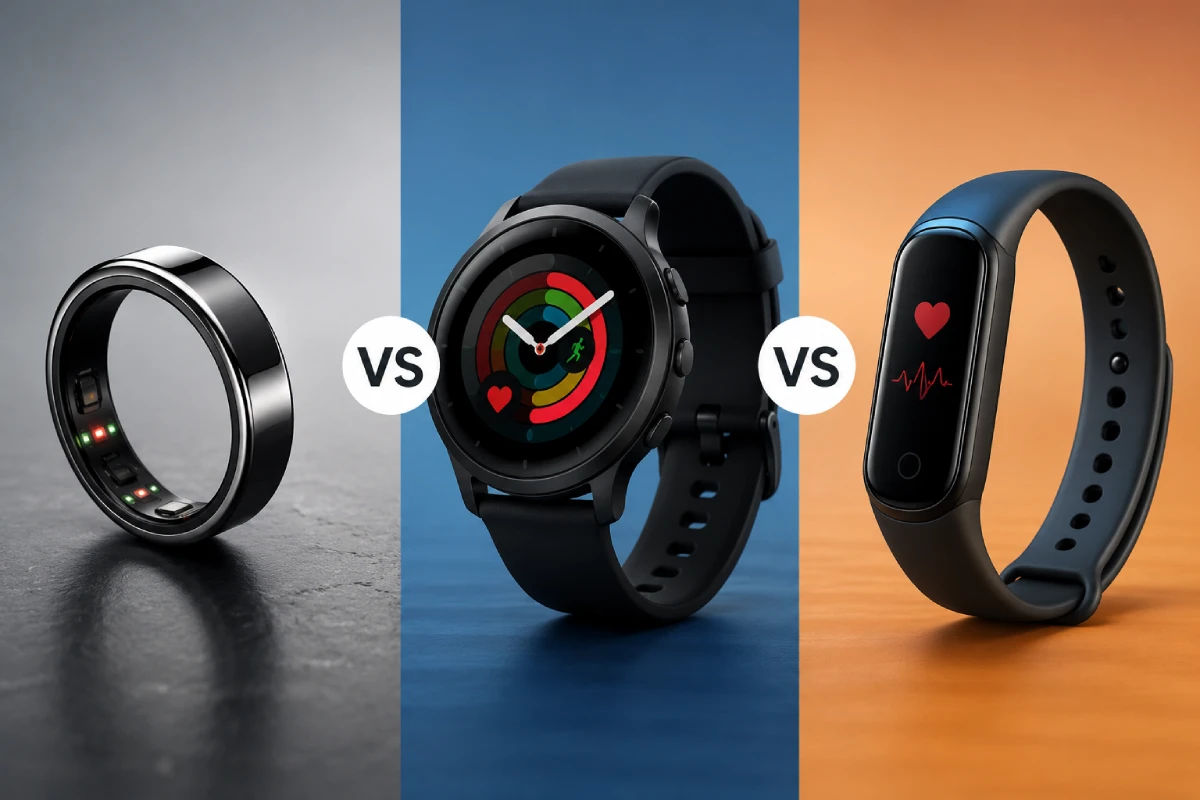
Smart Ring vs Fitness Watch & Fitness Band Wearable fitness technology has dramatically changed in recent years and currently the options out there, if you’re looking to track health, monitor your fitness and enhance your overall well-being, are more plentiful than ever. Three of the most widely recognized categories of wearable technology to do this are: the Smart Ring, a Fitness Watch and Fitness Bands. Many first-time buyers start with a comprehensive fitness tracker ring guide to understand how these compact wearables compare to traditional fitness devices and which features matter most.
Understanding the Three Wearable Categories
What Is a Smart Ring?
A smart ring is like any other ring, except that it has sensors to track all the metrics you need day and night.
Common functions include:
- Sleep tracking
- Heart rate monitoring
- Blood oxygen measurement
- Recovery analysis
- Activity tracking
- Stress monitoring
Many users choose smart rings because they are lightweight, discreet, and comfortable during sleep.
What Is a Fitness Watch?
Fitness watches combine health tracking with smartwatch functionality.
Typical features include:
- GPS tracking
- Workout modes
- Call notifications
- Messaging alerts
- Music control
- Advanced health monitoring
Fitness watches are often chosen by runners, cyclists and people who go to the gym. They like them because they give details, about their workouts. If you’re exploring top-rated options, our roundup of the best fitness tracker rings highlights leading devices based on accuracy, comfort, battery life, and health-tracking capabilities.
What Is a Fitness Band?
Fitness bands focus primarily on activity and wellness tracking.
Common features include:
- Step counting
- Calorie tracking
- Sleep monitoring
- Heart rate tracking
- Basic exercise modes
They are generally more affordable and easier to use than fitness watches.
Fitness Ring vs Fitness Watch: Feature Comparison
| Feature | Smart Ring | Fitness Watch |
| Sleep Tracking | Excellent | Very Good |
| Workout Tracking | Basic to Moderate | Advanced |
| GPS | Usually No | Usually Yes |
| Display | No Display | Full Display |
| Notifications | Limited | Extensive |
| Comfort During Sleep | Excellent | Moderate |
| Battery Life | 4–10 Days | 1–7 Days |
| Weight | Extremely Light | Heavier |
| Smart Features | Limited | Extensive |
Key Takeaway
When I compare fitness ring with fitness watch fitness ring generally excels at health monitoring and comfort. Smart fitness watch will provide you with both exercise and smart watch functions. When deciding on a smart ring and fitness watch, consider the “value” you get from fitness ring features, including sleep tracking, heart-rate monitoring, activity tracking, and recovery insights.
Fitness Ring vs Fitness Band
Many buyers compare a fitness ring vs fitness band because both focus heavily on health monitoring rather than smartphone features.
| Category | Smart Ring | Fitness Band |
| Comfort | Excellent | Good |
| Display | None | Small Screen |
| Sleep Tracking | Excellent | Good |
| Workout Tracking | Moderate | Moderate |
| Battery Life | Good | Excellent |
| Cost | Medium to High | Budget Friendly |
| Discretion | Very High | Moderate |
Smart Ring vs Smartwatch: Which Offers Better Health Tracking?
When it comes to a smart ring versus a smartwatch, health accuracy and convenience is often at the forefront of any debate.
Smart Ring Advantages
- Less intrusive
- Better overnight wearability
- Continuous passive monitoring
- Longer battery life in many cases
- Lightweight design
Smartwatch Advantages
- Larger data display
- Workout guidance
- GPS route tracking
- Real-time performance metrics
- Communication features
For sleep and recovery tracking, smart rings often perform exceptionally well. When analyzing performance during exercise, a smartwatch will generally offer more granular information. Many users prefer smart rings because they can support weight-loss and fitness goals by tracking daily movement, calorie burn, sleep quality, and overall wellness trends.
Fitness Ring vs Fitness Tracker: Understanding the Difference
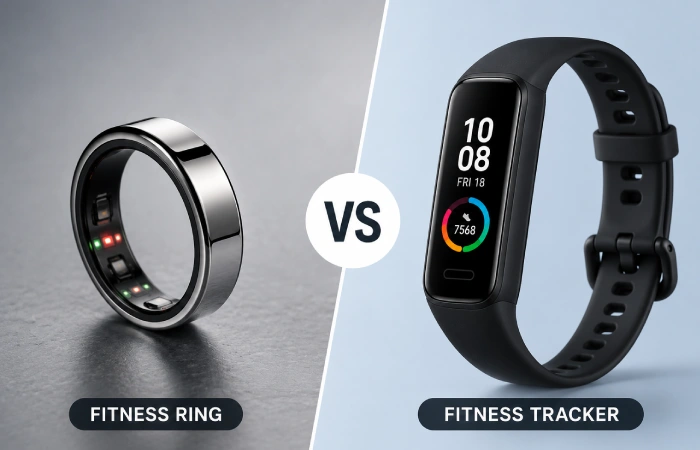
The term “fitness tracker” often includes both fitness bands and watches.
Smart Ring Focus
- Recovery scores
- Sleep quality
- Heart rate variability
- Wellness insights
Traditional Fitness Tracker Focus
- Daily activity
- Exercise sessions
- Step goals
- Calorie burn
If that’s the case, and you want to prioritize things such as recovery and sleep optimization, then a smart ring might be useful. If tracking fitness is priority, a fitness band will work well for that.
Specifications Comparison Table
| Specification | Smart Ring | Fitness Watch | Fitness Band |
| Form Factor | Ring | Wrist Watch | Wrist Band |
| Display | No | Yes | Small |
| GPS | Rare | Common | Limited |
| Sleep Tracking | Excellent | Good | Good |
| Heart Rate | Continuous | Continuous | Continuous |
| Water Resistance | Often Available | Common | Common |
| Battery Life | 4–10 Days | 1–7 Days | 5–14 Days |
| Smartphone Notifications | Limited | Extensive | Basic |
| Weight | Very Light | Moderate | Light |
Audience Persona Guide
1.Choose a Smart Ring If You:
- Prioritise sleep tracking
- Want a discreet wearable
- Prefer lightweight devices
- Focus on recovery and wellness
- Dislike wearing watches
Choose a Fitness Watch If You:
- Run or cycle regularly
- Need GPS tracking
- Want smartwatch features
- Prefer detailed workout data
- Like viewing metrics instantly
Choose a Fitness Band If You:
- Have a limited budget
- Need basic activity tracking
- Prefer simplicity
- Want long battery life
- Are new to fitness wearables
Morning Routine Suitability
Smart Ring
Ideal for users who want overnight recovery insights immediately after waking up. Many smart rings generate readiness or recovery scores that can help guide daily activity levels.
Fitness Watch
Useful for users who begin the day with workouts or outdoor runs and want access to detailed exercise metrics.
Fitness Band
Best for tracking daily step goals and maintaining general activity awareness throughout the day. Comparing fitness ring brands and reviews can help you identify which devices offer the best balance of performance, durability, accuracy, and value for money.
Night Routine Suitability
Smart Ring
Often considered the most comfortable wearable for overnight use due to its compact size.
Fitness Watch
Provides sleep data but may feel bulky for some users.
Fitness Band
Usually comfortable enough for sleep tracking but may offer fewer recovery metrics.
Sensitive User Guidance
Some individuals experience discomfort from larger wrist-based devices.
Smart Rings May Be Better For:
- People sensitive to wrist wearables
- Office professionals
- Frequent sleepers who dislike watches
Fitness Watches May Be Better For:
- Athletes
- Outdoor adventurers
- Data-driven fitness enthusiasts
Fitness Bands May Be Better For:
- Teenagers
- Beginners
- Budget-conscious users
Realistic Performance Expectations
One common misconception is that wearable devices provide medical-grade accuracy.
In reality:
- Wearables offer estimates rather than clinical measurements.
- Heart rate tracking is generally accurate during rest.
- Intense movement may reduce accuracy.
- Sleep stages are approximations.
- Recovery scores should be viewed as guidance, not diagnosis.
Knowledge of these limitations in particular sets users’ expectations at the appropriate level and allows more value to be obtained from the wearable devices.
Pros and Cons
Smart Ring
Pros
- Extremely comfortable
- Excellent sleep tracking
- Discreet design
- Lightweight
Cons
- No display
- Limited workout tracking
- Higher cost in some models
Fitness Watch
Pros
- Advanced fitness features
- GPS functionality
- Smart notifications
- Large display
Cons
- Bulkier design
- Shorter battery life
- More expensive premium models
Fitness Band
Pros
- Affordable
- Lightweight
- Easy to use
- Long battery life
Cons
- Fewer advanced metrics
- Smaller screens
- Less powerful software
Buying Tips Before Choosing a Wearable
Follow this simple workflow:
Step 1: Identify Your Goal
Ask yourself:
- Better sleep?
- Weight loss?
- Running performance?
- General health monitoring?
Step 2: Set a Budget
- Under $100 → Fitness Band
- $100–$300 → Fitness Band or Entry-Level Watch
- $250+ → Premium Smart Ring or Fitness Watch
Step 3: Consider Comfort
If wrist wearable is not good for you, smart ring might be the second choice.
Step 4: Evaluate Battery Needs
The long battery life often draws travellers toward rings or bands instead of those complicated smartwatches.
Step 5: Review App Ecosystems
It is the quality of the companion app as much, if not more, that drives satisfaction over the long term rather than the hardware itself.
Alternatives Worth Considering
Popular wearable categories include:
- Recovery-focused smart rings
- GPS sports watches
- Hybrid smartwatches
- Entry-level fitness bands
- Advanced health-focused wearables
The best choice depends on your fitness priorities rather than device popularity. Before making a purchase, check fitness ring compatibility requirements to ensure your chosen device works seamlessly with your smartphone, operating system, and favorite health apps.
Final Recommendation by Use Case
| User Type | Best Choice |
| Sleep-Focused User | Smart Ring |
| Runner | Fitness Watch |
| Cyclist | Fitness Watch |
| Budget Buyer | Fitness Band |
| Office Professional | Smart Ring |
| Beginner | Fitness Band |
| Advanced Athlete | Fitness Watch |
| Recovery-Focused User | Smart Ring |
Conclusion
Smart Ring vs Fitness Watch & Fitness Band argument really depends on what matters to you. Smart Rings give you health monitoring and very good sleep tracking. Fitness Watches give you workout data and smart functions. Fitness Bands offer a low-cost way to keep track of movement.
Before you buy think about your fitness goals how comfortable you want to be how much you want to spend and what features you need. The best wearable isn’t always the one—it’s the one that fits your daily routines and helps you reach your health goals over time.