
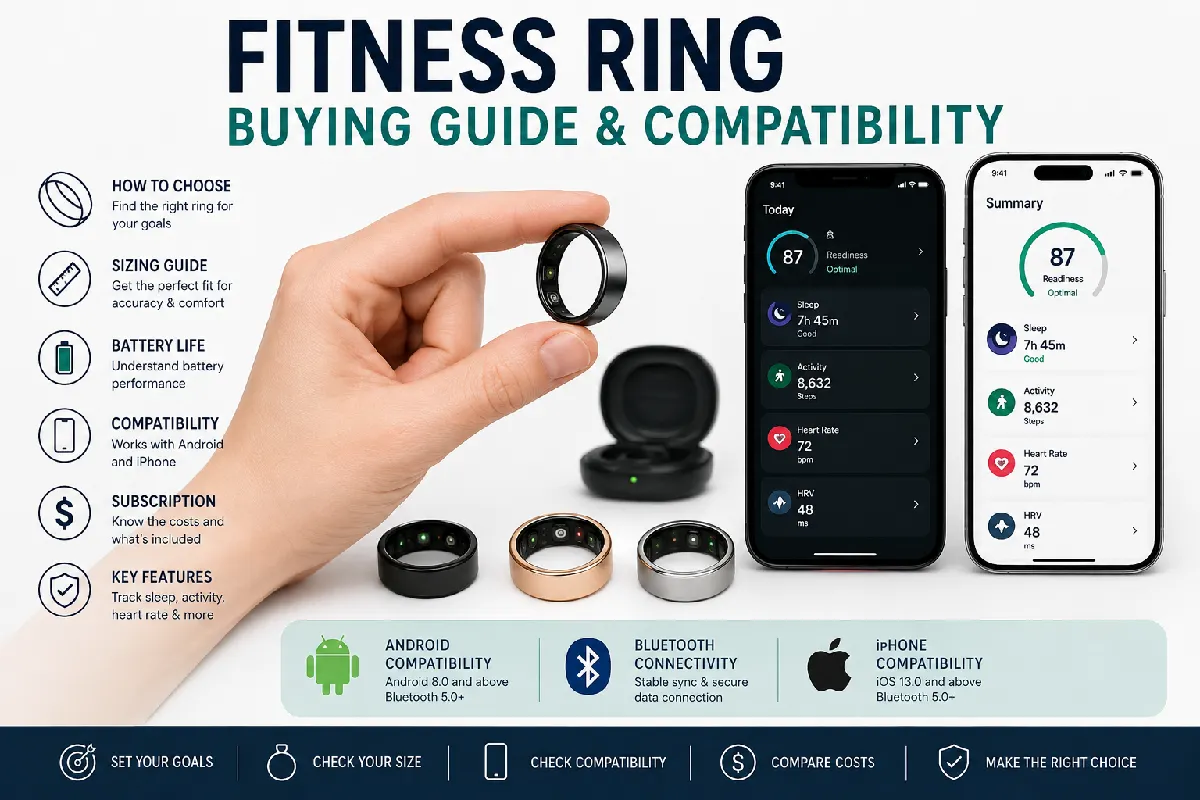
Fitness rings have become one of the growing categories, in wearable technology. While fitness watches and fitness bands remain popular many users prefer rings because they offer health tracking in a smaller less noticeable design.
However not all fitness rings provide the experience. Battery life, smartphone support, subscription price, and how comfortable or accurate the sensors are all range by brand. With this Fitness Ring Buying Guide & Compatibility guide, we’ll explain what fitness rings are, how they work, which smart features are important and how to select a model for you. If you’re new to wearable technology, start with our complete fitness tracker ring guide to understand how smart rings work and what features to look for before buying.
What Is a Fitness Ring?
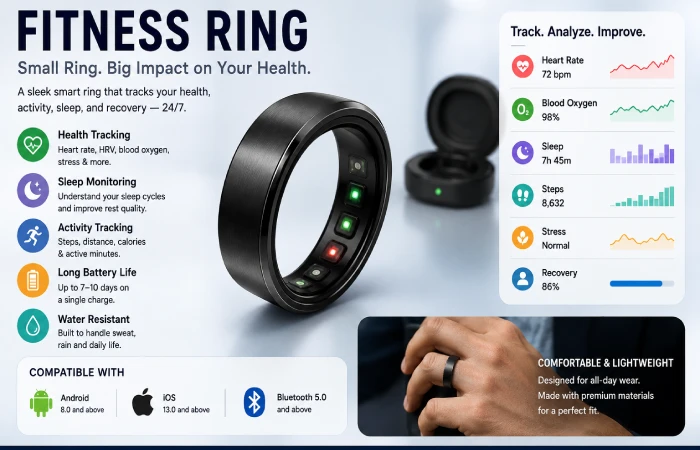
A fitness ring, also known as a smart ring, is a wearable device worn on the finger that tracks various health and activity metrics.
Most modern fitness rings can monitor:
- Daily activity
- Sleep quality
- Heart rate
- Heart rate variability (HRV)
- Blood oxygen levels
- Stress indicators
- Recovery trends
- Calorie expenditure
Unlike larger smartwatches, fitness rings focus on comfort, continuous wear, and discreet health monitoring.
Fitness Ring Buying Guide: What to Look For
Choosing the right fitness ring involves more than simply comparing prices.
Key Factors to Consider
- Sensor Accuracy
A fitness ring relies heavily on its sensors.
Look for:
- Optical heart-rate sensors
- Blood oxygen monitoring
- Skin temperature tracking
- Motion sensors
- Sleep tracking capabilities
More sensors do not automatically mean better accuracy. Software quality and data interpretation are equally important.
- Comfort and Wearability
Since most users wear fitness rings 24/7, comfort matters.
Consider:
- Ring thickness
- Weight
- Internal fit
- Edge design
- Daily wear comfort
A poorly fitting ring can affect both comfort and tracking accuracy.
- App Experience
The companion app is where all collected data is displayed.
Evaluate:
- Dashboard design
- Data readability
- Health insights
- Goal tracking
- Data export options
A strong app experience often provides more value than additional hardware features. Before checking compatibility requirements, it’s worth exploring the best fitness tracker rings to compare the most popular models available today.
How to Choose Fitness Ring Based on Your Goals
Different users have different priorities.
| User Goal | Recommended Features |
| Sleep improvement | Advanced sleep analysis |
| Weight management | Activity and calorie tracking |
| Fitness training | Recovery and HRV monitoring |
| General wellness | Basic health metrics |
| Frequent travellers | Long battery life |
| Minimalist users | Lightweight design |
Identifying your primary goal can narrow your options significantly.
Fitness Ring Specifications Comparison
| Feature | Entry-Level Ring | Mid-Range Ring | Premium Ring |
| Sleep Tracking | Basic | Advanced | Advanced AI insights |
| Heart Rate | Yes | Yes | Yes |
| Blood Oxygen | Limited | Yes | Yes |
| Recovery Metrics | No | Partial | Full |
| Battery Life | 3–5 Days | 5–7 Days | 7–10 Days |
| App Insights | Basic | Moderate | Comprehensive |
| Subscription Requirement | Rare | Sometimes | Often |
This comparison highlights why evaluating features beyond price is important.
Fitness Ring Sizing: Why It Matters
Understanding Fitness Ring Sizing
Sizing is one of the most overlooked buying factors.
A ring that is too loose may:
- Reduce sensor accuracy
- Shift during sleep
- Produce inconsistent readings
A ring that is too tight may:
- Cause discomfort
- Restrict blood flow
- Become difficult to remove
Best Practices
Most manufacturers offer sizing kits before purchase.
Recommended steps:
- Wear the sizing sample for at least 24 hours.
- Test during exercise.
- Check comfort while sleeping.
- Account for finger swelling during the day.
Proper fitness ring sizing improves both comfort and tracking reliability. Many users choose fitness rings for weight loss because these devices provide valuable insights into activity levels, calorie burn, and daily progress.
Fitness Ring Android Compatibility
What Android Users Should Check
Not every smart ring supports all Android devices equally.
Before purchasing, verify:
- Minimum Android version
- Bluetooth compatibility
- Supported health apps
- Synchronisation capabilities
Common integrations include:
- Google Fit
- Health Connect
- Third-party fitness platforms
Users with older Android devices may experience limited functionality.
Fitness Ring iPhone Compatibility
What Apple Users Should Check
Most premium fitness rings support iPhones, but feature availability may vary.
Review:
- Minimum iOS version requirements
- Apple Health integration
- Notification support
- Data-sharing permissions
Some rings offer deeper integration with Apple Health than others.
Like other iPhone users, app quality and ecosystem backing are as significant as hardware specifications.
Smart Ring Subscription: Understanding Ongoing Costs
Do All Fitness Rings Require a Subscription?
No.
Some brands provide full functionality without monthly fees.
Others require subscriptions for:
- Advanced analytics
- Recovery scores
- Sleep coaching
- Historical data access
Subscription Considerations
Before buying, calculate:
- Initial hardware cost
- Monthly subscription cost
- Annual ownership cost
Alternatively, if you get a cheaper ring that requires a recurrent subscription it will cost more in the long term than the more expensive option.
Fitness Ring Battery Life Expectations
Typical Battery Performance
Battery life varies considerably between models.
| Usage Type | Expected Battery Life |
| Heavy Tracking | 3–5 Days |
| Moderate Use | 5–7 Days |
| Optimised Use | 7–10 Days |
Factors Affecting Battery Life
- Sensor usage frequency
- Blood oxygen monitoring
- App synchronisation
- Firmware updates
- Environmental temperature
Manufacturers often quote battery numbers, so battery performance, in real life can be a bit lower.
Materials and Build Quality
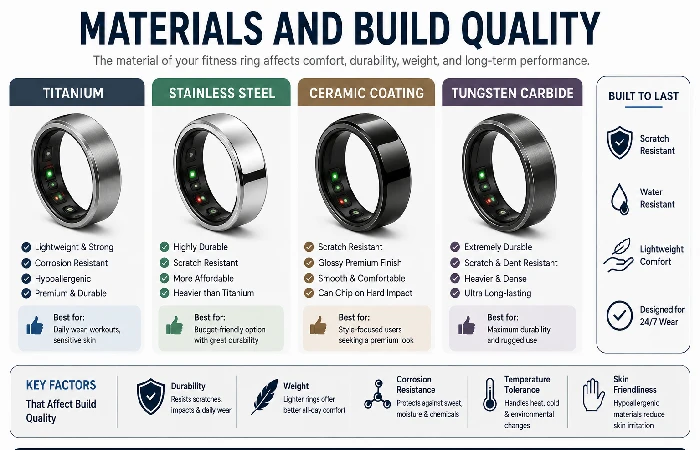
Fitness rings are exposed to constant wear.
Common materials include:
Titanium
Advantages:
- Lightweight
- Durable
- Corrosion resistant
Stainless Steel
Advantages:
- Strong
- Cost-effective
Limitations:
- Heavier than titanium
Ceramic Coatings
Advantages:
- Premium appearance
- Scratch resistance
Limitations:
- Can crack under severe impact
Material quality affects comfort, durability, and long-term appearance. If you’re deciding between wearable devices, our smart ring vs fitness watch comparison explains the key differences in comfort, functionality, and tracking capabilities.
Performance Expectations: What a Fitness Ring Can and Cannot Do
What Fitness Rings Do Well
- Monitor long-term trends
- Track sleep patterns
- Estimate recovery status
- Encourage healthier habits
Limitations
- Not medical devices
- May produce occasional inaccurate readings
- Cannot diagnose health conditions
- Data quality depends on proper wear
Understanding these limitations helps set realistic expectations.
Pros and Cons of Fitness Rings
| Pros | Cons |
| Lightweight | Smaller screens or no display |
| Comfortable for sleep tracking | Some require subscriptions |
| Discreet appearance | Limited workout display features |
| Long battery life | Premium models can be expensive |
| Continuous health monitoring | Accuracy varies by brand |
Workflow: How to Buy the Right Fitness Ring
Step 1: Define Your Primary Goal
Determine whether your focus is:
- Sleep
- Recovery
- Fitness
- General wellness
Step 2: Check Compatibility
Verify support for:
- Android
- iPhone
- Health platforms
Step 3: Confirm Sizing
Use a sizing kit whenever available.
Step 4: Compare Battery Life
Look beyond marketing claims.
Step 5: Evaluate Subscription Costs
Calculate total ownership expenses.
Step 6: Read Independent Reviews
Review long-term user experiences and software updates.
Who Should Buy a Fitness Ring?
Fitness rings may suit:
- Busy professionals
- Frequent travellers
- Sleep-focused users
- Health-conscious individuals
- People who dislike bulky watches
Their discreet design is often the primary reason users switch from traditional wearables.
Who Should Avoid a Fitness Ring?
Fitness rings may not be ideal for:
- Users wanting large displays
- Competitive athletes needing detailed workout screens
- Individuals requiring GPS navigation
- Users seeking smartwatch-style functionality
A fitness watch may provide a better experience in these situations.
Are Fitness Rings Legitimate?
Yes. Most reputable fitness rings use proven sensor technologies similar to those found in fitness watches and smartwatches.
However:
- Results vary by brand
- Accuracy is not perfect
- Consumer wearables are not replacements for professional medical equipment
Consumers should view smart rings as wellness and fitness tools rather than diagnostic devices.
Alternatives to Fitness Rings
If a fitness ring does not fit your needs, consider:
| Alternative | Best For |
| Fitness Watch | Detailed workouts |
| Fitness Band | Budget tracking |
| Smartwatch | Notifications and apps |
| Chest Strap | Heart-rate accuracy |
| Sleep Tracker Pad | Sleep-focused users |
Each option has strengths depending on the user’s goals.
Buying Tips Before Making a Final Decision
- Verify Android or iPhone compatibility.
- Check whether a subscription is required.
- Order a sizing kit if available.
- Compare battery life claims with real-world reviews.
- Review warranty coverage.
- Examine return policies.
- Assess app quality before purchase.
- Consider future software support.
Making a decision based on total ownership experience rather than marketing specifications often leads to better satisfaction.
Conclusion
Choosing a wearable is more than looking at prices. A complete Fitness Ring Buying Guide and Compatibility assessment should cover sizing, how long the battery lasts, support for your smartphone, any subscription fees how good the app is and what you can realistically expect from the device.
I think the best fitness ring is one that feels comfortable works with your phone and gives you information that matches your health and fitness goals. If you focus on how it works with your devices and how useful it is, over time rather than just what the ads say, you can make a better choice that makes you happy. Reading fitness ring brands reviews can help you compare accuracy, battery life, durability, and overall user satisfaction before making a purchase.