
Introduction
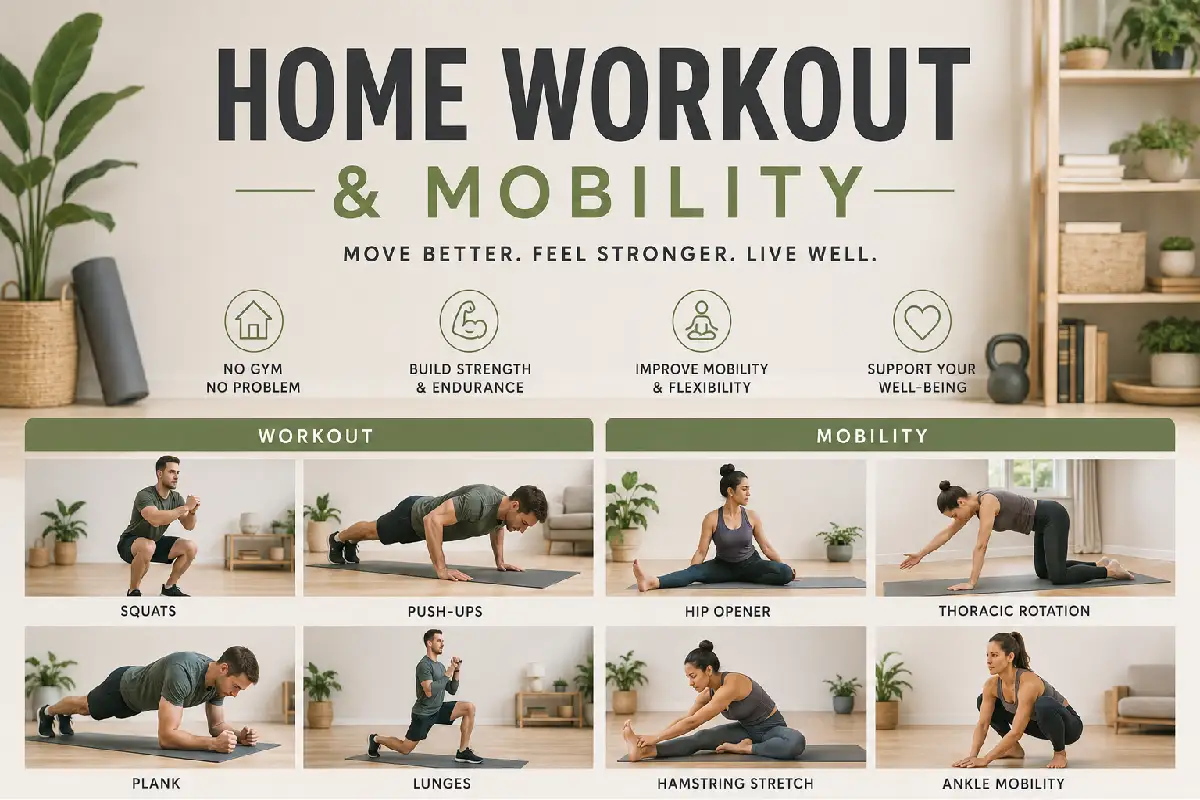
Home workout and mobility routines are becoming one of the ways to get more flexible stop back pain and make your whole body move better in 2026. A lot of people sit at desks for a time work from home or stare at screens so doing mobility exercises at home has become really important for staying healthy. These exercises are different from workouts that just focus on building muscle or losing weight. Mobility exercises, at home help your joints move better your spine work properly and your body do things more easily. Even doing these exercises for ten to twenty minutes a day can make you less stiff and improve your posture over time.
This Article is a Part of Yoga For Back Pain
10-Minute Yoga for Back Pain
Most people sit too much these days, which often leads to back discomfort. When done regularly, even a brief yoga practice eases stiffness while gently guiding the spine into better position.
Simple 10-Minute Flow:
Breathe easy, beginning at a gentle pace. Focus comes naturally when you let each breath settle first.
- Cat-Cow Stretch (1–2 minutes)
- Child’s Pose (1 minute)
- Sphinx Pose (hold for one to two minutes)
- Twist gently while lying on your back, spend a minute or two per side
- Forward bend while standing, hold for one to two minutes
Benefits:
- Reduces lower back stiffness
- Improves spinal mobility
- Relieves pressure from prolonged sitting
- Helps relax tight muscles
Starting slow works well when your back hurts. Newcomers find it helps without making things worse.
Daily Mobility Routine at Home
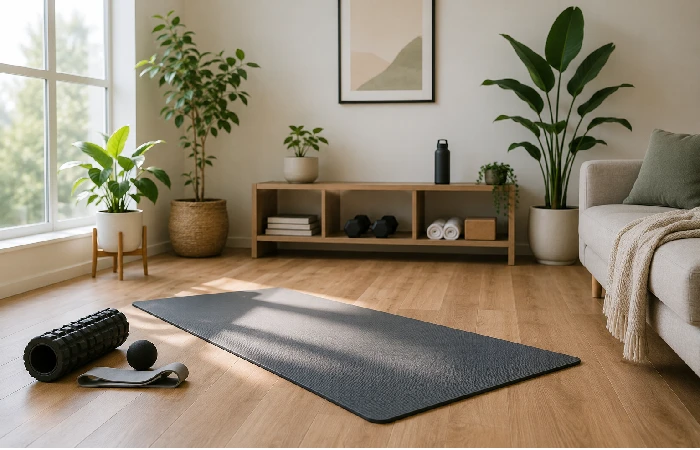
Every morning, try moving through a few slow stretches right where you are. This kind of gentle motion wakes up stiff spots without pushing too hard. Notice how each joint opens when given just a moment of attention. Over time, small shifts add up to smoother days. Your body learns these patterns like quiet habits. Stiffness fades when movement becomes routine. Simple actions, done often, change how you feel by afternoon. The main best yoga poses for back pain page provides a broader overview before you focus on specific pain-related conditions.
Full Routine that takes 10 to 15 minutes:
Upper Body:
- Neck rotations (slow and controlled)
- Shoulder circles forward and backward
- Arm swings
Lower Body:
- Hip circles
- Deep squat hold
- Ankle rotations
Spine:
- Cat-Cow movement
- Seated spinal twist
Benefits:
- Improves overall flexibility
- Reduces stiffness from sitting
- Enhances posture and balance
Warming up gets muscles ready when movement matters. Starting slow wakes the system before effort begins. A few motions wake joints that stiffen overnight. Blood flows easier after gentle prompts. Energy rises once rhythm finds its pace
At its core, a home exercise routine begins here. Movement flows better when built on this base. What you do daily ties back to this starting point. Without it, everything else feels off. This piece holds the whole setup together.
Bedtime Yoga for Relaxation
When night comes, gentle stretches slow things down inside. A quiet breath here, a lowered shoulder there – tension slips away piece by piece. The spine unwinds like it has time. Muscles remember how stillness feels. Each pose holds space without asking much. Nervous energy fades into background noise. Sleep arrives softer when the body is listened to. Rest becomes less of a chase.
Relaxation Flow:
- Legs Up the Wall (2–3 minutes)
- Reclining Butterfly Pose (2 minutes)
- Twist while lying on your back, hold 1 to 2 minutes per side
- Child’s Pose (2 minutes)
- Deep breathing (2–3 minutes)
Benefits:
- Improves sleep quality
- Reduces mental stress and anxiety
- Relaxes tight muscles
- Helps recovery after a long day
When life feels packed or tense, this habit tends to help quite a bit.
Spine Flexibility Exercises
Twist gently through each section of your spine to loosen stiffness. Movement here supports balance, daily motion, plus overall comfort down the road.
Key Exercises:
- Cat-Cow Flow (spinal articulation)
- Thoracic Spine Rotations (upper back mobility)
- Cobra Stretch (spine extension)
- Seated Forward Fold (flexion)
- Standing Back Extension (postural reset)
Benefits:
- Improves spinal range of motion
- Reduces stiffness in upper and lower back
- Supports better posture alignment
- Helps prevent long-term back issues
Most movements work better when your back bends easily.
Yoga Warm-Up Routine
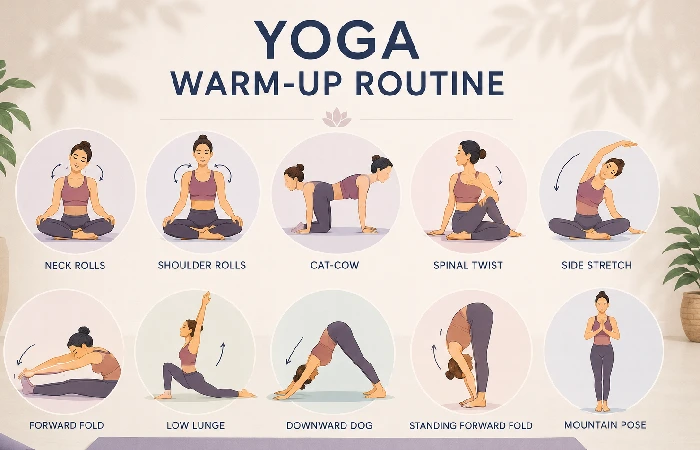
Warm up well ahead of exercise. Through yoga moves, circulation gets a boost while muscle readiness goes up – slipping into motion feels smoother that way. Fewer injuries happen when joints move freely.
10-Minute Warm-Up Flow:
- Slow Sun Salutations (2–3 rounds)
- Arm swings and shoulder activation
- Lunges with torso twist
- Hip openers
- Cat-Cow movement
Benefits:
- Prepares muscles for movement
- Reduces risk of injury
- Improves workout performance
- Enhances body coordination
Before lifting weights or doing cardio, try this sequence. It fits just right into your warm-up flow. If your pain is mainly in the lower back, the lower back pain relief guide offers targeted yoga stretches to reduce stiffness and improve flexibility.
Home Workout and Mobility Importance in 2026
Modern lifestyles have increased physical strain in unexpected ways:
- Long sitting hours
- Reduced physical movement
- Poor posture habits
- Increased stress levels
Working out at home with a focus on how you move helps more than pushing hard alone.
Key Advantages:
- No equipment required
- Finding a spot isn’t the issue – this works just about everywhere you happen to be
- Lasts just a short while – between ten and twenty minutes
- Suitable for all fitness levels
Mobility Compared With Regular Exercise
Feature
Home Exercise and Movement
Traditional Workout
Focus
Movement quality
Muscle size
Equipment
Not required
Often required
Injury risk
Low
Medium
Flexibility improvement
High
Moderate
Daily usability
Very high
Limited
Mobility training is becoming the foundation of modern fitness in 2026. Yoga is also highly effective for post-exercise recovery, which is explained in the gym recovery guide
Common Mistakes to Avoid
- Rushing through stretches
- Ignoring breathing control
- Skipping consistency
- Overstretching into pain
- Not warming up before movement
Slow, steady movement brings better results than rushing ahead. Going step by step keeps things moving without burning out. Patience shapes progress more than speed ever could.
If you want detailed breakdowns of each yoga pose, the individual yoga pose guide section is useful for safe and effective practice.
Troubleshooting Section
I feel stiffness during exercises
Solution lower intensity go slower
No improvement in flexibility
Try doing it every day without stopping for around two or three weeks straight
Back pain during movement
Start slow. Try moving through cat-cow, letting each breath guide the motion. Instead of pushing, allow the body to settle into child’s pose. Flow between them without rushing. Let tension ease with every exhale. Rest there if needed. The comparison page explains different yoga styles and helps you select the most effective option for back pain relief:
Lack of motivation
Solution: Start with a 10-minute fixed daily routine
FAQ
What is home workout & mobility?
Start moving through stretches and light lifts using just your weight, built for daily use without gear. This mix flows into better reach, power, and smoother joints while you stay indoors. Each move links to the next, shaping resilience where you live.
Can I do mobility exercises every day?
Most days, doing mobility exercises brings solid benefits without risk. Moving regularly keeps things flowing smoothly.
How long should a mobility routine be?
10–20 minutes per day is enough for noticeable results.
Is yoga good for back pain?
True, soft stretches in yoga can ease tightness while helping the spine sit straighter. Moving slowly loosens things up along with better posture over time.
Do I need equipment for home mobility workouts?
Bare hands work just fine when starting out. Simple moves need nothing extra on hand.
Conclusion
Working out at home while focusing on movement pays off. Better motion comes easier when you practice daily. The body responds well to consistent effort. Flexibility increases without needing special gear. Most days, your back feels lighter. Over time, standing tall becomes easier.
Most days, just moving around at home can shape how you feel. Ten minutes here, another few there over time, shifts happen. No machines needed, no special gear required either. Small efforts stack when done often. A little each morning or evening adds up differently than expected. The way clothes fit might change without chasing big results. Doing things daily matters more than doing them perfectly. For a more holistic approach to recovery, stress relief, and mobility, explore the wellness resource: