
When it comes to workouts, people concentrate much more on training than recovery, which is of vital importance. Working closely with GYM RECOVERY & FITNESS is necessary because it is the body’s stage of recuperation and repair for the exercise stimulus. This is where the body grows strong and adapts.
Whether training from home, using weight machines daily or adhering to a fitness plan with general well being as your goal, the process of recovery can promote improved adherence, less muscle soreness and overall success over the long term. Recovery is not an excuse from training but rather it supplements and aids your training response. If you’re looking for a complete approach to relieving discomfort and improving mobility, explore our guide to the best yoga poses for back pain.
This Article is a Part of Yoga For Back Pain
What is Gym Recovery & Fitness?
Gym Recovery & Fitness relates to both the training aspect and the recovery component of training, and the body’s ability to repair, rebuild, and adapt following exercise.
Recovery involves several factors:
- Sleep
- Hydration
- Nutrition
- Mobility work
- Stretching
- Yoga
- Active recovery sessions
When these elements work together, they help support physical performance and overall wellbeing.
Why Recovery Matters After Exercise
All exercises impose stresses on the body, be that on the muscles, joints or nervous system. Recovery is the period the body requires to overcome and adapt to these stresses.
Benefits of proper recovery include:
- Reduced muscle soreness
- Improved flexibility
- Better workout performance
- Lower risk of overuse injuries
- Improved energy levels
- Enhanced mobility
Without adequate recovery, progress may slow even when workout frequency increases. If gym training leaves your lower back feeling tight, the lower back pain relief guide provides targeted poses to reduce stiffness and improve flexibility.
Best Yoga After Gym Workout
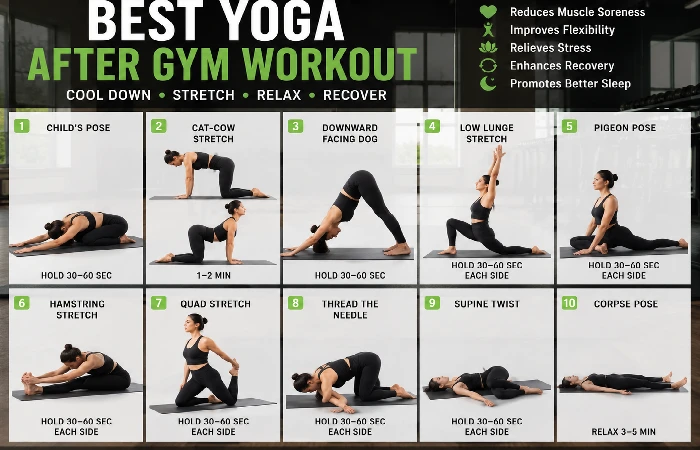
Yogi can help speed up recovery following a gym session, home based work out, or running.
Post-workout yoga focuses on:
- Gentle stretching
- Breathing control
- Mobility improvement
- Relaxation
Popular poses include:
Child’s Pose
Helps relax the lower back and hips.
Downward Dog
Supports hamstring and calf flexibility.
Seated Forward Fold
Provides a gentle stretch for the posterior chain.
Supine Twist
Encourages spinal mobility and relaxation.
Yoga sessions after training do not need to be lengthy. Even 10–15 minutes can complement a recovery routine.
Yoga for Muscle Recovery
For tightness that can arise from exercise, the Yoga for Muscle Recovery practices may be useful.
Some benefits include:
| Recovery Benefit | How Yoga Helps |
| Mobility | Improves joint movement |
| Flexibility | Lengthens tight muscles |
| Relaxation | Encourages recovery-focused breathing |
| Recovery | Promotes light movement |
| Stress Reduction | Supports overall wellness |
Yoga is a recovery session from hard training, not another intense workout.
Recovery Exercises for Athletes
Recovery exercises are added to maintain movement quality throughout periods of non-training.
Common recovery exercises include:
Walking
Light walking encourages circulation without adding significant physical stress.
Foam Rolling
May help reduce feelings of muscle tightness.
Dynamic Mobility Drills
Supports healthy movement patterns.
Light Cycling
Provides low-impact active recovery.
Gentle Yoga Flows
Combines flexibility and mobility training.
These activities can be adapted for home workouts as well as structured athletic programmes. Beginners can benefit from the individual yoga pose guides, which explain how to perform each stretch correctly and effectively.
Recovery Workflow for Home Fitness Enthusiasts
A simple recovery workflow can help improve consistency.
| Step | Action |
| Workout | Complete planned exercise session |
| Cool Down | Walk and stretch for 5–10 minutes |
| Hydrate | Replace lost fluids |
| Refuel | Eat a balanced meal with protein |
| Recover | Perform mobility or yoga work |
| Sleep | Aim for quality rest |
| Repeat | Continue training cycle |
Routine application is superior to occasional remediation.
Yoga for Weightlifters
Weightlifting can place significant demands on muscles and joints.
Yoga can complement strength training by supporting:
- Hip mobility
- Shoulder mobility
- Thoracic spine movement
- Recovery between sessions
- Flexibility development
Weightlifters is common among lifters, particularly in the chest, shoulders, hips and hamstrings. Yoga may help address these movement restrictions.
However, flexibility gains usually occur gradually rather than immediately.
Recovery needs vary depending on the cause of pain, which is why the specific pain conditions section offers more targeted recommendations.
Stretching vs Yoga for Recovery
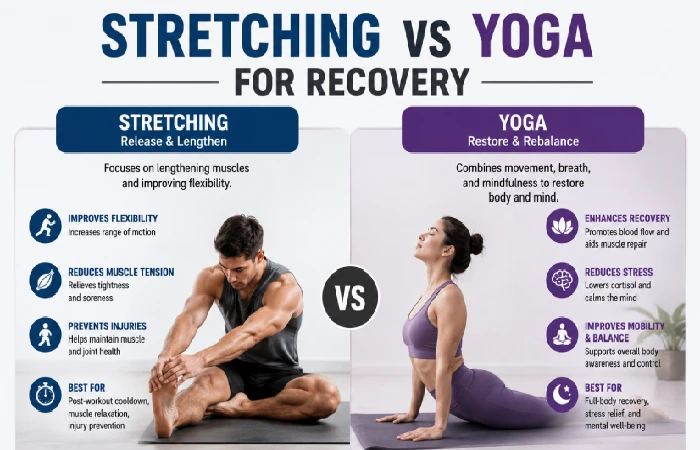
Many people wonder whether stretching or yoga is better for recovery.
| Factor | Stretching | Yoga |
| Flexibility | Good | Excellent |
| Mobility | Moderate | Good |
| Relaxation | Limited | Strong |
| Breathing Focus | Minimal | Significant |
| Recovery Support | Good | Good |
| Time Requirement | Short | Moderate |
For a quick recovery stretching will certainly not do you any harm, but with yoga there are added benefits for both breathing and mobility and also for relaxation.
There is no one type of stretching that is “better” than any other, in fact a lot of people find that by doing both works well.
On rest days, many people use the home workout yoga guide to stay active while supporting recovery and mobility.
What Recovery Can Realistically Achieve
It is not only recovery which matters, but the nature and scale of that recovery are what really counts.
Recovery Can Help With
- Managing fatigue
- Supporting muscle repair
- Improving mobility
- Reducing stiffness
- Supporting consistent training
Recovery Cannot Guarantee
- Instant muscle growth
- Immediate fat loss
- Elimination of all soreness
- Injury prevention in every situation
- Overnight fitness improvements
In order to achieve the desired long term goal of fitness the elements of training, recovery, nutrition and lifestyle need to be synergised.
Common Recovery Mistakes
Skipping Recovery Days
Many people assume more exercise automatically produces better results.
Poor Sleep Habits
Quality of recovery may also be impaired when not enough sleep time.
Inconsistent Hydration
As little as a one percent body weight loss due to dehydration may alter performance.
Ignoring Mobility Work
There’s also the case to be made that incorporating some mobility work will improve the quality of your movement and potentially the quality of your comfort long-term.
Building a Sustainable Recovery Routine
There isn’t anything really complex about having a good recovery strategy.
A practical weekly approach may include:
- Daily hydration
- Consistent sleep schedule
- Two or three yoga sessions
- Regular stretching
- Active recovery walks
- Balanced nutrition
Small habits maintained consistently often produce better results than extreme recovery strategies. Beyond home practice, yoga supports long-term health and flexibility as explained in the wellness guide:
Conclusion
By incorporating these techniques like best yoga after gym workouts, Yoga for muscle recovery, recovery drills for athletes, mobility workouts, good health will be achieved. Workout should be done in combination with recovery in order to have proper fitness programs for the years to come. The comparison page explains different yoga styles and helps you select the most effective option for back pain relief: