
Stillness might just be another form of moving. Between one stretch and the next, yoga pose settles into silence more than action. Each position ties motion to attention – this truth holds true whether you’ve done it before or not. Breath supports every stance the way soil gives life to roots underground. Visible work appears, but meaning grows where eyes can’t always see.
Every now and then, people walk into a yoga class attempting poses without really knowing their purpose – no sense of function, alignment, or effect. When understanding is missing, form tends to collapse, progress slows down. Looking closely at just one pose brings sharpness, revealing limb placement, rhythm of breathing, subtle internal changes. Details like these allow steady growth, bringing greater strength, stillness, awareness little by little.
Why do single-pose breakdowns count? Dig a little deeper – attention to one stance at a time sharpens insight. Slower motion often brings sharper vision. Imagine moving through familiar forms step by step, never skipping forward. One stance fills the room without crowding. Rather than piling moves on top of each other, the eye settles into a single form. If your back pain is linked to issues like sciatica, herniated disc, or posture strain, the specific pain conditions guide helps you choose the right yoga poses for your situation.
This Article is a Part of Yoga For Back Pain
Individual Yoga Pose Guides Help
Slow progress builds strength when every pose is practiced fully. Instead of rushing routines, focusing on one move shows what matters most
- Correct body positioning
- Controlled breathing techniques
- Better movement awareness
- Stronger posture foundations
- Safer practice habits
When each pose is understood thoroughly, practitioners can:
- Improve flexibility safely
- Build strength gradually
- Reduce injury risks
- Enhance posture and balance
- Develop mindfulness
- Progress more confidently
Some stretches move the body differently than others. While one position eases stiff muscles, a different one can ground your balance, add power, or quiet thoughts. Knowing what each does helps yoga make clearer sense.
Mountain Pose
Up there, like a peak, it seems plain – but each standing position in yoga grows out of that calm. When motion kicks in, the hush inside keeps things linked. Stillness first, then flow. This section is part of a larger resource, and the main best yoga poses for back pain page provides full context and additional stretches.
Mountain Pose Step by Step
- Start by placing your feet close or slightly separated at hip level.
- Stand so each foot carries the same load.
- Start by tightening your thigh muscles just a bit.
- Reach taller through the crown of your head.
- Relax the shoulders.
- Your arms hang loose at your sides. Stillness finds them where they fall.
- Look ahead without shifting your eyes.
Mountain Pose Effects
- Improves posture
- Enhances body awareness
- Strengthens the legs
- Improves balance
- Creates stability
Common Mistakes
Legs sometimes lock up when folks move through routines. Just like loose shoulders, a tall back holds equal weight. Yoga can support post-workout recovery, which is explained in the gym recovery guide:
Child’s Pose for Relaxation
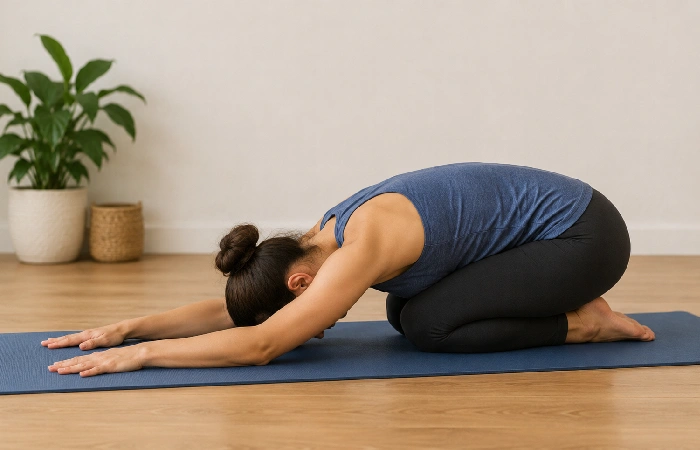
This position slips in quietness when movement has been strong. A soft break arrives right here, tucked behind busier stances.
Child s Pose Step by Step
- Get down onto the floor mat. On your knees now.
- Bend gently forward, letting your head move down. Slowly bring your brow closer to the ground.
- Breathe out while letting every muscle go loose. Release tension slowly from head to toes.
- Take breaths that are long, slow. Deep air fills your lungs each time.
Child s Pose gently relaxes body and mind
- Stretches the lower back
- Opens the hips
- Relieves stress
- Promotes relaxation
- Calms the nervous system
Common Mistakes
Shoulders tight? That happens a lot. Let it go now – melt down slowly. Neck stiffness fades when you stop fighting gravity.
Warrior One Pose
Standing tall in Warrior I builds strong legs, sharp attention, one steady breath at a time. From rooted feet rises a quiet kind of courage, motion held firm by stillness.
Warrior I Pose Step by Step
- Move ahead by stepping one leg out front, lowering into a lunge position slowly.
- Pivot the rear foot just a bit away from center. A tiny shift changes everything.
- Slowly tilt the lower leg forward at the joint up front.
- Up goes each arm, stretching high above your head.
- Keep your chest lifted.
- Look forward.
Warrior I Strengthens Legs Increases Balance Improves Focus
- Strengthens the legs
- Engages the core
- Builds shoulder strength
- Improves stability
- Enhances focus
Common Mistakes
Watch the front knee – don’t let it creep past the ankle. When aligned right, the movement guards the joints while boosting performance. A well-placed joint stays safe through correct positioning.
Warrior Two Pose
Standing strong in Warrior II pushes stamina, yet tunes focus along with how you feel your frame.
Warrior II Pose Steps
- Stand with your feet far apart.
- Slowly tilt the lower leg forward at the joint up front.
- Reach out with your arms until they’re level with the ground.
- Look sideways using your front hand as a guide.
Warrior II Strengthens Legs And Improves Balance
- Strengthens the lower body
- Improves stamina
- Enhances balance
- Increases concentration
- Opens the hips
Tree Pose
One foot rooted, it trains coordination while demanding attention. Focus grows as posture holds steady through stillness.
Tree Pose step by step
- Balanced on just a single foot.
- Rest the other foot beside your leg, either near the thigh or lower on the shin.
- Fingers meet just above the heart, palms flat. A quiet press begins here.
- Reach up high instead, letting your fingers point toward the ceiling.
- Keep your eyes fixed without wavering.
- Tree Pose Improves Balance and Focus
- Improves balance
- Strengthens leg muscles
- Enhances concentration
- Improves body awareness
Common Mistakes
- Resting your foot right on the knee could add strain where it is not needed.
Cobra Pose for Spine Health
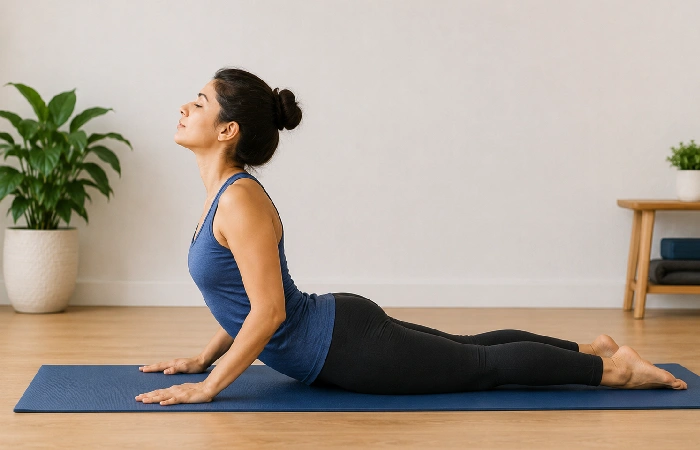
As the arms engage slightly, space grows between each vertebra. The shoulders roll backward slowly, inviting openness through the chest and abdomen. Breath flows deeper when the heart area lifts without strain. If your discomfort is mainly in the lower back, the lower back pain relief guide offers more focused stretches to ease stiffness and improve mobility.
Cobra Pose Steps
- Lie face down.
- Beneath your shoulders, place your hands.
- Push down through your hands.
- Lift your chest.
Bend your elbows just a little. Slight curves work better here. A soft angle holds more balance. Not straight, but not pulled in tight either.
Benefits of Cobra Pose
- Strengthens back muscles
- Opens the chest
- Improves spinal mobility
- Encourages better posture
Common Mistakes
Keep the lower back safe by avoiding too much stretch. Lift from the chest instead of pushing into an extreme curve. The comparison page helps you choose the most effective yoga approach for lower back pain relief:
Supine Twist for Back Flexibility
Step-by-Step Guide
1. Lie flat on your back. Start by lying on your yoga mat with your legs out and your arms by your side. Take a breath in and let your body relax.
2. Bring one knee toward your chest. Bend your knee and pull it to your chest. Keep your leg straight on the mat and your shoulders relaxed.
3. Twist across your body. Move your knee to the left side of your body slowly. Let your body twist naturally do not force it. Your hips will start to turn while your upper body stays still.
4. Extend your arm. Stretch your arm out to the side at shoulder height. This will help open your chest and make the twist in your spine deeper.
5. Turn your gaze gently. Look at your hand or keep your eyes looking up. Whatever feels better for your neck.
6. Breathe deeply. Hold. Take breaths for 20-30 seconds. When you breathe out let your lower back and hips relax a more.
7. Return to the switch sides. Bring your knee back to the middle slowly straighten your leg then do the thing on the other side. The Supine Twist is good, for flexibility so remember to do the Supine Twist regularly.
Conclusion
One yoga pose at a time opens doors most never notice. Focusing slowly brings shifts – tight muscles loosen while arms learn new lines through space. Breath begins to match motion when attention stays close. Strength grows not fast but steady, like roots under soil. For a more holistic approach to recovery and mobility, explore the wellness resource: