
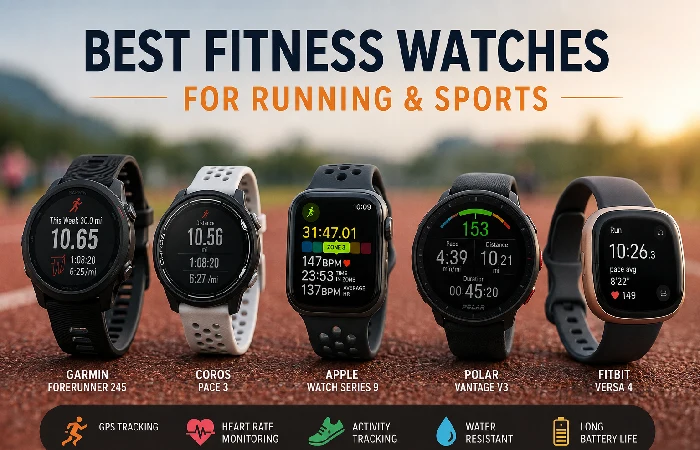
Fitness watches have come a way from just counting steps. Modern devices now include GPS tracking, heart-rate monitoring, recovery analysis, sleep tracking and special metrics for sports that help athletes get a better idea of how they are doing.
If you are getting ready, for a 5K race or if you ride a bike on weekends swim often or do sports picking the right watch can really make a difference. It helps you track your progress and manage your training better. If you’re looking for a device designed for active lifestyles, start with our Best Fitness Watch to compare the top options available today.
This guide goes over the features you should look for in a fitness watch. It tells you what to expect the benefits you can gain and also the downsides you might face. The goal is to help you make a choice when buying a fitness watch.
What Is a Fitness Watch?
A fitness watch is a device that I use and fitness watch collects movement data and biometric data while I exercise and while I carry out my daily tasks.
Depending on the model, it may track:
- Distance travelled
- Running pace
- Heart rate
- Calories burned
- Sleep quality
- Recovery status
- VO2 max estimates
- Swimming metrics
- Cycling performance
- Stress levels
Many modern fitness watches also connect to smartphones for notifications, music control and fitness app integration. Different sports and training styles require different features, making our best fitness watches by use case guide a valuable resource.
Key Features to Look for in a Fitness Watch
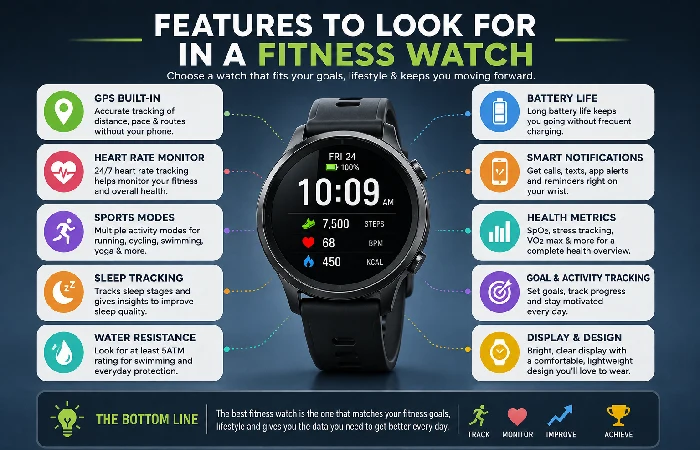
GPS Tracking Accuracy
GPS is essential for runners, cyclists and outdoor athletes. A reliable GPS system records distance, route and pace with greater precision.
The best GPS fitness watch typically supports:
- Multi-band GPS
- Satellite connectivity
- Route mapping
- Turn-by-turn navigation
- Pace tracking
Heart Rate Monitoring
Optical heart-rate sensors continuously measure effort levels during exercise.
Benefits include:
- Training zone monitoring
- Recovery tracking
- Calorie estimation
- Workout intensity analysis
Sports Modes
Different sports require different metrics.
Look for support for:
- Running
- Cycling
- Swimming
- Walking
- Hiking
- Strength training
- Rowing
- Triathlon activities
Battery Life
Battery performance varies significantly.
Typical ranges:
| Usage Type | Average Battery Life |
| Smartwatch Mode | 5–14 Days |
| GPS Running Mode | 10–40 Hours |
| Multisport Tracking | 8–30 Hours |
Best Fitness Watch Types by Activity
Best Running Fitness Watch
The best running fitness watch focuses on:
- Accurate pace tracking
- GPS reliability
- Cadence measurement
- Recovery metrics
- Race prediction tools
Runners training consistently benefit from advanced performance analytics rather than basic step counting alone.
Best GPS Fitness Watch
For outdoor training, GPS accuracy is often the most important feature.
Ideal users include:
- Marathon runners
- Trail runners
- Hikers
- Cyclists
- Adventure athletes
Advanced GPS watches may offer offline maps and route navigation.
Best Watch for Runners
The best watch for runners balances accuracy, comfort and battery life.
Key considerations:
- Lightweight design
- Sweat resistance
- Clear display visibility
- Long GPS battery life
- Comfortable wrist fit
Best Fitness Watch for Cycling
Cyclists benefit from watches that provide:
- Speed tracking
- Elevation data
- GPS route recording
- Heart-rate zones
- Training load analysis
Some models also integrate with cycling sensors and power meters.
Best Fitness Watch for Swimming
The best fitness watch for swimming should offer:
- Water resistance
- Lap counting
- Stroke recognition
- Pool and open-water tracking
- Swim efficiency metrics
Not all waterproof watches provide advanced swimming analytics, so specifications should be reviewed carefully.
Best Multisport Watch
A best multisport watch is designed for athletes participating in several activities.
Common users include:
- Triathletes
- Cross-training athletes
- Endurance competitors
- Outdoor adventurers
These watches allow seamless switching between sports while maintaining detailed training records. Athletes on a budget can still find reliable tracking features by exploring our best budget fitness watches recommendations.
Fitness Watch Feature Comparison
| Feature | Entry-Level Watch | Mid-Range Watch | Premium Multisport Watch |
| GPS | Basic | Advanced | Multi-band GPS |
| Heart Rate | Standard | Improved Accuracy | Advanced Sensors |
| Swimming Tracking | Limited | Good | Comprehensive |
| Battery Life | Moderate | Good | Excellent |
| Navigation | No | Limited | Full Mapping |
| Recovery Insights | Basic | Moderate | Advanced |
| Price Range | Lower | Mid-Level | Premium |
Typical Specifications to Evaluate
| Specification | Recommended Standard |
| Water Resistance | 5 ATM or higher |
| GPS Support | Multi-GNSS |
| Display | AMOLED or High-Visibility LCD |
| Battery | Minimum 7 Days |
| Weight | Under 60g for comfort |
| Bluetooth Connectivity | Latest supported version |
| Smartphone Compatibility | Android and iPhone |
How Fitness Watches Support Training: Workflow
Step 1: Set Goals
Examples:
- Run a faster 10K
- Improve cycling endurance
- Increase weekly activity
Step 2: Track Workouts
Record:
- Distance
- Time
- Pace
- Heart rate
Step 3: Analyse Performance
Review:
- Training load
- Recovery status
- Weekly trends
Step 4: Adjust Training
Use data to:
- Increase intensity gradually
- Schedule recovery days
- Avoid overtraining
Step 5: Monitor Progress
Focus on your monthly consistency and performance, not on an isolated workout.
Performance Expectations
Fitness watches provide useful insights, but expectations should remain realistic.
What They Can Do
- Measure activity trends
- Track workout performance
- Monitor recovery indicators
- Encourage consistency
What They Cannot Do Perfectly
- Replace professional medical evaluations
- Deliver 100% accurate calorie counts
- Guarantee athletic improvement
- Predict injuries with certainty
Environmental factors, wrist placement and sensor limitations can affect accuracy. Understanding GPS accuracy, heart-rate monitoring, and battery life is essential when choosing a sports watch. Learn more in our fitness watch features and buying guide.
Battery Life, Build Quality and Materials
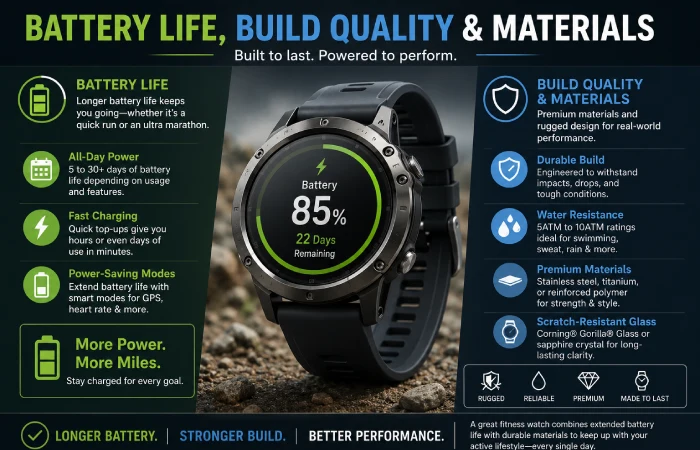
Common Materials
- Aluminium
- Stainless steel
- Titanium
- Reinforced polymers
Display Protection
Many premium models use:
- Gorilla Glass
- Sapphire crystal
Battery Considerations
Long-distance runners and endurance athletes should prioritise GPS battery life more, than smartwatch features.
Athletes training daily often benefit from watches lasting at least one week between charges. Before purchasing a sports-focused smartwatch, check our fitness watch compatibility guide to ensure seamless device integration.
Pros and Cons of Fitness Watches
Pros
- Convenient workout tracking
- Real-time performance data
- GPS navigation support
- Motivation through goal tracking
- Multi-sport compatibility
Cons
- Sensor accuracy varies
- Premium models can be expensive
- Frequent GPS use drains battery
- Some advanced metrics require interpretation
Who Should Buy a Fitness Watch?
Fitness watches are suitable for:
- Recreational runners
- Marathon trainees
- Cyclists
- Swimmers
- Gym users
- Outdoor enthusiasts
- Triathletes
Who Should Avoid Buying One?
A fitness watch may not be necessary if:
- You only exercise occasionally
- You prefer minimal technology during workouts
- Basic smartphone tracking meets your needs
- Advanced metrics would rarely be used
Are Fitness Watches Legitimate?
Yes. Fitness watches are legitimate tools used by recreational exercisers and professional athletes alike.
While most established manufacturers invest in these systems – GPS, and other sensors- to collect and store performance data, they should be used to guide the sport and the athlete rather than for definitive medical diagnoses.
Most devices get high points when compared to external benchmarks on their GPS and heart-rate tracking although subtle differences may be expected between brands and conditions of use. Compare real-world performance and athlete feedback in our detailed fitness watch reviews.
Alternatives to Fitness Watches
If a fitness watch does not fit your needs, alternatives include:
Smartphone Fitness Apps
Useful for:
- Casual runners
- Walking programs
- Basic distance tracking
Fitness Bands
Generally offer:
- Lower cost
- Lightweight design
- Basic activity monitoring
Cycling Computers
Designed specifically for cyclists requiring advanced route and performance data.
Chest Heart Rate Monitors
Often preferred for maximum heart-rate accuracy.
Buying Tips Before Choosing a Fitness Watch
Match Features to Your Primary Sport
Avoid paying for features you will never use.
Prioritise GPS Quality
Outdoor athletes should focus on GPS performance first.
Consider Battery Requirements
Long races and endurance events demand longer battery life.
Check App Compatibility
Ensure the watch integrates with your preferred fitness ecosystem.
Evaluate Comfort
A lightweight and comfortable watch is more likely to be worn consistently.
Conclusion
Choosing the fitness watches for running and sports is all about what you want to achieve with your training. It also depends on the activities you like the how much money you are willing to spend. Runners often care a lot about how accurate the GPS’s. Cyclists might look for navigation and details about how long they can keep going. Swimmers need a watch that works well when you are in the water.
Of looking for every fancy feature think about the ones you will use every day. A fitness watch that fits your needs can give you information, about your training. It can also help you reach your fitness goals over time. Let you see how you are doing better as the weeks go by.