
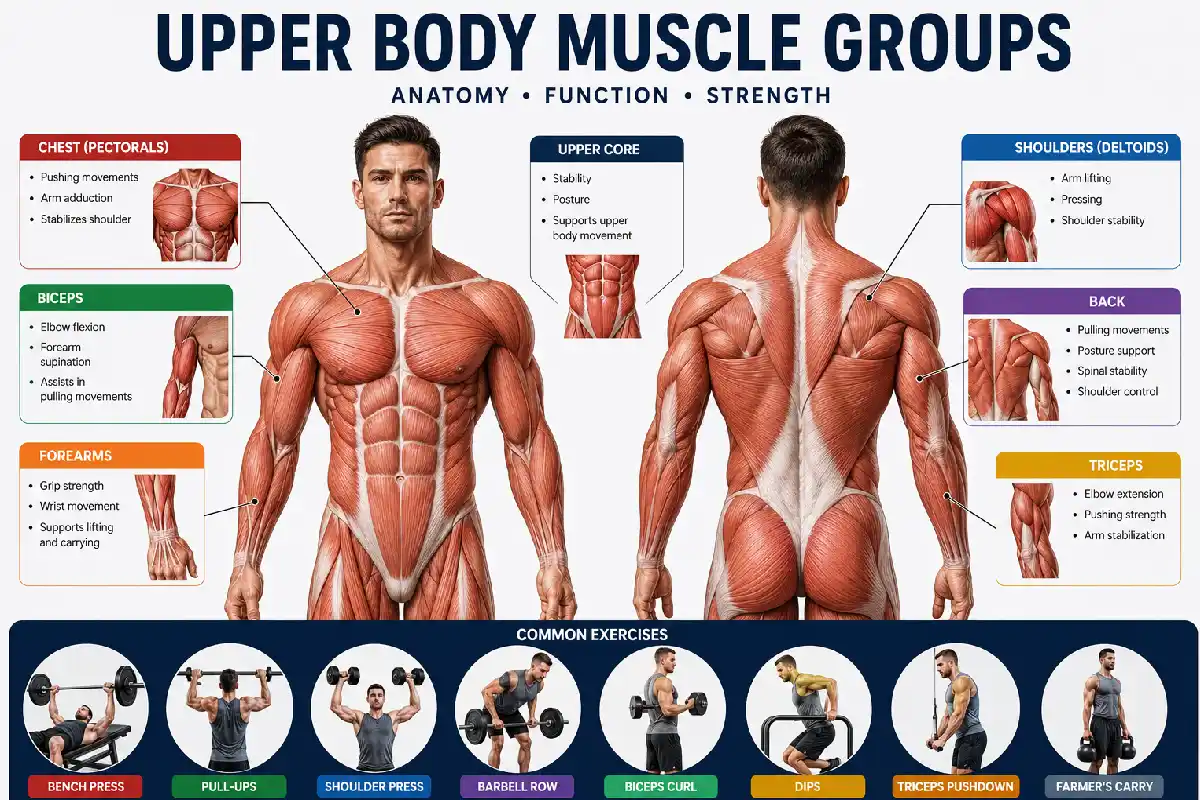
The upper body is really important because it helps us do lots of things every day. We use our body to lift things carry things push things pull things reach for things and throw things. If you know about the Upper Body Muscle Groups you can exercise better avoid getting hurt and get stronger.
You might want to build Upper Body Muscle Groups to look good. You might want to get better at sports or you might just want to be able to do daily things more easily. Either way learning about the Upper Body Muscle Groups and how they work together will help you make good choices when you are exercising and trying to get stronger. Understanding the major upper body muscles is the first step toward creating an effective training routine. Explore our Upper Body Workout for a complete overview of workouts, exercises, and training strategies.
This Article is part of the Home Workout
What Are Upper Body Muscle Groups?
The Upper Body Muscle Groups are the muscles in your body that’re, above your waist. These Upper Body Muscle Groups help you move your arms and your shoulders and your chest and your upper back and your torso. The Upper Body Muscle Groups work together to make you strong keep your posture straight and keep your joints safe when you are working out.
If you know a bit about the Upper Body Muscle Groups and how they work you can make a workout plan that is fair and good, for your body. This way you can avoid making mistakes when you are training with the Upper Body Muscle Groups.
Upper Body Anatomy
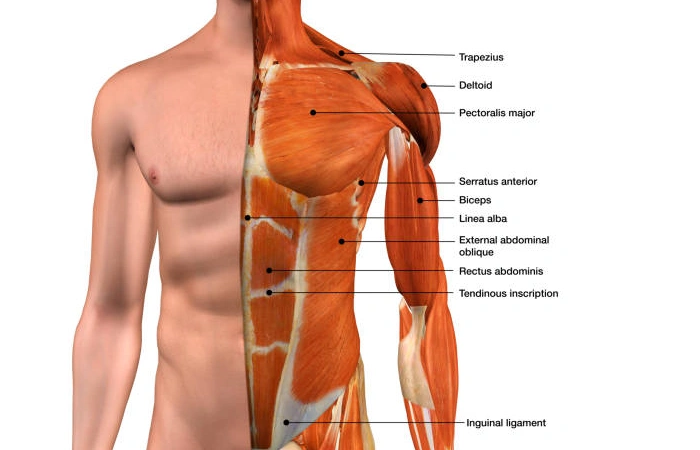
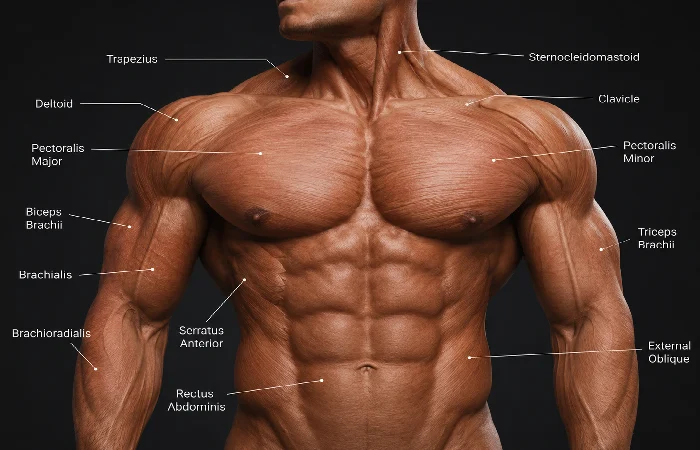
To understand how training affects performance, it is helpful to know the main muscles complicated. Once you understand how each muscle functions, the next step is selecting the right movements. Check out our Upper Body Exercises to target every major muscle group effectively.
Chest Muscles (Pectorals)
The pectoral muscles are located on the front of the upper torso.
Primary functions include:
- Pushing movements
- Arm adduction
- Shoulder stabilisation
- Upper-body power production
Common exercises:
- Push-ups
- Bench Press
- Chest Flyes
Back Muscles
The back contains several large and powerful muscles.
These include:
- Latissimus Dorsi
- Trapezius
- Rhomboids
- Erector Spinae
Functions include:
- Pulling movements
- Posture support
- Spinal stability
- Shoulder control
Common exercises:
- Pull-ups
- Rows
- Lat Pulldowns
Shoulder Muscles (Deltoids)
The shoulder consists of three heads:
- Anterior Deltoid
- Lateral Deltoid
- Posterior Deltoid
Their functions include:
- Arm elevation
- Pressing movements
- Rotational control
- Joint stability
Arm Muscles
Biceps
Located at the front of the upper arm.
Functions:
- Elbow flexion
- Pulling assistance
- Forearm rotation
Triceps
Located at the back of the upper arm.
Functions:
- Elbow extension
- Pressing strength
- Arm stabilisation
Forearm Muscles
The forearms support:
- Grip strength
- Wrist movement
- Carrying ability
- Exercise control
Strong forearms often improve performance in pulling and lifting exercises.
Upper Body Muscles and Their Functions
| Muscle Group | Primary Function |
| Chest | Pushing movements |
| Back | Pulling movements |
| Shoulders | Lifting and stabilising |
| Biceps | Elbow flexion |
| Triceps | Elbow extension |
| Forearms | Grip and wrist control |
| Upper Core | Stability and posture |
This coordinated system allows the body to perform complex actions professionally. Many upper body muscles can be trained successfully without gym equipment. Follow our Home Upper Body Workouts for practical exercises you can perform at home.
Upper Body Strength Benefits
Developing upper body strength offers benefits beyond appearance.
Improved Daily Function
Simple activities become easier, including:
- Carrying groceries
- Lifting boxes
- Household tasks
- Recreational activities
Better Athletic Performance
Many sports require upper body strength, including:
- Tennis
- Swimming
- Basketball
- Baseball
- Rock climbing
Enhanced Joint Stability
Strong muscles help care the shoulders, elbows, and wrists during program.
Improved Posture
Balanced muscle development can pay to better posture and movement system.
Greater Exercise Performance
Many compound exercises rely heavily on upper body muscles to generate force and maintain control.
How Upper Body Muscle Groups Work Together
Most exercises involve multiple muscles working simultaneously.
Push-Up Movement Workflow
- Chest muscles generate pushing force.
- Triceps extend the elbows.
- Deltoids assist shoulder movement.
- Core muscles stabilise the body.
- Forearms support wrist positioning.
This coordinated effort demonstrates why balanced training is important.
Best Exercises for Major Upper Body Muscle Groups
Chest
- Bench Press
- Push-Ups
- Incline Dumbbell Press
Back
- Pull-Ups
- Barbell Rows
- Lat Pulldowns
Shoulders
- Overhead Press
- Lateral Raises
- Rear Delt Flyes
Biceps
- Barbell Curls
- Hammer Curls
- Chin-Ups
Triceps
- Dips
- Skull Crushers
- Tricep Pushdowns
Forearms
- Wrist Curls
- Farmer’s Carries
- Dead Hangs
Including exercises for each muscle group helps support balanced development. If you have access to weights and machines, our Gym Upper Body Workouts Guide can help you maximize muscle activation and training results.
Balanced vs Unbalanced Upper Body Training
| Factor | Balanced Training | Unbalanced Training |
| Strength Development | Even Progress | Muscle Weaknesses |
| Posture | Improved | Potential Imbalances |
| Injury Risk | Lower | Higher |
| Athletic Performance | Better | Limited |
| Joint Stability | Enhanced | Reduced |
| Muscle Symmetry | More Balanced | Less Balanced |
Common Upper Body Training Mistakes
Training Only Visible Muscles
Many individuals focus heavily on chest and biceps while neglecting the back and rear shoulders.
Ignoring Recovery
Muscles require adequate rest to adapt and recover.
Poor Technique
Improper exercise form may reduce effectiveness and increase injury risk.
Excessive Training Volume
More training is not always better. Recovery remains essential.
Neglecting Progressive Overload
Gradually increasing resistance is important for continued strength development. A solid understanding of muscle anatomy can improve exercise selection and muscle growth. Learn more in our Upper Body Muscle Building.
Expectations Management: What Results Can You Realistically Expect?
First 4–6 Weeks
Many people notice:
- Better exercise technique
- Improved muscular endurance
- Increased workout confidence
Two to Three Months
Possible improvements include:
- Increased strength
- Better muscle definition
- Improved posture
Long-Term Progress
Meaningful muscle growth depends on:
- Training consistency
- Nutrition quality
- Recovery habits
- Sleep
- Progressive overload
Results typically develop gradually rather than immediately. Knowing how muscles work together can help you lift more efficiently and safely. Explore our Upper Body Strength Training for proven strength-building techniques.
Sample Weekly Upper Body Training Workflow
Push Focus
- Bench Press
- Shoulder Press
- Tricep Pushdowns
Pull Focus
- Pull-Ups
- Rows
- Bicep Curls
Accessory Work
- Lateral Raises
- Farmer’s Carries
- Core Exercises
This structure helps ensure all major upper body muscle groups receive attention. The upper body contains several large muscle groups that contribute to calorie burning and overall energy expenditure. Discover effective strategies in our Upper Body Fat Burning.
FAQs
What are the Upper Body Muscle Groups?
The Upper Body Muscle Groups are the muscles in the chest shoulders, arms, forearms and upper core that help us move be strong and stay stable.
Which Upper Body Muscle Group is the biggest?
The back has some of the Upper Body Muscles like latissimus dorsi and cowl muscle.
How often should I work out my Upper Body Muscles?
Most people should work out their Upper Body Muscles two to three times a week. Give them time to rest.
What are the good things about having Upper Body Muscles?
Having strong Upper Body Muscles helps us with things do better in sports have good posture be more stable and lift things easier. The Upper Body Muscle Groups are really important, for all of these things.
Conclusion
Upper Body Muscle Groups are really important to understand. This is because they help us figure out how our body moves and how we get strong. When we do things our upper body muscles are working.
If we learn about the parts of our upper body and how the main muscles work we can make a training plan that really works for us. We will know how to make our upper body strong.
To get strong and perform well in the run we need to exercise all the time make sure all our muscles are developed do not expect too much too soon and give our body time to rest. This is the key to having upper body muscles and doing well. Upper Body Muscle Groups are important, for this. Training each muscle group with the right frequency is essential for recovery and progress. Learn how to organize your schedule with our Upper Body Workout Splits Guide.