

Introduction
Nutrition & Recovery for Strength are commonly neglected in comparison to workout programming, but these next two elements are also an essential pillar of strength. Your strength training results in a stimulus, but your body will only adapt and get stronger in the time you spend recovering. Good nutrition, hydration and sleep are essential. No matter if you’re new to lifting and just learning how to lift to get stronger, or an experienced strength athlete looking to elevate your performance to the next level, it’s vital to understand how recovery and nutrition go hand in hand to keep forward momentum going strong. Here’s a primer on the science of post-strength training recovery, protein, sleep and all the best foods for strength.
Why Nutrition Matters for Strength Training
Strength days also work muscles, connective tissues and energy systems so the returns will feel the effects of the work and require the correct food to be topped back up to take time for your body to recover.
A balanced diet for strength training generally includes:
- Protein for muscle repair
- Carbohydrates for training energy
- Healthy fats for hormone function
- Vitamins and minerals for overall health
- Adequate hydration
Insufficient nutrition may contribute to:
- Reduced workout performance
- Slower recovery
- Increased fatigue
- Difficulty maintaining training intensity
Nutrients for Strength Development
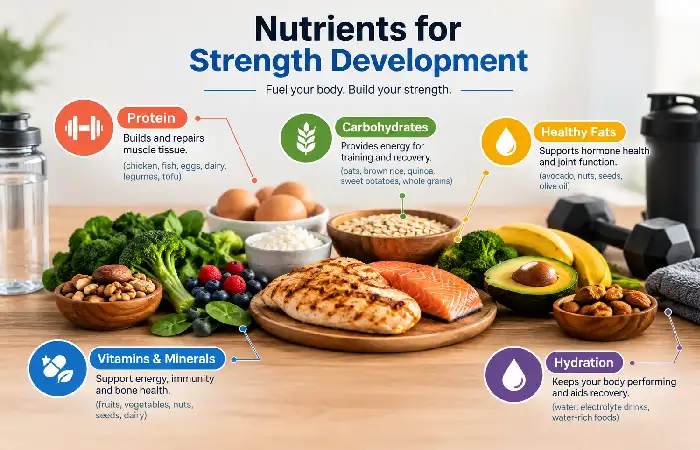
| Nutrient | Main Function | Common Sources |
| Protein | Muscle repair and growth | Chicken, fish, eggs, dairy, legumes |
| Carbohydrates | Training fuel | Rice, oats, potatoes, fruit |
| Healthy Fats | Hormonal support | Nuts, seeds, olive oil |
| Calcium | Bone health | Milk, yoghurt, cheese |
| Magnesium | Muscle function | Nuts, spinach, beans |
| Potassium | Fluid balance | Bananas, potatoes |
Protein for Strength: How Much Do You Need?
One of the most discussed topics in strength training is protein for strength development.
Protein provides amino acids that help repair muscle tissue after exercise.
General Protein Recommendations
| Activity Level | Daily Protein Range |
| Sedentary Adults | 0.8 g per kg body weight |
| Recreational Lifters | 1.2–1.6 g per kg |
| Strength Athletes | 1.6–2.2 g per kg |
For example:
- 70 kg individual
- Protein target: 112–154 g daily
High-Quality Protein Sources
Animal-Based Sources
- Chicken breast
- Lean beef
- Fish
- Eggs
- Greek yoghurt
- Cottage cheese
Plant-Based Sources
- Lentils
- Tofu
- Tempeh
- Edamame
- Beans
- Soy products
Spreading out protein could ultimately be more advantageous to protein synthesis in muscle than consuming the bulk of the protein in only one dose.
Best Foods for Strength and Recovery
So much has been placed on supplements, most overlook the importance of everyday nourishment. Whole foods are the foundation to performance.
Foods for Strength
Breakfast Options
- Oats with berries and Greek yoghurt
- Eggs with wholegrain toast
- Smoothie with fruit and protein
Lunch Options
- Chicken, rice and vegetables
- Turkey wrap with salad
- Tuna and potato bowl
Dinner Options
- Salmon with sweet potatoes
- Lean beef with rice
- Tofu stir-fry with vegetables
Recovery Snacks
- Greek yoghurt
- Cottage cheese
- Protein shake
- Banana with peanut butter
Creatine for Strength: What Does Research Show?
Creatine for strength is one of the most researched sports supplement. Creatine is also stored naturally in the muscles, it can be used as fuel to help sustain work rate during high intensity exercise.
Potential Benefits
- Supports short-duration power output
- May improve training volume
- Helps replenish energy stores during intense exercise
- Widely researched in resistance training populations
Expectations Management
Creatine is not a shortcut to strength gains.
Results vary depending on:
- Training quality
- Nutrition habits
- Recovery practices
- Individual response
Most users notice gradual improvements over weeks rather than immediate dramatic changes.
Recovery After Strength Training
Why Recovery Matters
Training creates microscopic muscle damage. Recovery allows the body to repair and adapt.
Without adequate recovery:
- Fatigue may accumulate
- Performance may decline
- Injury risk may increase
- Progress can slow
Recovery Workflow After a Strength Session
| Step | Action |
| 1 | Cool down after training |
| 2 | Rehydrate with water |
| 3 | Consume protein and carbohydrates |
| 4 | Perform light movement if needed |
| 5 | Prioritise quality sleep |
| 6 | Allow recovery before training the same muscles intensely again |
This workflow supports effective recovery after strength training while helping maintain training consistency.
Sleep and Muscle Strength

The Connection Between Sleep and Strength
One of the most powerful recovery tools is sleep.
Sleep and muscle strength are associated because valuable recovery occurs while a person is sleeping.
Benefits associated with adequate sleep include:
- Improved recovery
- Better focus during workouts
- Reduced perceived fatigue
- Support for muscle repair
How Much Sleep Is Recommended?
| Age Group | Recommended Sleep |
| Teenagers | 8–10 hours |
| Adults | 7–9 hours |
| Older Adults | 7–8 hours |
Improving Sleep Quality
- Maintain a regular sleep schedule
- Reduce screen exposure before bed
- Keep the room cool and dark
- Limit caffeine late in the day
- Create a relaxing bedtime routine
Comparing Recovery Strategies
Recovery Method Comparison
| Recovery Method | Benefits | Limitations |
| Quality Sleep | Supports overall recovery | Requires consistency |
| Proper Nutrition | Provides repair nutrients | Planning required |
| Hydration | Supports performance and recovery | Easy to neglect |
| Active Recovery | May reduce stiffness | Not a substitute for rest |
| Massage | Can improve comfort | May not directly increase strength |
| Stretching | Supports mobility | Limited effect on strength gains |
No single recovery strategy replaces the others. The best approach combines several habits consistently.
Common Mistakes That Slow Strength Progress
- Not Eating Enough
Some individuals train hard but fail to consume enough calories to support recovery.
- Inadequate Protein Intake
Low protein consumption may limit muscle repair.
- Poor Sleep Habits
Late nights and inconsistent sleep schedules can affect recovery quality.
- Training Too Often
More training is not always better. Muscles require time to recover.
- Ignoring Hydration
Even mild dehydration can affect workout performance.
What Results Should You Realistically Expect?
Strength gains rarely happen overnight.
Realistic expectations include:
- Early improvements often come from learning movement patterns
- Consistent training typically produces gradual progress
- Nutrition and recovery support long-term adaptation
- Individual results vary according to age, genetics, training history and programme quality
The most successful lifters usually focus on consistency rather than quick fixes.
Sample Daily Nutrition and Recovery Plan
| Time | Activity |
| 7:00 AM | Breakfast with protein and carbohydrates |
| 10:00 AM | Hydration and fruit snack |
| 1:00 PM | Balanced lunch |
| 4:00 PM | Pre-workout snack |
| 6:00 PM | Strength training session |
| 7:30 PM | Recovery meal with protein |
| 10:00 PM | Sleep preparation |
| 10:30 PM | Bedtime |
Conclusion
Strength is not gained alone through lifting weights. Correct Nutrition & Recovery for Strength is about providing a proper environment for appropriate training adaptations to occur. Correct nutrition for strength training, adequate protein intakes for strength training, correct use of creatine for strength training, good quality sleep and muscle strength habits, and constant recovery will result in progressing in the long run. Step away from looking for magic pills or quick fixes.