
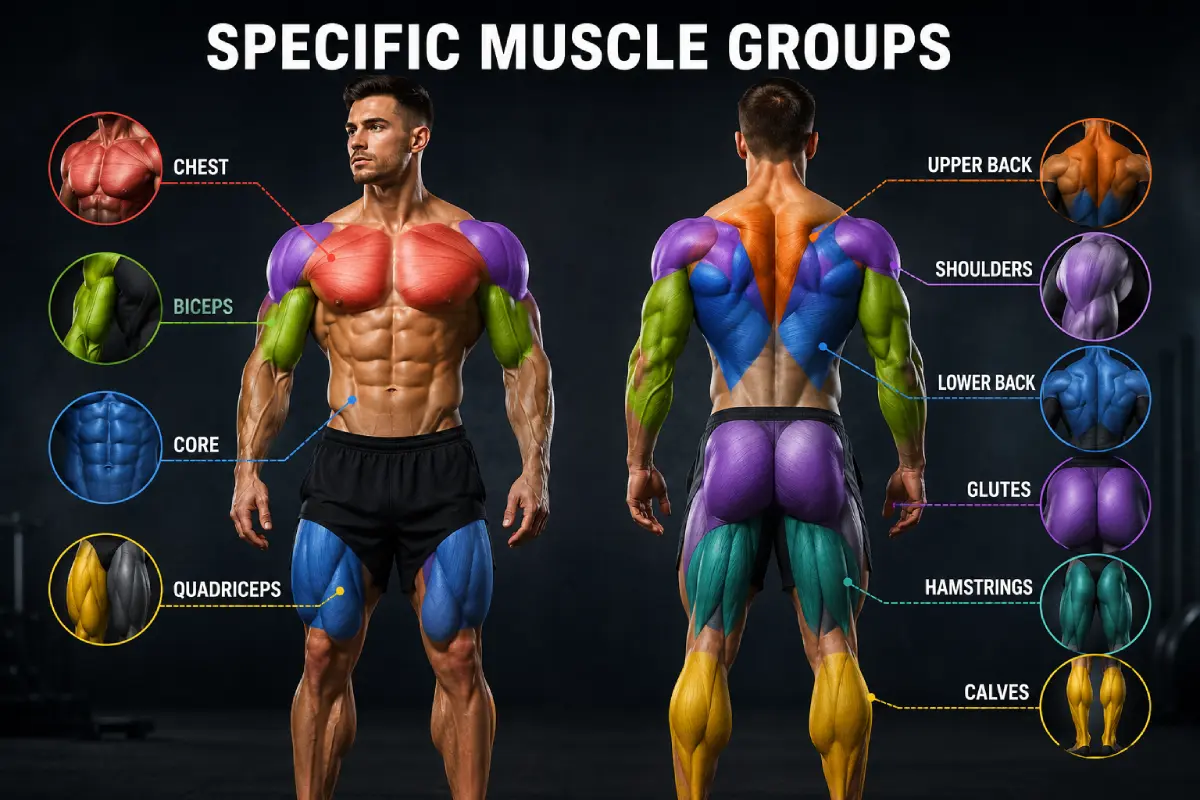
Building muscle is not about lifting heavy weights. To really build muscle you need to understand how the different muscle groups work and how often you should train the muscle groups. You also need to figure out which exercises are best, for the muscle groups.
If you want arms or a stronger chest or more powerful legs you should focus on training the arms or the chest or the legs.
This will help you make a training plan that will really work for you over time. This guide will tell you the basics of building muscle and what you can really expect when you train the muscle groups, like the arms or the chest or the legs.
Targeting individual muscles is important, but it should be part of a complete growth strategy. Explore our How to Build Muscle Fast for a comprehensive approach to building size and strength.
This Article is part of the Muscle Gain
What Are Specific Muscle Groups?
Specific muscle groups are collections of muscles that perform similar movements and can be trained together. And also Common muscle groups include:
- Chest
- Back
- Shoulders
- Arms (biceps and triceps)
- Legs (quadriceps, hamstrings, glutes and calves)
- Core
In almost all workout programs, the training session is organized by muscles, which prevents the over-training and leads to more or less even physical development. Before focusing on individual body parts, it’s important to understand the principles of hypertrophy, progressive overload, and recovery. Learn more in our Muscle Building Fundamentals Guide.
Why Training Specific Muscle Groups Matters
A structured muscle-group approach provides several advantages:
- Better workout organisation
- Easier progress tracking
- Improved recovery management
- Reduced risk of overtraining
- Balanced physique development
In fact, most beginners actually work out full-body every single day. However, muscle only gets bigger during your resting days. By splitting up workouts by muscle groups, you are giving muscles a chance to rest and rebuild stronger. Specific muscle development requires the right exercise selection, training volume, and progression methods. Explore our Workout & Training Guide for proven muscle-building strategies.
Build Arm Muscles Fast: Effective Strategies
The arms consist primarily of the biceps and triceps. Relatively smaller muscle, they tend to do quite well in progressive overloading and repeated training stimulus.
Best Exercises for Arm Growth
Biceps
- Barbell curls
- Dumbbell curls
- Hammer curls
- Chin-ups
Triceps
- Close-grip bench press
- Tricep pushdowns
- Overhead extensions
- Dips
Arm Training Workflow
| Step | Action |
| 1 | Warm up with light resistance |
| 2 | Perform compound exercises first |
| 3 | Add isolation movements |
| 4 | Focus on full range of motion |
| 5 | Recover for 48–72 hours |
Expectations
Most individuals can expect measurable arm growth after 8–12 weeks of consistent training and adequate nutrition. Even the best muscle-specific workout plan will produce limited results without proper nutrition. Read our Muscle-Building Nutrition Guide to support muscle growth effectively.
Build Chest Muscle Fast With Compound Movements

The chest muscles play a major role in pushing movements and also upper-body strength.
Top Chest-Building Exercises
- Barbell bench press
- Incline dumbbell press
- Push-ups
- Chest dips
- Cable flyes
Common Mistakes
- Using excessive weight with poor form
- Neglecting incline exercises
- Training chest too frequently
- Inadequate recovery
Chest Growth Expectations
Growth of your chest is different and depending on your genes and quality of training and nutrition. Visible result can often be observed from two to three months of dedicated training. A structured meal plan can help provide the calories and protein needed for balanced muscle development. Check out our Muscle-Building Diet Plans.
Build Back Muscle Fast for Strength and Posture
Some of the body’s largest muscle groups are located in the back; they include latissimus dorsi, rhomboids and trapezius.
Key Benefits of Back Training
- Improved posture
- Greater pulling strength
- Enhanced athletic performance
- Balanced upper-body development
Recommended Back Exercises
- Deadlifts
- Pull-ups
- Lat pulldowns
- Bent-over rows
- Seated cable rows
Comparison of Popular Back Exercises
| Exercise | Primary Focus | Difficulty |
| Pull-Ups | Lats | High |
| Lat Pulldown | Lats | Moderate |
| Deadlift | Entire posterior chain | High |
| Cable Row | Mid-back | Moderate |
| Barbell Row | Upper and mid-back | High |
Realistic Results
Back muscles often grow steadily due to their size and frequent use during compound exercises. Certain supplements may help support recovery and performance when training specific muscle groups frequently. Learn more in our Muscle-Building Supplements Guide.
Build Leg Muscle Fast Through Progressive Overload
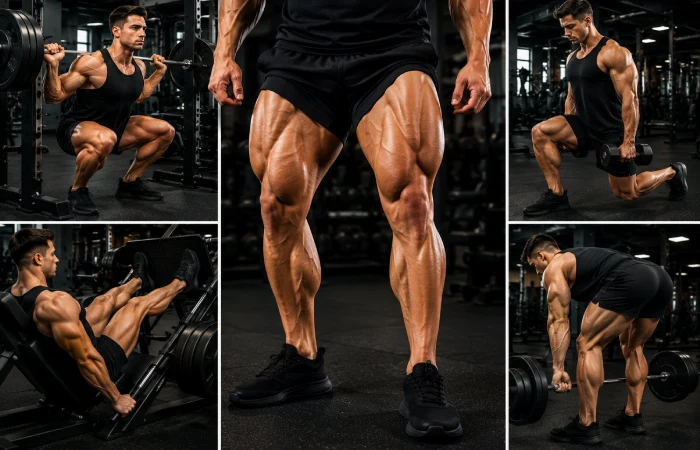
Major Leg Muscles
- Quadriceps
- Hamstrings
- Gluteal muscles
- Calves
Best Leg Exercises
- Squats
- Romanian deadlifts
- Leg press
- Lunges
- Step-ups
Why Leg Training Matters
Strong lower body can translate to stronger whole-body training and potentially allow better training efforts in your other muscle groups. The best training approach for specific muscle groups often depends on your training background and skill level. Read our Muscle Building by Experience Level Guide.
Build Shoulder Muscle Fast Safely
Shoulders contribute to both aesthetics and functional strength.
Main Shoulder Areas
- Anterior deltoid
- Lateral deltoid
- Posterior deltoid
Effective Shoulder Exercises
- Overhead press
- Dumbbell shoulder press
- Lateral raises
- Rear delt flyes
- Face pulls
Injury Prevention Tips
- Avoid excessive weight
- Maintain controlled movement
- Strengthen rear deltoids
- Warm up shoulder joints thoroughly
Sample Weekly Muscle Group Training Plan
| Day | Muscle Groups |
| Monday | Chest and Triceps |
| Tuesday | Back and Biceps |
| Wednesday | Rest or Active Recovery |
| Thursday | Legs |
| Friday | Shoulders and Core |
| Saturday | Optional Full-Body Session |
| Sunday | Rest |
This structure provides sufficient recovery while maintaining consistent training frequency.
Nutrition for Specific Muscle Groups
When training and nutrition are balanced the muscles will be built.
Key Nutritional Priorities
Protein
We recommend around 1.6 – 2.2 grams per kilogram of your body weight on a daily basis.
Carbohydrates
Support workout performance and recovery.
Healthy Fats
Help hormone production and overall health.
Hydration
Supports muscle function and recovery processes.
Common Limitations That Affect Muscle Growth
Even effective training programmes can produce slower-than-expected results due to:
- Inconsistent workouts
- Poor sleep quality
- Insufficient calorie intake
- Inadequate protein consumption
- Excessive cardio volume
- Unrealistic expectations
Muscle growth takes time and usually months.
Frequently Asked Questions
What are specific muscle groups in fitness?
Muscle groupsare discrete parts of the body such as the back, shoulders, chest, arms and legs that you train using isolation-resistance exercises.
Can I train the same muscle group every day?
The absolute minimum amount of rest that a majority of your muscle groups needs to rest in between heavy workouts is forty eight hours.
Which muscle group grows fastest?
Growth rates vary by individual. Beginners often notice early improvements in chest, shoulders and arm muscles due to initial training adaptations.
How many exercises should I perform per muscle group?
I will add 3-5 exercises per muscle group per workout depending on training experience and recovery abilities. Age, gender, and lifestyle factors can influence training priorities and muscle-development goals. Learn more in our Muscle Building by Demographic Guide.
Conclusion
Working your muscle groups is the best training option for you. Focusing on chest back arms legs and shoulders ensures a balanced routine and a better development for your muscles. Everyone is different so results will vary. But if you do resistance training eat well and rest properly you will make progress with your muscles. It is, about doing it consistently and being patient.