
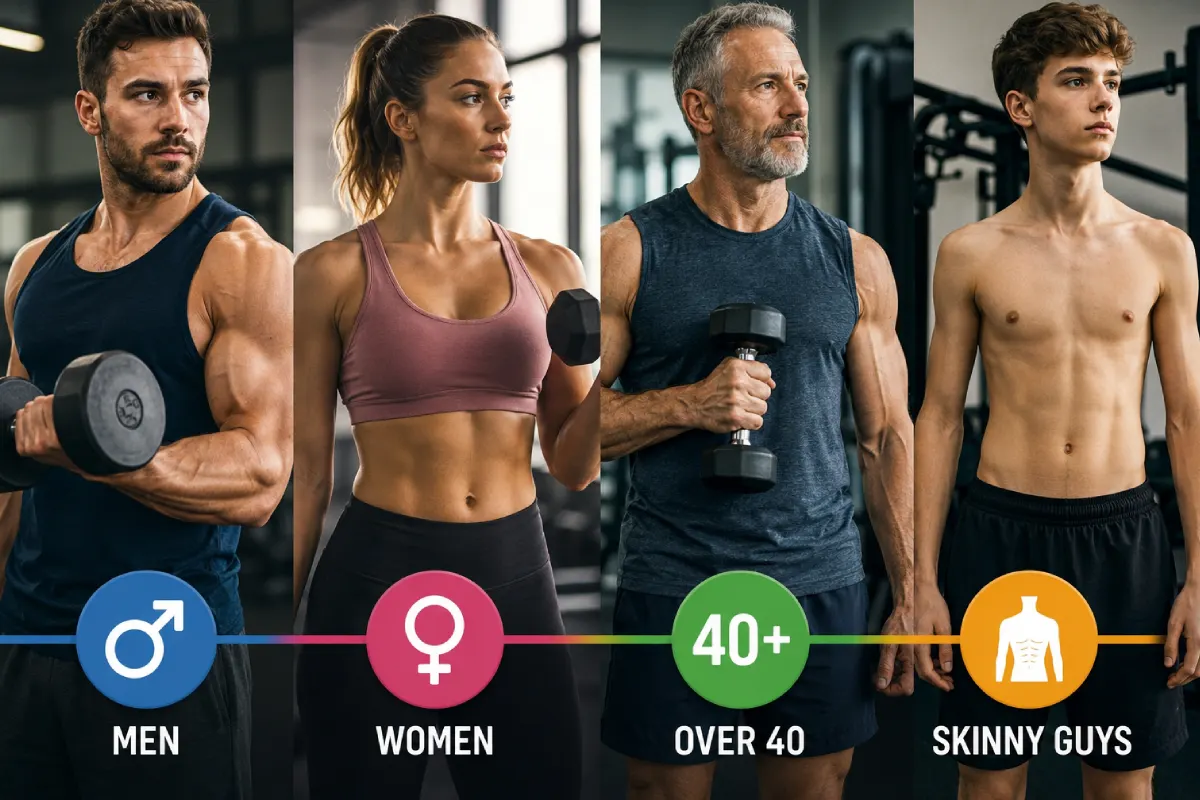
Muscle-Building Isn’t a One-Size-Fits-All Affair The same principles of progressive overload, sufficient protein and rest applies for all the following points, but muscle building by demographics is nuanced and can vary from person to person depending on their sex, age, hormone levels and frame. A strategy that yields the same results for a 20-year-old guy might be a little ineffective when training an adult woman or a naturally lean individual of more than 40 years old. Muscle-building results can vary based on age, gender, and lifestyle factors. Explore our How to Build Muscle Fast for a complete approach to gaining muscle effectively.
This Article is part of the Muscle Gain
Why Demographics Matter in Muscle Building
Several factors influence muscle growth:
- Hormonal differences
- Age-related muscle changes
- Recovery capacity
- Metabolic rate
- Body composition
- Training experience
- Lifestyle factors
Recognizing these variables allows individuals to optimize their muscle-building programmers’ without relying on unrealistic expectations.
Regardless of demographic differences, the basic principles of hypertrophy and progressive overload remain the same. Learn more in our Muscle Building Fundamentals Guide.
Muscle Building Comparison by Demographic
| Demographic | Primary Goal | Training Focus | Protein Target | Recovery Priority |
| Men | Size and strength | Progressive overload | 1.6–2.2g/kg | Moderate |
| Women | Lean muscle development | Strength + hypertrophy | 1.6–2.2g/kg | Moderate |
| Adults Over 40 | Muscle preservation and growth | Strength training | 1.8–2.2g/kg | High |
| Skinny Guys | Mass gain | Calorie surplus + resistance training | 1.6–2.2g/kg | High |
Build Muscle Fast for Men
Higher testosterone levels men naturally have higher than women, can facilitate better muscle mass growth possibilities than women.
Recommended Training Approach
- Train 4–6 days weekly
- Focus on compound lifts
- Use progressive overload
- Prioritise strength and hypertrophy phases
Effective Exercises
- Squats
- Deadlifts
- Bench press
- Pull-ups
- Overhead press
- Barbell rows
Nutrition Considerations
Men aiming to build muscle quickly typically benefit from:
- Moderate calorie surplus
- Protein-rich meals
- Adequate carbohydrates
- Consistent hydration
Expectations
A beginner may even pack on muscle even faster during the first year of training. Progress naturally slows as experience increases. Training programs should be adjusted to match individual needs and fitness goals. Explore our Workout & Training Guide for effective muscle-building routines.
Muscle Building for Women

Key Benefits
- Increased strength
- Better metabolic health
- Improved bone density
- Enhanced athletic performance
Training Recommendations
Women often respond exceptionally well to:
- Resistance training 3–5 times weekly
- Higher training volume
- Lower-body focused exercises
- Progressive strength development
Example Exercise Selection
Lower Body
- Squats
- Hip thrusts
- Lunges
- Romanian deadlifts
Upper Body
- Push-ups
- Dumbbell presses
- Rows
- Lat pulldowns
Nutrition Priorities
- Protein at each meal
- Whole-food carbohydrates
- Healthy fats
- Adequate recovery nutrition
Limitations
Muscle growth takes time. Significant physique changes usually require months of consistent effort rather than weeks. Nutritional requirements often vary depending on age, activity level, and body composition. Read our Muscle-Building Nutrition Guide to optimize your diet for growth.
Building Muscle Over 40
Muscle Loss Ages After 40 Even when men pass the 40 year old mark and sarcopenia or the age related loss of muscle become an issue it is still possible to produce and utilize very large amount of muscle mass and strength.
Common Challenges
- Slower recovery
- Reduced anabolic response
- Joint discomfort
- Lifestyle stress
Best Training Strategy
Focus on Strength First
Prioritise:
- Compound movements
- Controlled technique
- Progressive loading
- Recovery days
Recovery Becomes Essential
Include:
- Quality sleep
- Mobility work
- Active recovery sessions
- Stress management
Nutrition Considerations
Older adults may benefit from:
- Higher protein intake
- Consistent meal timing
- Adequate vitamin D
- Sufficient calcium intake
Realistic Expectations
Building muscle in your 40s is totally achievable, but keep your expectations at least somewhat realistic, as you are not likely to get the same kinds of results at the same pace you would when you are 20. Mostly though, just aim to make training part of a regular routine rather than making each workout all-out. A personalized eating plan can help support muscle growth while meeting your unique nutritional needs. Check out our Muscle-Building Diet Plans Guide.
How Skinny Guys Gain Muscle

It can be very common for lean people, skinny in nature, to hit obstacles when they can’t gain muscle even while training intensely. Knowing how to build muscle skinny people know the right ways to use nutrition, and know how to be consistent in their training. Supplement choices may differ based on training goals, recovery needs, and demographic factors. Learn more in our Muscle-Building Supplements Guide.
Common Mistakes
- Not eating enough calories
- Excessive cardio
- Inconsistent workouts
- Insufficient recovery
Muscle-Gain Strategy
Step 1: Create a Calorie Surplus
Consume more calories than you burn daily.
Step 2: Prioritise Protein
Aim for quality protein sources such as:
- Chicken
- Fish
- Eggs
- Dairy
- Lean beef
- Legumes
Step 3: Focus on Compound Lifts
Build programmes around:
- Squats
- Deadlifts
- Bench presses
- Pull-ups
Step 4: Track Progress
Monitor:
- Body weight
- Strength levels
- Training performance
Expectations
Healthy muscle gain often occurs gradually. Rapid weight gain may increase body fat rather than muscle tissue.
Muscle Building Workflow
Step 1: Assess Your Starting Point
Identify:
- Age
- Training experience
- Body composition
- Activity level
Step 2: Set Realistic Goals
Examples:
- Gain 2–4 kg of muscle over several months
- Improve strength on major lifts
- Increase lean body mass percentage
Step 3: Follow a Structured Programme
Train consistently for at least 12 weeks before making major changes.
Step 4: Optimise Nutrition
Prioritise:
- Protein intake
- Calorie management
- Hydration
Step 5: Monitor and Adjust
Review progress every 4–6 weeks and make gradual adjustments. Training experience can influence how quickly muscle is gained and which methods are most effective. Read our Muscle Building by Experience Level Guide.
Expectations Management: What Results Are Realistic?
Muscle-building results vary significantly between demographics.
| Experience Level | Expected Muscle Gain Potential |
| Beginner | Faster progress |
| Intermediate | Moderate progress |
| Advanced | Slower progress |
| Over 40 Beginner | Steady but gradual progress |
Important factors include:
- Genetics
- Consistency
- Sleep quality
- Nutrition
- Recovery habits
There is no universally “perfect” timeline for muscle growth.
Benefits and Limitations of Demographic-Based Muscle Building
Benefits
- More personalised programming
- Better recovery management
- Improved adherence
- Realistic expectations
- Reduced injury risk
Limitations
- Individual differences still matter
- Genetics influence outcomes
- Progress varies considerably
- Lifestyle factors can affect results
Frequently Asked Questions
What is muscle building by demographic?
Muscle building by demographic is really about changing the way you train and eat and take care of yourself based on how old you’re if you are a man or a woman and what kind of body you have. This helps you build muscle better.
Can women build muscle effectively?
Yes. Women can get really strong. Build a lot of muscle if they do the right kind of exercises and eat the right food.
Is building muscle over 40
Yes it is. If you do strength training. Eat enough protein you can build and keep muscle even when you are, over 40 years old.
Conclusion
Building muscle is different for people of ages and backgrounds. Men should know this about building muscle, or at least a little about it differently from women. Women should make sure and work out smarter, that is, focus on things that work. If your age is over 40 and you’re trying to build muscle, know this – your body doesn’t work the way it use to. If you’re skiny and trying to build muscle, don’t give up.
The best way to build muscle is to do strength training exercises eat food and keep doing it for a long time. Building muscle is not about doing things that work for someone else it is about finding what works for you and sticking to it. Muscle building for men, muscle building for women building muscle, over 40 and muscle building for guys all need to be done in a way that is consistent and sustainable. Different populations may prioritize different muscle groups based on performance goals, aesthetics, or daily activities. Explore our Specific Muscle Groups Guide for targeted training advice.