
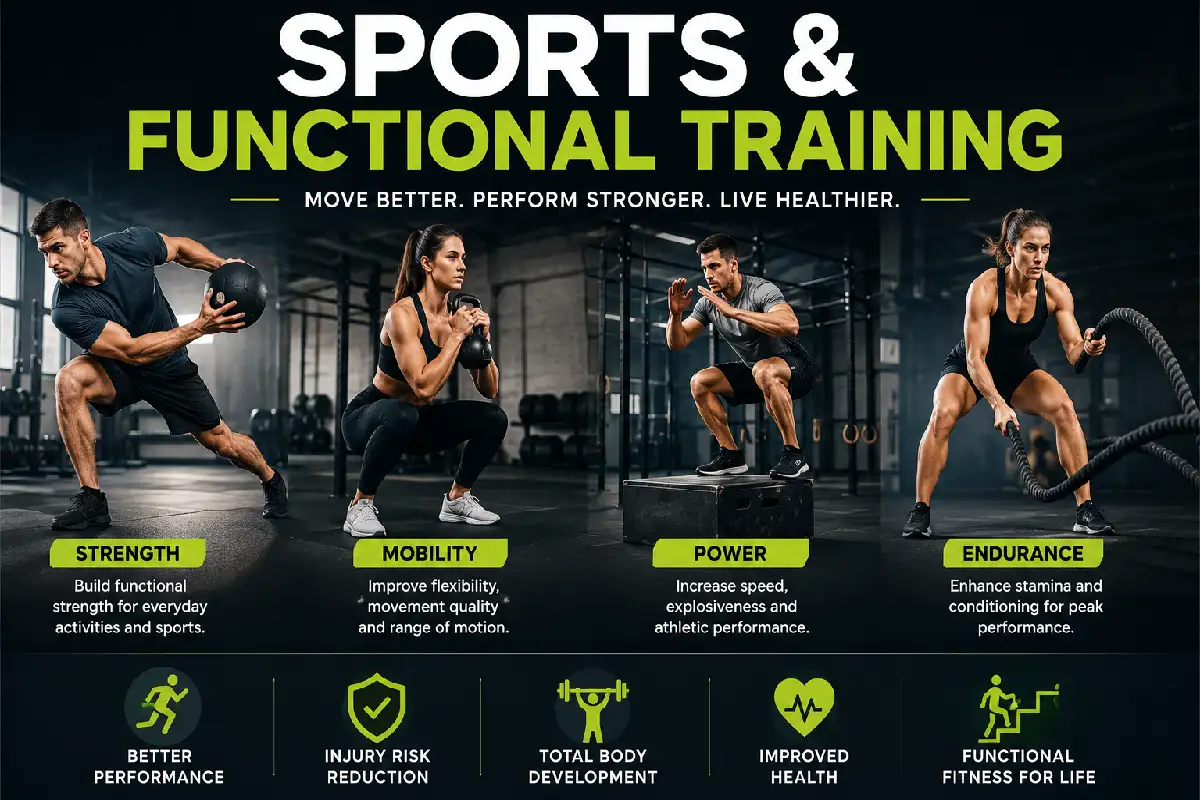
Sports and functional training is a way to get in shape. This is good for athletes and people who like to stay active. Functional training does not just focus on building muscles it does a lot more than that. Sports and functional training helps people get stronger and better at moving It also helps with balance and endurance which’s really important, for Sports and functional training.
People who play sports like tennis can really benefit from training. This type of training is also great for people who enjoy doing arts. If you like to climb or you just want to be able to move around functional training can be very helpful. Functional training is something that can help people who like to do things, like tennis and arts. It can also help people who like to climb and just move around. Sports performance depends on more than just grip strength. Follow our Forearm Workouts to develop strength, endurance, power, and overall forearm function.
This Article is part of the Workout Plans
What Is Sports & Functional Training?
Gym workouts and weight machines often isolate single muscles.Functional exercises recruit many joints and muscle groups that are all working together.
Common movement patterns include:
- Squatting
- Lunging
- Pushing
- Pulling
- Rotating
- Carrying
- Jumping
- Sprinting
Sports training applies these movements to improve athletic performance in specific activities such as tennis, football, basketball, martial arts, and climbing. Understanding how the forearm muscles contribute to movement and stability can help athletes train more effectively. Learn more in our Forearm Anatomy.
Benefits of Sports & Functional Training
Improved Athletic Performance
When you’re a serious athlete, you need speed, coordination, agility and power. And that is precisely what training functional movements develop instead of individual muscles.
Better Everyday Movement
Things like grocery shopping, walking up stairs, and picking things up seem much easier and much more fluid and also when the body moves the right way.
Reduced Injury Risk
Developing muscles in a way and having better mobility can really help reduce injuries that happen when we move in a way that is not good for our bodies.
Increased Core Stability
Most functional exercises require the core to stabilise the body during movement.
Enhanced Mobility and Flexibility
Dynamic movements improve joint range of motion while developing usable strength.
Sport-specific performance improves when supported by targeted strength training. Explore our collection of Forearm Exercises to build stronger and more resilient forearms.
Sports & Functional Training vs Traditional Gym Training
| Feature | Sports & Functional Training | Traditional Gym Training |
| Focus | Movement quality | Muscle isolation |
| Exercises | Multi-joint movements | Single-muscle exercises |
| Athletic Transfer | High | Moderate |
| Coordination Development | Excellent | Limited |
| Core Engagement | High | Moderate |
| Everyday Function | Strong carryover | Moderate carryover |
Both training methods work well. Functional training usually gives you more benefits when it comes to moving around. Functional training is really good, for helping you with all kinds of movements.
Many functional forearm exercises can be performed without access to a gym. Follow our Home Forearm Training for practical workouts you can do anywhere.
Essential Components of a Functional Training Programme
Strength Development
Strength forms the foundation of athletic performance.
Examples:
- Deadlifts
- Squats
- Farmer carries
- Kettlebell swings
Mobility Training
Mobility exercises help maintain healthy movement patterns.
Examples:
- Hip openers
- Thoracic rotations
- Dynamic stretching drills
Power Development
Power combines strength with speed.
Examples:
- Box jumps
- Medicine ball throws
- Sprint intervals
Balance and Coordination
Improved balance can benefit both athletes and older adults.
Examples:
- Single-leg exercises
- Stability drills
- Agility ladder work
Arm Wrestling Forearm Training
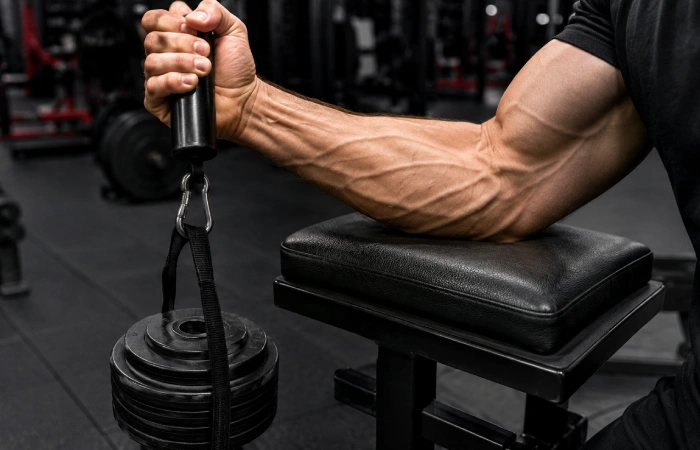
Your forearms can influence arm wrestling in a number of ways. You need grip strength, wrist strength, and durability.
Effective Arm Wrestling Forearm Training Exercises
- Wrist curls
- Reverse wrist curls
- Hammer curls
- Towel pull-ups
- Plate pinches
- Fat grip training
Strong forearms help you control your movements better when you are pulling or twisting. This is really important in arm wrestling.
Resistance training can help athletes improve forearm strength, control, and power. Learn more in our Equipment-Based Forearm Workouts.
Climber Forearm Workout for Grip Endurance
Climbers rely heavily on forearm endurance and finger strength.
Recommended Climber Forearm Workout
Dead Hangs
Improve grip endurance and finger strength.
Fingerboard Training
Targets climbing-specific grip positions.
Farmer Carries
Build total-body stability while strengthening the forearms.
Wrist Roller Exercises
Develop forearm endurance through controlled resistance.
Consistency is key because the sport involves repeated stresses on the muscles of the forearm. A powerful grip is essential for sports such as climbing, wrestling, tennis, martial arts, and arm wrestling. Discover effective techniques in our Grip Strength Training.
Martial Arts Grip Strength Development
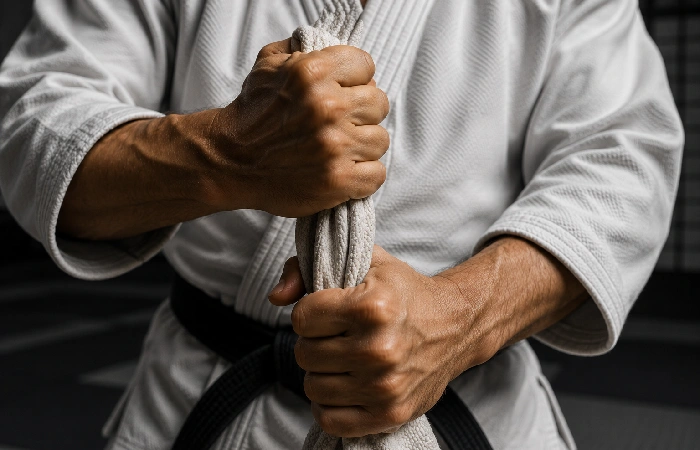
People who do arts get a lot of benefit from having strong grips. This is because strong grips help them control the people they are fighting. Martial arts practitioners also need grips to handle weapons properly.. When martial arts practitioners have strong grips they can strike their opponents with more stability. Strong grips are really important, for martial arts practitioners.
Exercises for Martial Arts Grip Strength
- Gi pull-ups
- Rope climbs
- Towel rows
- Kettlebell carries
- Hand grippers
Grip strength helps a lot in keeping your body stable when you are grappling or clinching with someone.
Increasing forearm muscle mass can improve strength output and support better athletic performance. Read our Forearm Muscle Building Guide for proven growth strategies.
Forearm Exercises for Tennis Performance
Effective Forearm Exercises for Tennis
Reverse Wrist Curls
Help strengthen muscles that support the elbow.
Pronations and Supinations
Improve rotational control used during serves and groundstrokes.
Resistance Band Extensions
Promote balanced forearm development.
Grip Squeezes
Support racket control and endurance.
Proper forearm conditioning may help reduce fatigue during longer matches.
Sample Sports & Functional Training Workflow
1: Warm-Up (10 Minutes)
- Dynamic stretches
- Light jogging
- Mobility drills
2: Strength Block (20 Minutes)
- Squats
- Deadlifts
- Push-ups
3: Functional Movement Block (15 Minutes)
- Farmer carries
- Medicine ball slams
- Lunges
4: Conditioning Block (10 Minutes)
- Sprint intervals
- Rowing machine
- Battle ropes
5: Recovery (5–10 Minutes)
- Stretching
- Breathing exercises
- Light walking
Realistic Expectations from Sports & Functional Training
Many people expect immediate athletic improvements. In reality, progress occurs gradually.
What You May Notice
1–4
- Better movement awareness
- Improved mobility
- Increased exercise confidence
4–8
- Strength gains
- Improved endurance
- Better exercise technique
8–16
- Enhanced athletic performance
- Improved balance and coordination
- Greater overall fitness
There may be changes depending on the quality of sleep, nutrition, the frequency of your training, as well as your fitness level.
Recovery plays a critical role in maintaining performance and reducing injury risk. Follow our Forearm Recovery and Injury Prevention Guide to stay healthy throughout your training.
Common Mistakes to Avoid
Skipping Mobility Work
Mobility is a core component of functional performance.
Using Excessive Weight
Poor technique can reduce effectiveness and also increase injury risk.
Ignoring Recovery
Rest and recovery are essential for adaptation.
Neglecting Progressive Overload
Gradually increasing challenge helps maintain progress.
Who Can Benefit from Sports & Functional Training?
Sports & Functional Training is suitable for:
- Recreational athletes
- Competitive athletes
- Tennis players
- Martial artists
- Climbers
- Adults seeking improved movement
- Individuals returning to exercise
Beginners can start with bodyweight movements before progressing to weighted exercises.
Conclusion
Sports and functional training is a way to get stronger and better at sports. It works by helping you move your body in a way that’s good for you rather than just working on one muscle at a time. This means you can get fit in a way that really helps you in sports and in your life.
If you want to get better at arts and have a stronger grip or if you want to do a workout for your forearms to help with climbing or if you want to get better, at arm wrestling then a functional training program can really help.
It can also help if you play tennis and you want to do exercises that will help your forearms. The key is to have a plan and to stick to it and to make sure you rest and take care of yourself so you can keep getting better over time. Sports and functional training can give you a lot of benefits if you do it in a way.