

Low carb and keto diets are two popular approaches to dieting that have been around for quite some time. Both diets are centered around the concept of food and carbohydrate restriction but differ in the specific level of restriction. Low carb diets aim to restrict food types that are typically rich in carbs including pasta, bread, rice, processed food, and added sugars and limits it whereas it would also allow a moderate reduction in carbohydrates from vegetables and fruits. The keto diet is an eating plan that is low in carbohydrate and high in fat that is designed to enable the body to produce ketones available in ketone bodies and shift towards fat metabolism.
Many people prefer low-carb and ketogenic diets rather than more traditional diets because they reduce satiety and induce fat oxidation without affecting the energy levels throughout the day. The diet pattern generally consists of nutrient dense products such as eggs, nuts, lean meats and fish, healthy oils, seeds and low-carb vegetables. Subtracting or cutting out processed carbohydrates encourages healthier eating habits and helps to control caloric intake.
Who Actually Sticks With a Low-Carb Diet Plan
A low-carb diet plan tends to suit people who want change without turning their whole kitchen upside down. Fruit stays. A bit of wholegrain stays. What goes is the added sugar and the more obviously refined stuff — white bread, sugary cereals, that sort of thing. It’s often where people land if they’ve never counted a macro in their life and don’t especially want to start.
Who this usually fits: someone trying to lose weight steadily, stabilise energy through the day, or just stop the mid-afternoon crash — without weighing every plate.
Who Actually Sticks With a Keto Diet Plan
Keto pulls a different crowd. Some people want quicker results and don’t mind rules being strict rather than vague — oddly, strict is often easier to follow than “everything in moderation.” Others are managing something specific, like insulin resistance, or epilepsy under a doctor’s supervision. Getting into ketosis isn’t instant either; it usually takes a few days, sometimes longer, and it means genuinely giving up most fruit, grains, and anything starchy.
Who this usually fits: someone who doesn’t mind tracking intake fairly closely and is motivated by seeing changes early on, even if some of that early change is just water weight.
Ketogenic Diet Foods vs Ordinary Low-Carb Foods
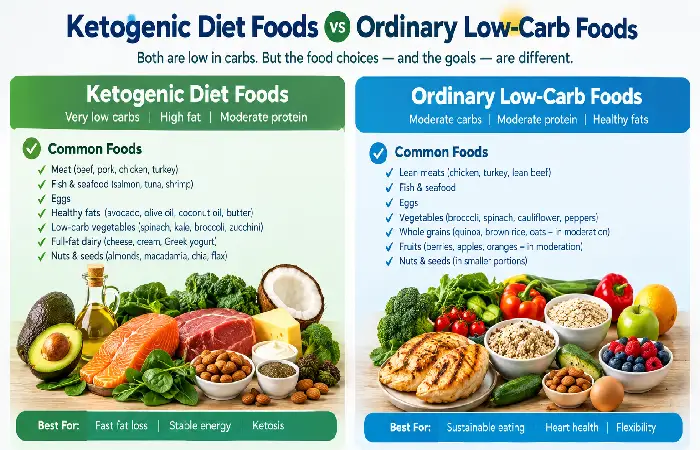
Here’s where things properly split. Ketogenic diet foods have to keep carbs low enough all day to hold ketosis — which knocks out a fair few things that are completely fine on standard low-carb.
| Food Category | Low-Carb Foods | Ketogenic Diet Foods |
| Fruit | Berries, apples, in moderation | Small berry portions, occasionally |
| Grains | A little oats or quinoa | Basically off the table |
| Legumes | Lentils, chickpeas, moderate amounts | Mostly avoided |
| Dairy | Normal use | High-fat versions preferred |
| Fat intake | Moderate | High — often 70%+ of calories |
| Daily carb range | 50–150g | 20–50g |
Take breakfast as an example. A small bowl of oats is nothing on low-carb. On keto, that same bowl could eat up most of your carbs for the entire day.
A Rough Starting Workflow
- Work out what you actually want first — steady, flexible change points toward low-carb; faster results with more discipline points toward keto.
- Track your current carb intake for a few days before touching anything, just so you know your baseline.
- Cut gradually for low-carb. Cut sharply and watch how you feel for keto — the adjustment isn’t the same at all.
- Track fat, protein and carbs properly for the first fortnight, especially on keto — hitting the fat target is trickier than people expect.
- Don’t judge anything before week four. Early weight loss, especially on keto, is often just water.
Morning Routine Suitability
Low-carb mornings are easy enough — Greek yoghurt and berries, eggs on wholegrain toast, a smoothie with some fruit thrown in. Keto mornings take more thought. Cereal’s gone, toast is gone, most fruit is gone. Eggs, avocado, maybe a bulletproof coffee if that’s your thing — though plenty of people find that heavier than they’d like first thing in the morning, and there’s nothing wrong with admitting that.
Evening Routine Suitability
Dinner’s fairly forgiving on both, honestly, since protein and vegetables work either way. The real difference is the side — rice, pasta, bread need replacing entirely on keto, while low-carb just asks for smaller portions rather than cutting them out completely.
Sensitive-User Guidance
Not everyone should just dive in. Anyone with a history of disordered eating, kidney problems, or who’s pregnant or breastfeeding really should speak to a GP or dietitian first — particularly before trying keto, given how restrictive it is. Same goes for anyone on medication for diabetes or blood pressure; cutting carbs can shift how those medications behave fairly quickly, so that’s not something to sort out on your own.
Cost Comparison
Keto usually costs more, in practice. More fat, more protein — olive oil, cheese, nuts, decent cuts of meat — and that adds up faster than a bag of rice ever will. Low-carb tends to sit closer to a normal food budget, since you’re not replacing whole food groups, just trimming portions and swapping a few things out.
Managing Expectations: Keto Diet for Weight Loss
Keto diet for weight loss does tend to show faster results early on — some of that’s water loss as glycogen stores drop, some of it’s genuinely reduced appetite from eating more fat and protein. But that doesn’t mean keto wins long-term. Once you get past those first few weeks, several studies suggest the results between keto and low-carb tend to even out, assuming calories are roughly matched either way.
Worth saying plainly: neither diet works particularly well if it doesn’t fit your life. A strict plan abandoned after six weeks usually achieves less, overall, than a moderate one kept up for a year.
FAQs
What’s the real difference between a low-carb and keto diet?
Both diets cut carbohydrates. Keto goes much further. Usually, under 50 grams a day. To specifically reach ketosis. Low‑carb stays more moderate. Does not chase that particular state.
Is keto better than low-carb for weight loss?
Not really not for the term. The keto diet for weight loss often shows results at first mostly because of water loss.. Over time the results tend to slow down when the number of calories is similar, to other low-carb diets.
Can I eat fruit on keto?
A little — mostly berries, in small amounts. Most fruit has too much natural sugar to fit keto’s carb limits.
How long does it take to get into ketosis?
Usually two to four days of strict carb cutting, though it varies from person to person.
Conclusion
There’s no real winner between low-carb & keto diet — it comes down to what fits your goals, your budget, and how much restriction you can actually live with. Low-carb suits people after steady, manageable change. Keto suits people wanting quicker early movement and comfortable with stricter rules. Both can work. What decides it, more than anything, is which one you’ll still be doing past week four.