
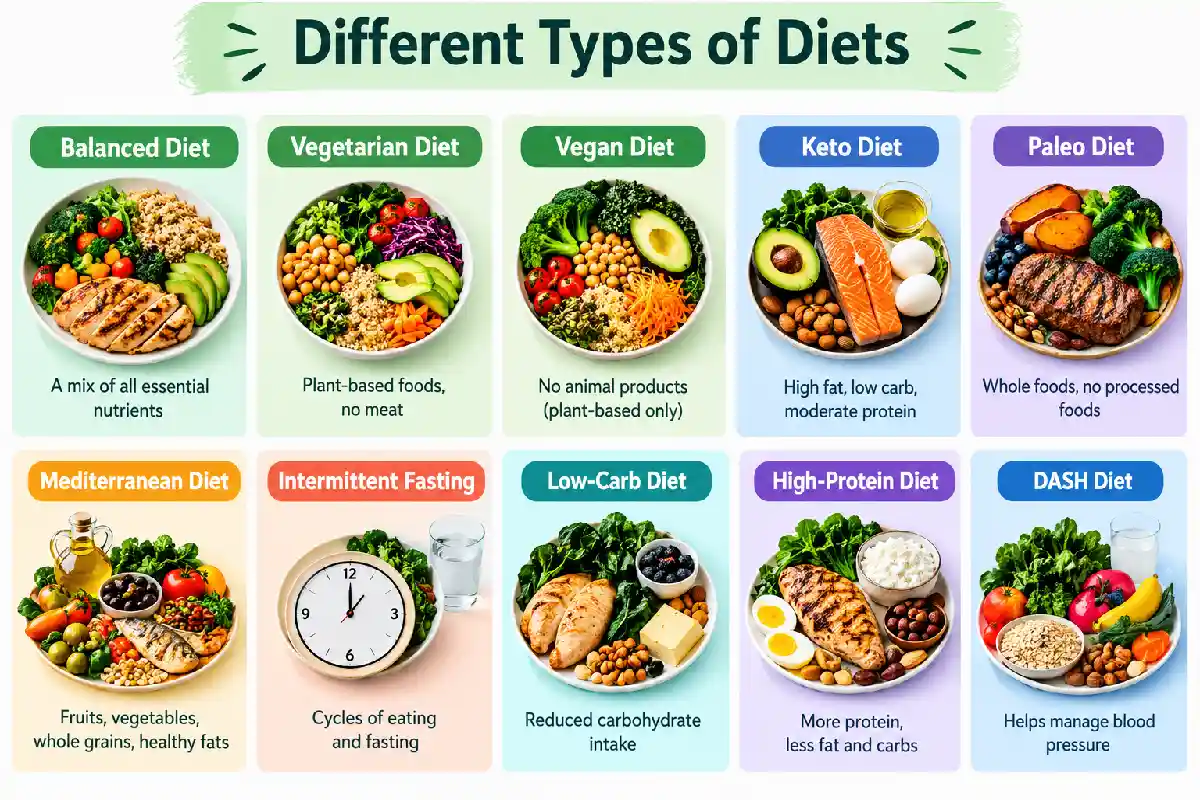
Deciding what kind of diet to follow can be confusing because there are various styles of eating. These eating styles are the Mediterranean diet, vegetarian eating, low carb eating, keto, high protein eating, and fasting. Knowing a little about each diet will help you to compare the various styles of eating by looking at how each diet works, what foods are included and if each diet aligns with your needs, preferences and lifestyle.
A diet that actually works shouldn’t be the trendy or extreme. For most people the key is a diet that delivers the right nutrition to the body in the context of their daily lives and they can stick to long term.
What Are the Different Types of Diets?
Various diets offer different set ups of the foods and eating patterns. Some focus on the types of foods consumed and others will focus on the macronutrients, meal timings or specific health aims.
For instance the Mediterranean diet highlights vegetables, fruit, whole grains, beans, nuts, olive oil and fish. The ketogenic diet limits carbohydrates heavily. Boosts fat intake. A plant-based diet centers, around foods that come from plants and a high-protein diet aims to raise protein consumption on purpose.
There is no one diet that works for every person. What someone needs depends on age, how active they’re any medical issues they might have their food likes, cultural traditions and personal goals.
How to Choose Between Different Diet Plans
Before choosing from the many popular diets available, consider what you are actually trying to achieve.
Your goal might be:
- improving overall diet quality
- losing body weight
- supporting muscle growth
- increasing protein intake
- improving meal structure
- reducing your intake of highly processed foods
- accommodating vegetarian or vegan preferences
- managing a medically diagnosed condition under professional guidance
It is also worth thinking about whether you can stick to the eating pattern at work when you are on the move during gatherings, with friends and when you are having meals with your family.
A diet that seems great on paper might be hard to keep going if it needs foods that’re not easy to find where you live lots of cooking ahead of time or rules that don’t fit with your usual daily habits.
Mediterranean Diet
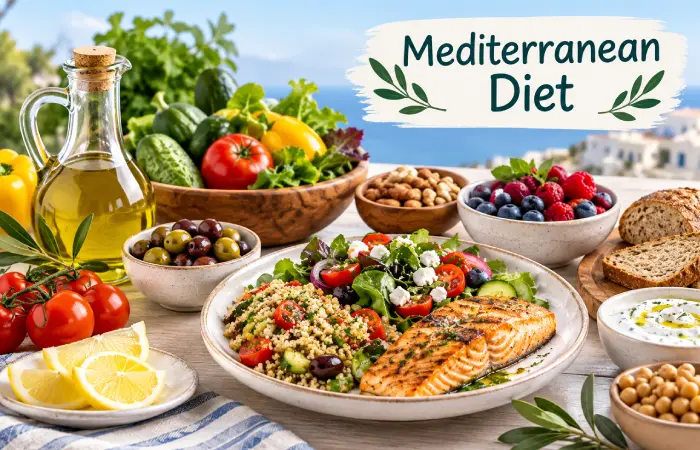
Mediterranean diet is one of the most common popular types of healthy diet that are researched. It draws on the traditional diets of countries that bathe the Mediterranean Sea however, there is no single Mediterranean diet.
The approach generally emphasises:
- vegetables
- fruit
- whole grains
- beans and lentils
- nuts and seeds
- olive oil
- fish and seafood
- moderate amounts of dairy
- smaller amounts of red and processed meat
Rather than focusing on a single macronutrient, the Mediterranean pattern is primarily about overall food quality and dietary balance.
What Does a Mediterranean Diet Meal Look Like?
A typical meal might contain grilled fish, a large portion of vegetables, whole grains and olive oil, followed by fruit.
Another example could be a bean and vegetable salad with whole-grain bread, olive oil and a small serving of yoghurt.
Potential Advantages
While it has a very solid base, the Mediterranean style can be fairly flexible and include a lot of different foods. It might suit people who aren’t interested in counting calories or carbs at each meal.
Limitations
A complete liposuction prescription It isn’t necessarily a weight-loss diet. Water intake You have to pay attention to the size of the portions, especially for high-calorie foods like oil, nuts and cheese.
Low-Carb & Keto Diet
There are many levels of low-carb diets. Keto is sort of the extreme end of low carbs where it is forcing your body to switch from using carbohydrate as its main fuel to using fat and ketones.
Foods commonly included in low-carb approaches include:
- meat and poultry
- fish
- eggs
- non-starchy vegetables
- nuts and seeds
- dairy foods, depending on the plan
- oils and fats
Foods restricted on stricter keto plans can include bread, pasta, rice, potatoes, sugary foods and many high-carbohydrate fruits.
Low-Carb vs Keto
These terms should not be treated as interchangeable.
A regular low carbohydrate eating regimen could have a lot more carbohydrate than the keto diet. As you would anticipate, it is clearly a must to limit carbs properly in a ketogenic food plan.
Potential Benefits
Restrict carbohydrate intake for some to be able to moderate their intake of refined carbohydrate foods.
Limitations
Having a meal at a restaurant and planning the family menu may be more difficult with such severe carbohydrate restriction and most people find it difficult enough to eat out socially. Some have a few undesirable symptoms on a significant dietary change, such as, headaches, tiredness and/or GI symptoms.
People should not take medicine for diabetes or other illnesses without consulting with a licensed healthcare provider before doing anything major to their diet.
Plant-Based Diet
Eating plant-based is food that is predominantly from plants. You should remember, eating plant-based does not necessarily mean you are vegan.
Some people following a plant-focused diet still eat eggs, dairy, fish or occasional meat.
Common plant foods include:
- vegetables
- fruits
- beans
- lentils
- peas
- whole grains
- nuts
- seeds
- tofu and other soy foods
A vegan diet, by contrast, excludes animal-derived foods.
Benefits and Limitations
A well-planned plant-based diet can provide substantial fibre, vitamins, minerals and beneficial plant compounds.
Animal foods are not the only source of nutrients Vegetarian and vegan diets may be lacking some nutrients. Nutrients such as vitamin B12, iron, iodine, calcium, vitamin D, and omega-3 fats need special attention. Non-meat eaters need to plan meals to include these nutrients and avoid deficiencies which may occur even on vegetarian diets.
Fortified foods and supplements may be useful for some people, particularly where dietary intake is insufficient.
High-Protein Diet
A high-protein diet increases the proportion or total amount of protein consumed compared with a person’s usual diet.
Protein-rich foods include:
- chicken and turkey
- fish
- eggs
- Greek yoghurt
- cottage cheese
- milk
- tofu
- tempeh
- beans and lentils
- lean meat
- protein-rich grains and other plant foods
Protein is particularly relevant to people who perform resistance training because it provides amino acids needed for muscle protein synthesis.
However, more protein is not automatically better. Total energy intake, training, sleep, carbohydrate intake, dietary fats and overall food quality also matter.
High-Protein Diet for Weight Loss
A higher-protein eating pattern may help some people feel fuller and preserve lean mass while losing weight, particularly when combined with resistance training.
It is still possible to consume too many calories on a high-protein diet. Foods such as cheese, fatty meats, nuts and some protein bars can be energy-dense.
For healthy adults, protein requirements vary according to body size, activity level and goals. People with kidney disease or other relevant medical conditions should seek individual advice before substantially increasing protein intake.
Intermittent Fasting
Intermittent fasting focuses primarily on when you eat rather than prescribing one particular list of foods.
Common approaches include:
- time-restricted eating
- alternate-day fasting
- 5:2-style approaches
- overnight fasting periods
Time-restricted eating might involve eating meals within a consistent daily window and avoiding food for the remaining hours.
How Does Intermittent Fasting Work?
A simple example is eating breakfast at 8 am, having the final meal at 6 pm and then avoiding caloric food until breakfast the next morning.
The precise schedule can vary considerably.
Intermittent fasting can help some people reduce their overall energy intake because there are fewer hours available for eating. However, it does not eliminate the importance of food quality or total energy intake.
Who Should Be Careful?
Fasting is not suitable for everyone. Children and adolescents, pregnant or breastfeeding people, and people with certain medical conditions or a history of eating disorders may need to avoid fasting or only consider it under professional supervision.
Popular Diet Plans Compared
The following table provides a practical overview of several popular diets.
| Diet approach | Main focus | Foods commonly emphasised | Potential advantage | Common limitation |
| Mediterranean | Overall food quality | Vegetables, whole grains, beans, fish, olive oil | Flexible and varied | Portions still matter |
| Low-carb | Reduced carbohydrate intake | Protein, vegetables, fats | Can simplify carbohydrate reduction | Can be restrictive |
| Keto | Very low carbohydrate | Fats, protein, low-carb vegetables | Structured carbohydrate restriction | More difficult to maintain |
| Plant-based | Predominantly plant foods | Vegetables, fruit, legumes, grains | High-fibre food choices | Nutrient planning may be needed |
| High-protein | Increased protein intake | Meat, fish, eggs, dairy, legumes | Useful for satiety and training goals | Can become calorie-dense |
| Intermittent fasting | Meal timing | Varies by eating pattern | Simple timing structure for some | Hunger and social schedules can be challenging |
These approaches can also overlap. For example, someone could follow a predominantly plant-based diet while eating a relatively high amount of protein.
Healthy Diet Types: What Should a Balanced Diet Include?
Instead of judging a diet solely by its name, examine what you actually eat throughout the day.
A generally balanced eating pattern can include:
Protein
Protein sources can include fish, poultry, eggs, dairy, beans, lentils, tofu and other protein-rich foods.
Fruit and Vegetables
Aim for a broad variety of colours and types rather than relying on only a few vegetables.
Whole Grains and Other Carbohydrates
Oats, whole-grain bread, brown rice, potatoes and other minimally processed carbohydrate sources can provide energy and nutrients.
Healthy Fats
Nuts, seeds, olive oil, avocado and oily fish can contribute unsaturated fats to the diet.
Fluids
Water should generally be the main drink for most people, although individual fluid needs vary.
A healthy diet is therefore more than simply choosing a category such as “low-carb” or “high-protein”.
Different Diets and Protein: Why It Matters
Because this website focuses on high-protein diets, it is useful to understand how protein fits into different eating patterns.
Protein can be obtained from both animal and plant sources.
For example:
Animal sources
- chicken
- turkey
- fish
- eggs
- milk
- yoghurt
- cottage cheese
Plant sources
- lentils
- chickpeas
- beans
- tofu
- tempeh
- peas
- nuts
- seeds
An active person may require more protein than someone who is sedentary. The amount may vary depending on body size, amount of training, age, or overall health.
A better approach than trying to get as much protein as possible all the time is to eat enough protein at each meal and eat a varied diet.
Diet Selection Workflow: How to Choose a Diet Plan
Choosing among different diet plans can be easier when you use a simple process.
1: Define Your Main Goal
Determine if your main goal is to lose weight, build muscle, eat nutritious food, save time, do what’s right or something else.
2: Review Your Current Diet
Keep a food journal for a few days of your usual eating habits. Don’t look for subtle signs, but rather notice some trends.
3: Choose the Least Restrictive Approach That Meets Your Needs
If more than one method is possible, think about which method would best suit your routine life without taking on additional restrictions.
4: Check Nutritional Coverage
Ask whether the plan provides enough protein, fibre, vitamins, minerals, healthy fats and energy.
5: Test the Approach
Follow the eating pattern consistently for a reasonable period rather than changing diets every few days.
6: Monitor Practical Results
Track relevant measures such as body weight trend, training performance, hungry, energy levels and how easy it is to sustain the diet.
7: Adjust Where Necessary
If the diet is too restrictive, causes persistent hunger or makes everyday eating unnecessarily difficult, modify it or consider another approach.
What to Expect When Starting a New Diet
Changing your eating pattern can produce noticeable changes during the first few weeks, but early changes should not automatically be interpreted as changes in body fat.
Body weight can fluctuate because of:
- water retention
- glycogen storage
- sodium intake
- food volume
- hormonal changes
- bowel contents
Because of that looking at longer-term trends is usually more useful, than reacting to a days weight.
Similarly a diet cannot guarantee an amount of weight loss muscle gain or improved health.
Results depend on the individual, adherence, starting point, energy intake, physical activity, sleep and other factors.
I believe a realistic goal is to find an eating pattern that supports your objective while keeping everyday life simple.
Pros and Limitations of Popular Diets
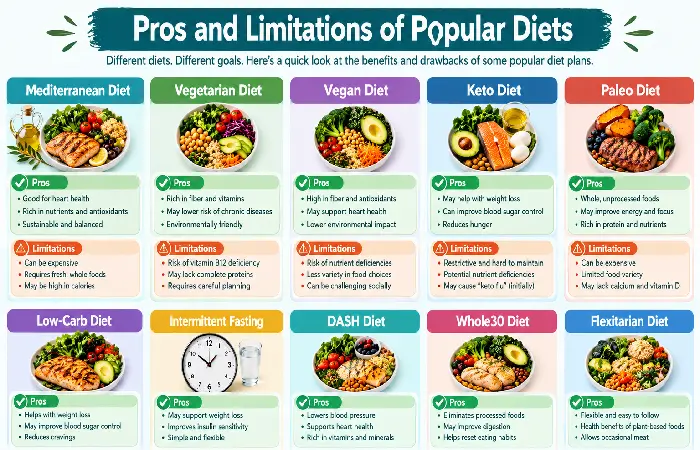
Mediterranean Diet
Pros
- Wide range of foods
- Flexible meal options
- Emphasises vegetables and whole foods
- Does not require strict macronutrient tracking
Limitations
- Calorie-dense foods can still contribute substantial energy
- Some traditional foods may be expensive depending on location
- It may require changes for people accustomed to highly processed foods
Low-Carb and Keto
Pros
- Clear food structure
- Can reduce intake of refined carbohydrates
- May suit people who prefer protein- and fat-focused meals
Limitations
- Keto is considerably more restrictive
- Social eating can become difficult
- Fibre intake may fall if vegetables and other plant foods are neglected
Plant-Based
Pros
- Encourages a broad range of plant foods
- Can provide substantial dietary fibre
- Flexible versions are available
Limitations
- Some nutrients require deliberate planning
- Vegan diets require reliable vitamin B12 sources
- Processed plant-based foods are not necessarily nutritionally superior
High-Protein
Pros
- Can support muscle-building goals
- May improve fullness
- Compatible with many different diet styles
Limitations
- Excess calories remain possible
- Some high-protein foods are high in saturated fat or sodium
- Very high protein intake may not be appropriate for everyone
Intermittent Fasting
Pros
- Simple meal-timing framework
- Does not necessarily require specific foods
- Can suit people who prefer fewer eating occasions
Limitations
- Hunger can be difficult for some people
- May conflict with family or work schedules
- It does not automatically result in weight loss
Common Mistakes When Trying Different Diet Plans
Choosing a Diet Based Only on Its Name
A diet label does not tell you everything about the actual food quality of someone’s meals.
Cutting Out Too Many Foods
Unnecessary restriction can make a diet difficult to maintain and may reduce nutritional variety.
Ignoring Protein
People focused on weight loss sometimes reduce food intake without considering protein or resistance training.
Expecting Rapid Results
Short-term fluctuations are normal. Sustainable changes generally require consistency over time.
Treating Supplements as a Replacement for Food
Supplements can have specific uses, but they should not replace a varied diet without a good reason.
Copying Someone Else’s Diet
A meal plan that works for an athlete, influencer or friend may not match your energy requirements, preferences or health circumstances.
Are Popular Diets Suitable for Everyone?
No.
People with diabetes, kidney disease, gastrointestinal conditions, eating disorders, food allergies or other medical considerations may need individual dietary guidance.
Pregnant and breastfeeding people also have specific nutritional requirements.
Anyone taking medication that can be affected by major dietary changes should discuss those changes with an appropriate healthcare professional.
The goal should not be to find the most restrictive diet. It should be to find an eating pattern that is nutritionally appropriate and realistic for the individual.
FAQs
What are the main different types of diets?
The Different Types of Diets include Mediterranean carb, ketogenic plant-based high-protein and intermittent fasting. These diets vary in what foods they include how they balance macronutrients like fats, proteins and carbohydrates and when meals are eaten.
Which diet is best for weight loss?
There is no one diet that works best for everyone when it comes to weight loss. The effective diet is one that helps a person consistently eat fewer calories than they burn while still getting the nutrients their body needs. It also needs to be something that a person can stick with over time.
What are healthy diet types for beginners?
For beginners a healthy diet often means focusing on mostly unprocessed foods. This includes plenty of vegetables, fruits, whole grains, lean proteins and healthy fats. The Mediterranean diet is an example of a balanced and sustainable way to eat.
Is a high-protein diet healthy?
A high-protein diet can be healthy for people especially if the protein comes from diverse sources like lean meats, fish, eggs, dairy, beans and legumes. However protein needs vary from person to person. People with kidney issues or other health concerns should talk to a doctor before increasing protein intake.
Are low-carb and keto the same diet?
No they are not the same. Low-carb is a term for diets that reduce carbohydrate intake. The ketogenic diet is a strict type of low-carb diet that limits carbs to very low levels to put the body into ketosis, a state where it burns fat for fuel instead of glucose.
Can a plant-based diet provide enough protein?
Yes. Foods such as beans, lentils, tofu, tempeh, peas, nuts and seeds can contribute protein. People following fully plant-based diets should plan their overall diet to ensure adequate protein and other essential nutrients.
Does intermittent fasting work for everyone?
Yes a plant-based diet can provide protein. Foods like beans, lentils, tofu, tempeh, peas, nuts and seeds are rich in protein. People who follow a plant-based diet need to eat a variety of these foods to meet their protein needs and also make sure they get iron, vitamin B12, calcium and other nutrients.
How should I choose between different diet plans?
Start with your main goal, assess your current eating habits and consider nutritional adequacy, convenience, cost and sustainability. A healthcare professional or registered dietitian can provide individual guidance where medical or nutritional concerns are involved.
Final Thoughts
Today many diets are very different from one another. However most of them can be understood by looking at three ideas: the foods that the diet focuses on how the diet spreads out nutrients and whether the diet limits when or what you can eat.
Mediterranean, plant‑based, low‑carb, keto, high‑protein and intermittent fasting are all ways of living. Each of these diets has parts and bad parts. The best approach is to think about getting nutrition setting goals and being able to keep going with the plan over time rather than choosing a diet just because it is popular.
If your goal is to lose weight or build muscle think about everything. Consider the quality of the food you eat the amount of protein you get the number of calories you take in and the exercise you do such as lifting weights or running. Also think about getting sleep and being able to stick with the plan.
When you have a health problem or a special need it is better to get help from a trained doctor or nurse, for food advice of following a diet that is not made for you.