
Introduction
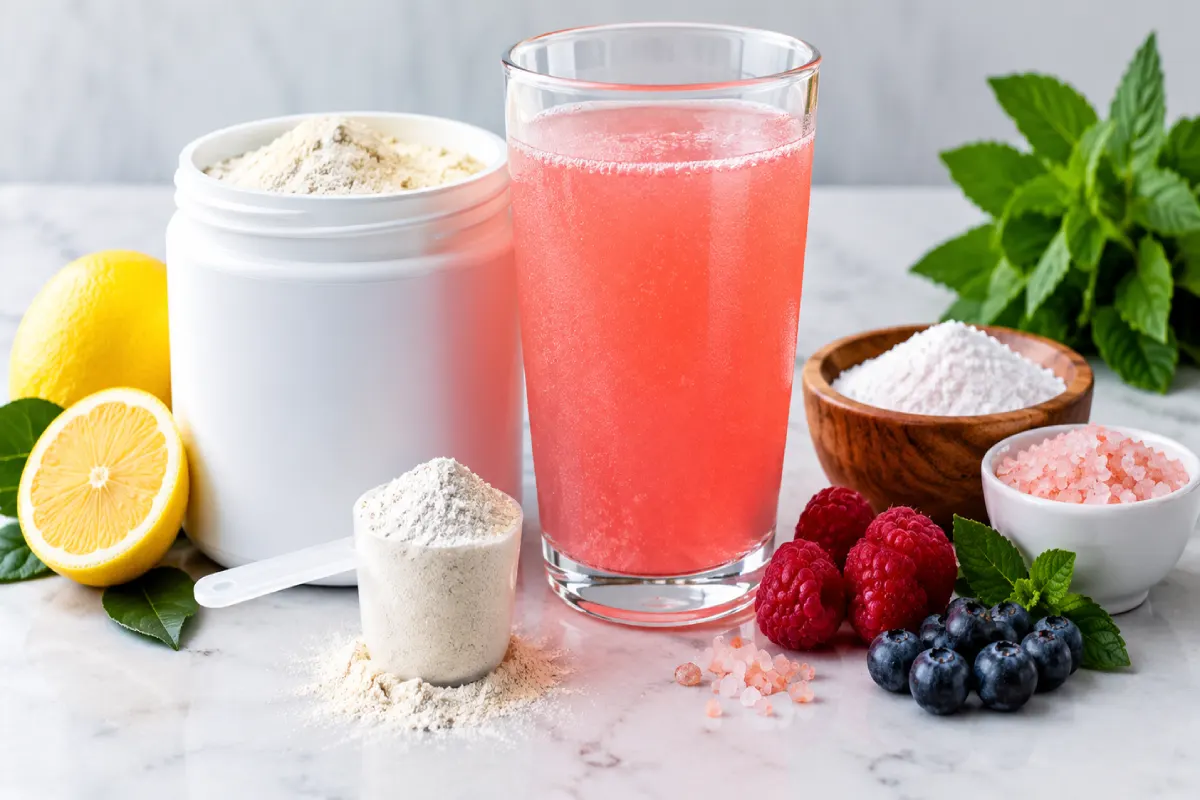
Hydration is important for everyday health, exercise and recovery. The consumption of water is the most dominant way of hydration, but hydration powders have become a more common supplement among athletes, bodybuilders, fitness fanatics, travellers and the sports minded. Getting to know Hydration Powder Basics & Ingredients can help consumers with feeding them out from the products which would not meet their needs. Not all hydration powders have the same ingredients and it really depends on the ‘formula’, application and hydration needs.
Hydration Powder Basics & Ingredients Explained
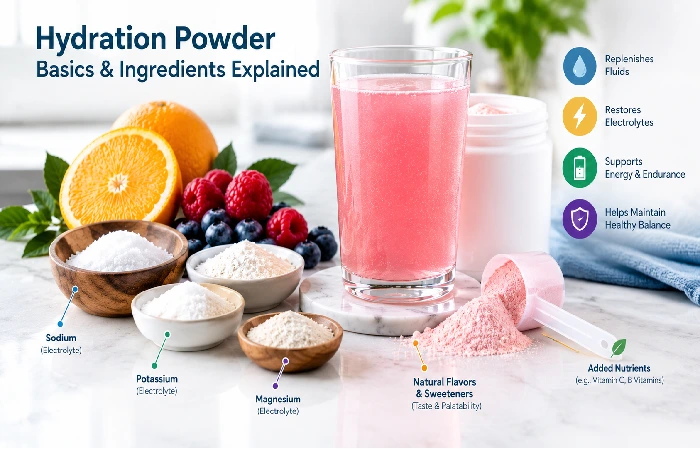
Hydration powders are beverage mixes which are meant to be dissolved in a water, purported to deliver electrolytes and other nutrients which, it is claimed, can help sustain fluid balance. When doing your recipes compared to water hydration powders tend to have minerals which are washed from your body in sweat, sodium, potassium, magnesium and chloride.
Common Reasons People Use Hydration Powders
- Exercise and sports training
- Hot weather conditions
- Long-distance travel
- Outdoor activities
- Recovery after excessive sweating
- Supporting hydration during illness-related fluid loss
You need to remember that hydration powders are just a complement to water, not a substitute.
What Is a Hydration Powder?
A hydration powder is a powdered drink mixture that is mixed with water containing electrolytes and other components that are intended to aid hydration.
Most products are packaged in:
| Format | Description |
| Single-serve packets | Convenient for travel and workouts |
| Tub containers | Cost-effective for regular users |
| Stick packs | Portable and easy to carry |
| Bulk powder bags | Common among athletes and teams |
Key Ingredients Found in Hydration Powders
Sodium
Sodium is often the most important electrolyte in hydration formulas.
Functions include:
- Supporting fluid balance
- Helping maintain hydration levels
- Replacing sweat losses
- Supporting nerve function
The majority of sporting hydration products tend to have the sodium content higher than that of sports electrolyte beverages.
Potassium
K+ (potassium) is also involved in regulating movement of fluid in and out of the cells jointly with Na+.
Potential roles include:
- Muscle function support
- Fluid regulation
- Electrolyte balance
Magnesium
Magnesium is frequently included in smaller amounts.
Benefits may include:
- Supporting normal muscle function
- Assisting energy production
- Contributing to electrolyte balance
Chloride
Chloride is another electrolyte commonly lost through sweat.
Its primary role involves helping maintain fluid and electrolyte balance.
Calcium
Some hydration powders include calcium to provide additional mineral support.
Carbohydrates
Carbohydrates may appear as:
- Glucose
- Dextrose
- Cane sugar
- Maltodextrin
Vitamins
Some formulations contain:
- Vitamin C
- B Vitamins
- Vitamin D
These vitamins are generally included as supplemental nutritional additions rather than primary hydration ingredients.
Hydration Powder Ingredient Comparison
| Ingredient | Main Purpose | Commonly Included |
| Sodium | Fluid retention and hydration | Very common |
| Potassium | Electrolyte balance | Very common |
| Magnesium | Muscle support | Common |
| Chloride | Fluid regulation | Common |
| Calcium | Mineral support | Moderate |
| Carbohydrates | Energy and absorption support | Varies |
| Vitamins | Nutritional support | Optional |
| Amino Acids | Recovery-focused formulas | Optional |
How Hydration Powders Work
This is how they work: by giving the body electrolytes, which assist in the transportation of fluids in the body.
Typical Hydration Workflow
- Powder is mixed with water.
- Electrolytes dissolve into the drink.
- Fluid and minerals are consumed.
- Electrolytes assist fluid balance processes.
- Hydration levels are supported during activity or recovery.
Does won‘t necessarily mean better, it may simply allow individuals to replace the fluids and electrolytes that are lost through sweating.
Key Features to Look For
When comparing hydration powders, consumers should consider several factors.
Electrolyte Profile
Look at:
- Sodium amount
- Potassium content
- Magnesium levels
- Overall electrolyte balance
Sugar Content
Products generally fall into three categories:
| Type | Typical Use |
| Sugar-free | Everyday hydration |
| Low sugar | General fitness |
| Higher carbohydrate | Endurance exercise |
Ingredient Transparency
Quality products typically provide:
- Full ingredient lists
- Electrolyte amounts
- Serving size details
- Nutrition facts
Artificial vs Natural Ingredients
Consumers may prefer:
- Natural flavours
- Natural sweeteners
- Artificial sweeteners
- Dye-free formulas
The choice often depends on personal preference.
Performance Expectations
Hydration powders can be of use, but should be taken with a consideration of its limitations.
What They May Help With
- Restoring the lost electrolytes through sweating How can I aid hydration during exercise? Making it easy to stay water is easy by:
- Assisting fluid intake during travel
What They Cannot Do
- Instantly improve athletic performance
- Replace a balanced diet
- Prevent all dehydration risks
- Guarantee recovery outcomes
Pros and Cons
| Pros | Cons |
| Convenient hydration support | Quality varies between brands |
| Portable and easy to store | Some products contain high sodium |
| May replace sweat-related electrolyte losses | Flavour preferences differ |
| Available in many formulations | Premium options can be expensive |
| Useful during exercise and travel | Not always necessary for sedentary individuals |
Who Should Consider Hydration Powders?
May Be Suitable For
- Endurance athletes
- Gym-goers
- Outdoor workers
- Frequent travellers
- Individuals exercising in hot climates
May Not Be Necessary For
- People with low activity levels
- Individuals already meeting hydration needs through water and diet
- Those advised by healthcare professionals to limit certain minerals
Are Hydration Powders Legitimate?
Yes. Hydration powders are legitimate nutritional products commonly used in sports and wellness settings.
However, legitimacy should be evaluated by reviewing:
- Ingredient transparency
- Third-party testing when available
- Brand reputation
- Nutrition labelling
- Compliance with regulatory requirements
Consumers should avoid assuming that all hydration powders provide identical benefits.
Alternatives to Hydration Powders
Several alternatives can support hydration.
| Alternative | Best For |
| Plain water | Everyday hydration |
| Coconut water | Natural electrolyte source |
| Sports drinks | Exercise sessions |
| Milk | Hydration and nutrition |
| Fruit-infused water | Flavour without additives |
| Oral rehydration solutions | Specific hydration needs |
Buying Tips
Before purchasing a hydration powder:
- Review the ingredient list.
- Compare electrolyte levels.
- Check sugar content.
- Assess serving cost.
- Verify nutrition information.
- Consider your activity level.
- Read independent product reviews.
The best choice depends on individual hydration goals rather than marketing claims.
Conclusion
Knowing the basics of hydration powder and what ingredients are in them is helpful for consumers in guiding their choices of hydration products. Most hydrate powders have a combination of electrolytes, such as sodium, potassium, magnesium and chloride. Certain formulas may contain addition of carbohydrates, vitamins or amino acids. Although hydration powder may be useful in helping supplement electrolyte replacement during exercise, travel or hot weather activity they work best when used in conjunction with adequate water consumption and reasonable expectations.