
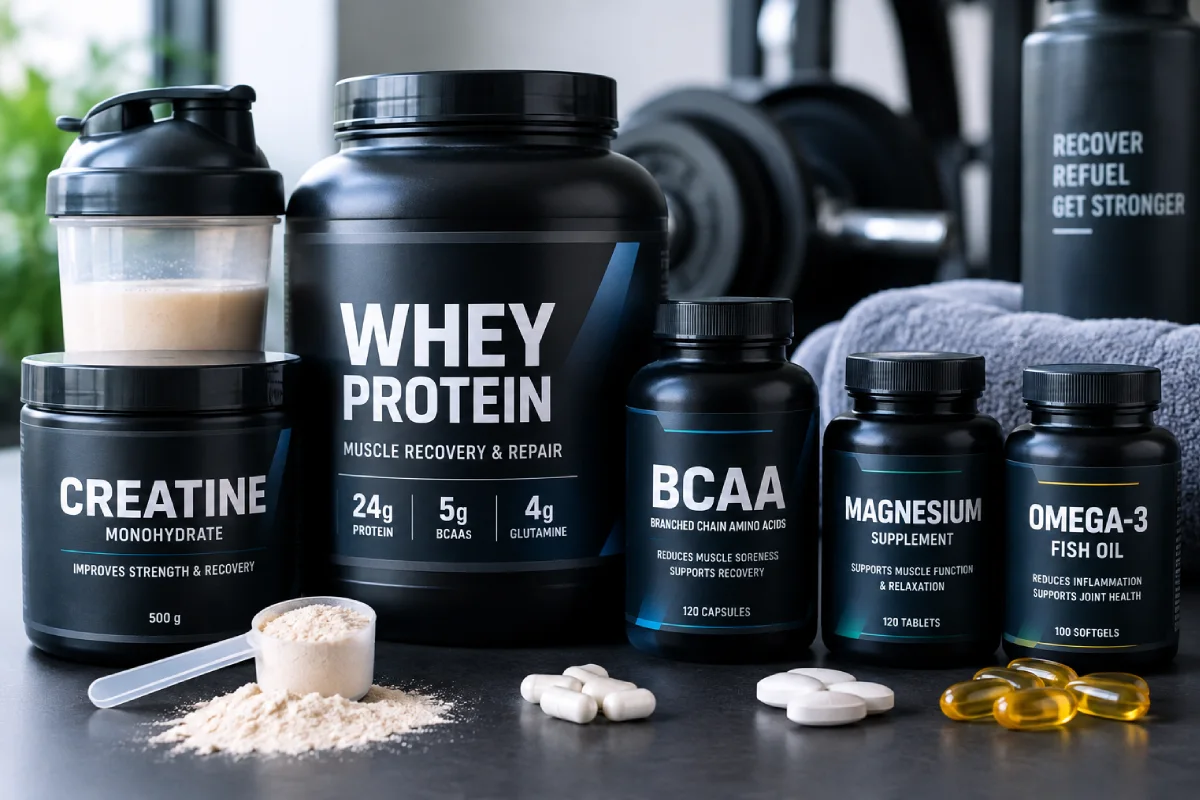
After a hard session your body needs time and nutrients to repair and adapt. A recovery supplement is of benefit in providing additional nutrients, especially when training twice a day or in situations where it is difficult to obtain all nutritional requirements from foods. The use of a supplement should be incorporated as part of an overall recovery program- including sufficient protein intake, fluids, sleep, rest days and sensible progression. The supplement market makes recovery appear more confusing. There are protein powders, creatine formulas, amino acids, electrolyte blends, magnesium formulas and a number of blends claiming to be specifically for athletes. Knowledge about what all these ingredients do is more helpful than just selecting a product because it says “recovery”. The guide will outline the main categories of supplement, what the evidence usually implies, a few restrictions, safety advice, and how to deduce whether it is necessary.
What Are Muscle Recovery Supplements?
Muscle recovery supplements are a supplement foods. They are supplied with nutrients which might help recovery from training/competition. Such as protein, amino acids, creatine, carbohydrates, electrolytes, vitamin, minerals or any mixture.
What makes this important is to distinguish between “support” and “accelerating” “beyond normal limits”. You have complex systems for recovery built in, your muscles can repair themselves after damage, energy systems readjust after exertion. The right supplements can supply good cooking.net”>nutrition but cannot bypass the time aspect of recovery.
Muscle Recovery Supplements Basics
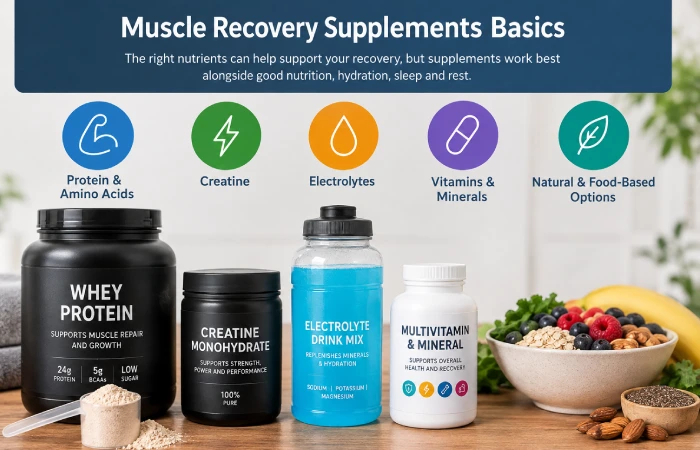
Recovery involves several overlapping processes:
- Repairing muscle tissue after training
- Replenishing muscle glycogen
- Replacing fluids and electrolytes lost through sweating
- Supporting normal energy metabolism
- Managing training fatigue
- Adapting to repeated exercise
The importance of each factor depends on the type and duration of exercise.
An example, someone just finishing a short strength session may only require a normal meal (containing carbohydrate, protein), whereas someone performing for several hours in the heat doing an endurance event, will require more (fluid, sodium, carbohydrate)
What Supplements Can and Cannot Do
A useful way to think about supplements is as nutritional tools rather than recovery shortcuts.
They may help when:
- Your diet does not provide enough protein.
- You train frequently and need convenient nutrition.
- You have higher carbohydrate or electrolyte requirements.
- You follow a restrictive eating pattern.
- A healthcare professional has identified a nutrient deficiency.
- Convenience matters after training.
They are less useful when:
- Your diet already covers your nutritional needs.
- You are relying on supplements instead of meals.
- Poor sleep is limiting recovery.
- Your training load is consistently too high.
- You expect a supplement to eliminate muscle soreness.
Best Supplements for Muscle Recovery
There is no single supplement that is best for everyone. Different products address different recovery requirements.
| Supplement category | Main purpose | When it may be useful | Important limitation |
| Protein powder | Helps meet protein requirements | When food is inconvenient or intake is low | Not inherently better than protein-rich food |
| Creatine monohydrate | Supports high-intensity exercise and muscle energy availability | Regular resistance or repeated high-intensity training | Benefits build with consistent use |
| Electrolytes | Replace minerals lost in sweat | Long, hot or very sweaty sessions | Not always necessary for short workouts |
| Carbohydrate products | Replenish or provide exercise fuel | Endurance or high-volume training | Extra calories may not suit every goal |
| Selected vitamins/minerals | Correct or prevent inadequate intake | When dietary intake is insufficient or deficiency exists | More is not necessarily better |
| Amino acid products | Provide individual amino acids | Certain dietary situations | Complete protein often provides these naturally |
The appropriate choice depends on your diet, training style, sweat rate, exercise duration and overall goals.
Post Workout Recovery Supplements: What Should You Look For?
For example, An individual who has just completed a short force session will perhaps require a typical meal (precise ingredients to be decided) ( carbohydrate, protein) however; an individual participating in an endurance event in the sun for numerous hours. Will require significantly more (fluid, sodium, carbohydrate)
-
Protein
Protein provides amino acids for muscle protein synthesis and normal tissue maintenance. If it is not possible to eat a large meal soon after training, a protein shake is a good idea. Whey, casein and plant based powders all have a place. In fact the problem more often than not is insufficient total daily protein rather than a post workout miracle shake.
-
Carbohydrates
Carbohydrates replenish glycogen, the stored form of carbohydrate used during exercise.
They become especially relevant when:
- Training sessions are long.
- Exercise intensity is high.
- You train again later the same day.
- You participate in endurance sports.
- Your overall carbohydrate intake is low relative to training demands.
For a normal recreational workout, a regular meal containing carbohydrates may be entirely sufficient.
-
Fluids and Electrolytes
SWEATING Loss of fluid by sweating and depending upon the conditions it causes a corresponding loss of electrolytes according to individual sweat rate. An electrolyte product might be of benefit in long duration training, hot climate training, or heavy sweating exercise sessions; for a short duration training perhaps just plain water and regular diet might suffice.
Protein for Muscle Recovery
Protein is by far the most important component of recovery nutrition, as amino acids serve as the fundamental building blocks needed to maintain and repair muscle tissue, and.
Good dietary sources include:
- Eggs
- Dairy products
- Fish
- Poultry
- Lean meat
- Soy
- Beans
- Lentils
- Peas
- Greek yoghurt
- Cottage cheese
Protein powder is simply a convenient way to obtain protein. It is not automatically superior to whole food.
Whey Protein
Whey is a complete protein containing all essential amino acids and is rapidly digested compared with some other protein sources.
It may be convenient for people who tolerate dairy and want a simple post-workout option.
Casein Protein
Casein is another milk-derived protein that digests more slowly than whey. It can be useful when someone wants a convenient protein source between meals or before a longer period without food.
Plant Protein
Soy, pea, rice and blended plant proteins can help people who avoid dairy or animal products.
Blended plant proteins can be particularly useful when a combination provides a broader amino-acid profile.
How Much Protein Do You Need?
Depending on the size of the body, age, amount of training, overall energy consumption and desired effects, requirements differ. Instead of indiscriminately eating multiple protein products, it‘s probably wise to first consider total daily protein quantity; a supplement can then be used to cater for the shortfall between the amount that‘s practical to eat and the amount required.
Creatine for Muscle Recovery and Training
Creatine is one of the most researched sports nutrition ingredients and is widely used in strength and high-intensity training.
This matters for activities such as:
- Weight training
- Sprinting
- Repeated high-intensity intervals
- Power-based sports
Creatine and Recovery
Creatine is not primarily a muscle soreness treatment. Its value is more closely related to supporting training capacity and muscle energy availability.
Consistent use may help people maintain training quality over time, which can indirectly support long-term adaptation.
Creatine monohydrate is generally the most established form and is typically preferred because it has extensive research behind it.
Does Creatine Work Immediately?
Not necessarily.
Creatine supplementation is generally a consistency-based strategy. Changes in muscle creatine stores develop with continued intake, and some people experience an increase in body mass related to water stored within muscle.
That is different from gaining body fat.
Supplements for Muscle Soreness
Delayed-onset muscle soreness, commonly called DOMS, can appear after unfamiliar or demanding exercise and may become noticeable during the following day or two.
A supplement should not be viewed as a requirement for managing normal soreness.
Helpful recovery strategies can include:
- Adequate sleep
- Light movement
- Normal hydration
- Sufficient protein
- Appropriate training progression
- Rest from unusually demanding exercise
- Balanced nutrition
Some supplements are marketed specifically for soreness, but evidence can vary substantially between ingredients and doses.
If soreness is severe, persistent, associated with significant swelling, weakness or dark urine, it should not simply be treated as ordinary post-workout soreness. Medical assessment may be appropriate.
Vitamins, Minerals & Electrolytes for Recovery
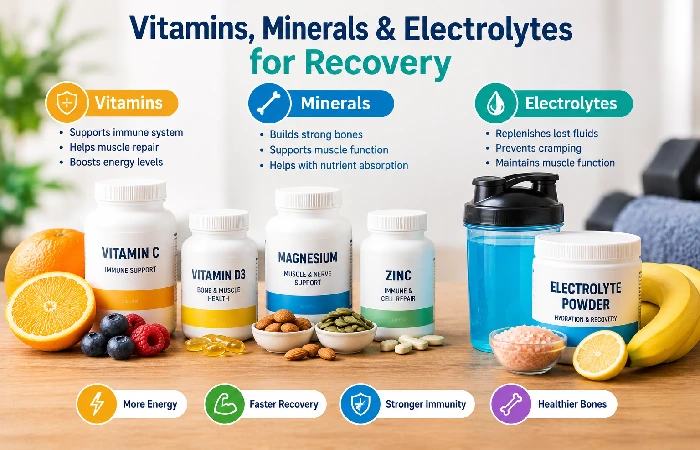
Vitamins and minerals are essential for normal physiological processes, including energy metabolism, nervous-system function, bone health and immune function.
However, taking large amounts of vitamins does not automatically produce better recovery.
Magnesium
Magnesium contributes to normal muscle and nervous-system function. People with inadequate dietary intake may benefit from correcting that shortfall.
A magnesium supplement is not necessarily needed simply because you exercise.
Vitamin D
Vitamin D has several important roles in the body, including supporting bone health and normal muscle function.
Supplementation is particularly relevant when inadequate vitamin D status has been identified.
Iron
Iron is essential for oxygen transport and normal energy metabolism. At Iron supplementation should not be treated as a general performance booster, particularly because excessive iron can be harmful.
People concerned about iron status should discuss testing and supplementation with a qualified healthcare professional.
Electrolytes
Sodium and other electrolytes are particularly relevant when substantial sweat losses occur.
An electrolyte drink can be practical for:
- Long endurance sessions
- Outdoor training in hot weather
- Heavy sweaters
- Repeated training sessions
- Events lasting several hours
But electrolyte products can add unnecessary calories, sugar or sodium when used without a clear need.
Natural & Food-Based Recovery Supplements
Before purchasing a supplement, look at what your normal diet already provides.
A recovery-focused meal could contain:
Protein: chicken, fish, eggs, yoghurt, tofu or legumes
Carbohydrates: rice, potatoes, oats, fruit or whole-grain foods
Fluids: water, milk or another suitable beverage
Micronutrients: vegetables, fruit, nuts, seeds and other minimally processed foods
For many people, this approach covers the fundamentals of recovery without requiring a large supplement stack.
Example Post-Workout Meals
Strength training:
Chicken, rice and vegetables with water.
Vegetarian option:
Tofu, rice, vegetables and yoghurt.
Quick option:
Greek yoghurt, fruit and oats.
Plant-based option:
Soy yoghurt or fortified plant milk with oats, fruit and a protein-rich food.
Long endurance session:
A meal containing carbohydrates, protein and fluids, with additional electrolytes where sweat losses justify them.
A Simple Muscle Recovery Supplement Workflow
Instead of buying several products at once, use a step-by-step process.
Step 1: Assess Your Training
Ask:
- How often do you train?
- How long are your sessions?
- Are they strength, endurance or mixed?
- Are you training once or multiple times per day?
- How much do you sweat?
Step 2: Check Your Diet
Look at your regular intake of:
- Protein
- Carbohydrates
- Fruit and vegetables
- Fluids
- Essential fats
- Vitamins and minerals
Step 3: Identify the Actual Gap
- If protein is low, protein powder may be useful.
- If training is prolonged and sweaty, electrolytes may have a clearer purpose.
- If you regularly perform high-intensity resistance training, creatine may be worth considering.
- If a nutrient deficiency is suspected, testing and professional guidance are more appropriate than guessing.
Step 4: Add One Product at a Time
Adding five products simultaneously makes it difficult to determine whether any individual product is useful.
Start with the most obvious nutritional gap and assess whether the product is convenient and well tolerated.
Step 5: Review Your Recovery
Look beyond the supplement.
Track:
- Training performance
- Sleep quality
- General fatigue
- Muscle soreness
- Appetite
- Hydration
- Ability to complete planned sessions
This provides a more realistic picture of whether your recovery strategy is working.
Muscle Recovery Supplements: Expectations vs Reality
One of the biggest mistakes in sports nutrition is expecting supplements to compensate for poor recovery habits.
| Expectation | More realistic view |
| A supplement will stop soreness | Normal soreness may still occur after challenging exercise |
| More protein means faster recovery | Protein needs have a practical range; excess is not automatically better |
| Creatine works like a pre-workout stimulant | Its benefits are associated with consistent supplementation |
| Electrolytes are necessary after every workout | Need depends largely on sweat and exercise conditions |
| Vitamins improve recovery regardless of deficiency | Benefits are more relevant when intake or status is inadequate |
| A recovery powder replaces a meal | It can provide selected nutrients but may not offer the variety of a complete meal |
| More ingredients mean a better formula | Simple products can be easier to evaluate and dose |
The goal should be adequate recovery, not the maximum possible number of supplements.
Recovery Supplement Safety & Buying Guide
Supplements are not regulated in exactly the same way as medicines, so consumers should pay attention to product quality and labelling.
Check the Ingredient List
Look for clear information about:
- Active ingredients
- Amount per serving
- Serving size
- Allergens
- Added sugars
- Stimulants
- Proprietary blends
- Recommended use
Avoid assuming that a long ingredient list means a product is more effective.
Consider Third-Party Testing
For competitive athletes, third-party testing can be particularly important because contamination or undeclared substances can create problems.
Independent certification does not prove that a product will improve recovery, but it can provide additional information about manufacturing and testing practices.
Be Careful With High Doses
“Natural” does not automatically mean risk-free.
High doses of certain vitamins and minerals can cause adverse effects. Supplements can also interact with medicines or be unsuitable for people with certain medical conditions.
People who are pregnant, have a medical condition, take regular medication or are considering high-dose supplementation should seek appropriate professional advice.
Watch Out for Unclear Claims
Be cautious with products promising:
- Instant recovery
- Zero soreness
- Guaranteed muscle growth
- Rapid fat loss
- Hormonal optimisation
- Drug-like results from a supplement
Strong marketing language is not the same as strong evidence.
Pros and Limitations of Recovery Supplements
Potential Benefits
- Convenient source of nutrients
- Useful when appetite is low after training
- Easy to carry to work or the gym
- Can help meet protein requirements
- Useful for prolonged training and significant sweat losses
- Certain evidence-supported ingredients can support specific training goals
Limitations
- They can be expensive compared with whole foods.
- Not everyone needs them.
- Quality varies between products.
- Some contain unnecessary ingredients.
- They cannot replace sleep or appropriate training volume.
- Some can cause digestive discomfort.
- High-dose supplementation can create avoidable risks.
Who May Benefit From Muscle Recovery Supplements?
Supplementation may be particularly practical for:
People Training Frequently
Someone exercising most days may find convenient protein, carbohydrate or electrolyte products useful depending on their programme.
Endurance Athletes
Long sessions can create higher demands for carbohydrates, fluids and electrolytes.
People With Busy Schedules
A protein shake can be a practical alternative when a proper meal is temporarily unavailable.
People Following Restrictive Diets
Certain dietary patterns can make it harder to obtain particular nutrients, although food-first planning should remain the foundation.
Competitive Athletes
Athletes with high training volumes may have more specific nutritional requirements and should consider professional sports-nutrition guidance.
Who Should Be More Cautious?
Extra care is appropriate if you:
- Take prescription medicines
- Have kidney or liver problems
- Have a diagnosed nutrient deficiency
- Are pregnant or breastfeeding
- Have food allergies
- Are under 18
- Have a history of disordered eating
- Plan to use high doses of vitamins or minerals
In these situations, a doctor or registered dietitian can help determine whether supplementation is appropriate.
Common Mistakes When Using Recovery Supplements
Taking Everything at Once
A large supplement stack can make it difficult to identify what is helping, what is unnecessary and what may be causing side effects.
Ignoring Total Calories
Recovery requires adequate energy. Someone consistently eating too little may struggle to recover even with plenty of supplements.
Forgetting Carbohydrates
Protein gets most of the attention, but carbohydrates can be important for restoring glycogen, particularly after endurance or high-volume training.
Treating Sleep as Optional
Supplements cannot substitute for regular, sufficient sleep.
Changing Training Too Quickly
Increasing weight, volume or frequency aggressively can create more fatigue than your recovery strategy can handle.
Conclusion
Supplements for muscle recovery can be helpful, but many are not effective shortcuts. Protein may be useful in satisfying nutritional requirements, creatine may support high intensity training, and electrolytes may be needed during exercise that causes large losses of water and mineral. Above all, keep it simple: Eat consistently, drink up, get quality sleep, get your calories and protein, and I wouldn‘t push your carbs. Also give your body time to adapt. With those habits in place, a well-chosen supplement can offer a lot of convenience and consistency to your recovery nutrition.