

Muscle building isn’t just about what you do at the gym. For muscular development to occur you need to provide the stimulus, which is the progressive training programme, but nutrition & recovery for hypertrophy is what determines how well your body will react to that stimulus. Lack of nutrients and time for recuperation can lead to delayed results, even with the best programme. Here is a simple guide to the main nutritional and recovery principles of hypertrophy. You will find this focuses on realistic needs with realistic advice, backed by evidence and not quick fix gimmicks.
What Is Nutrition & Recovery for Hypertrophy?
Nutrition & recovery for hypertrophy the of nutrition & recovery for hypertrophy is the use of foods and the body to allow muscular repair and growth after performing resistive exercises.
Effective hypertrophy support typically includes:
- Adequate protein intake
- Appropriate calorie consumption
- Balanced carbohydrate and fat intake
- Sufficient sleep
- Recovery management between training sessions
- Long-term consistency
Why Nutrition Matters for Muscle Growth
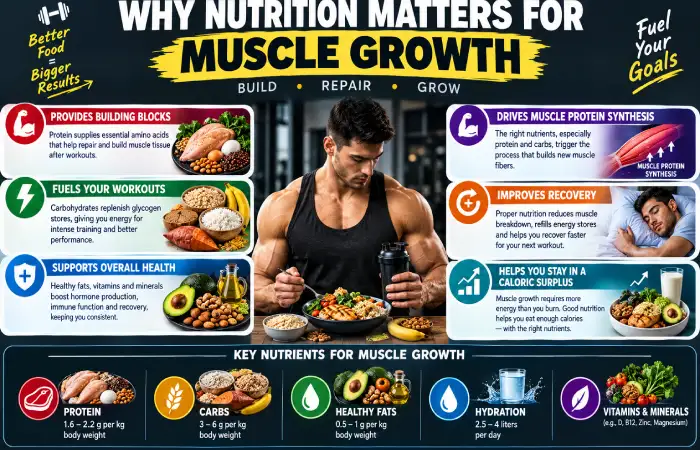
Resistance training causes tiny damage to muscle and stimulates an adaptation process. Nutrition supplies the raw materials for repair.
Without sufficient energy and nutrients, the body may struggle to maximise training adaptations.
Key Roles of Nutrition
| Nutrient | Primary Function |
| Protein | Supports muscle repair and growth |
| Carbohydrates | Replenishes training energy stores |
| Fats | Supports hormone production |
| Vitamins & Minerals | Assist recovery and overall health |
| Water | Supports hydration and performance |
Protein for Muscle Hypertrophy
One of the most important nutritional factors for hypertrophy is protein intake.
Protein is a valuable source of amino acids that can be used for restoring injured muscle tissues and for new muscle protein synthesis.
Recommended Protein Intake
| Goal | Daily Protein Range |
| General fitness | 1.2–1.6 g/kg body weight |
| Muscle hypertrophy | 1.6–2.2 g/kg body weight |
| Calorie deficit phases | Up to 2.4 g/kg body weight |
For instance, a 75kg individual may be eating anywhere from 120–165g of protein per day if their goal is hypertrophy.
Common Protein Sources
- Lean poultry
- Fish
- Eggs
- Greek yoghurt
- Cottage cheese
- Tofu
- Tempeh
- Beans and legumes
- Protein powders
Protein Distribution Matters
Timing of protein intake grazing versus pulsatile consuming the majority of protein in one sitting may not be as desirable as several intakes spread throughout the day.
Example:
- Breakfast: 30g protein
- Lunch: 35g protein
- Snack: 25g protein
- Dinner: 35g protein
Calorie Surplus for Hypertrophy
Building muscle generally requires sufficient energy intake.
A calorie surplus for hypertrophy involves intake above the amount of energy used by the body on a regular basis.
Why a Surplus Helps
Extra energy supports:
- Muscle repair
- Training performance
- Recovery processes
- Muscle-building adaptations
Recommended Surplus Range
| Goal | Suggested Surplus |
| Lean muscle gain | 150–300 calories/day |
| Faster weight gain | 300–500 calories/day |
Realistic Expectations
Most natural trainees should expect gradual progress.
Typical monthly muscle gain ranges:
| Experience Level | Potential Monthly Muscle Gain |
| Beginner | 0.5–1 kg |
| Intermediate | 0.25–0.5 kg |
| Advanced | 0.1–0.25 kg |
Actual results vary based on genetics, training quality, recovery, age, and consistency.
Nutrition for Muscle Growth: Beyond Protein
Although protein receives most attention, overall diet quality also matters.
Carbohydrates
Carbohydrates provide fuel for training and replenish glycogen stores.
Useful sources include:
- Oats
- Rice
- Potatoes
- Whole grains
- Fruit
- Vegetables
Healthy Fats
Dietary fats contribute to:
- Hormone production
- Cell health
- Nutrient absorption
Examples:
- Avocados
- Olive oil
- Nuts
- Seeds
- Fatty fish
Hydration
Even mild dehydration may affect exercise performance.
General hydration habits include:
- Drinking water regularly throughout the day
- Increasing fluid intake during intense training
- Monitoring urine colour as a rough hydration indicator
Recovery for Hypertrophy: Why Rest Is Essential
Training stimulates growth, but recovery is where adaptation occurs.
Many people focus heavily on workouts while overlooking recovery.
Benefits of Recovery
Effective recovery may support:
- Muscle repair
- Reduced fatigue
- Improved training quality
- Better long-term consistency
- Lower injury risk
Sleep for Muscle Growth
Sleep is one of the most important recovery tools available.
The body does work during sleep that helps build the muscles. Body is working during sleep to perform a number of recovery and repair procedures.
Recommended Sleep Duration
| Age Group | Recommended Sleep |
| Teenagers | 8–10 hours |
| Adults | 7–9 hours |
Sleep Quality Tips
- Maintain a consistent bedtime
- Reduce screen exposure before sleep
- Keep the bedroom cool and dark
- Limit caffeine late in the day
- Establish a relaxing evening routine
What Happens During Sleep?
Quality sleep supports:
- Muscle repair
- Hormonal regulation
- Recovery from training
- Energy restoration
- Cognitive performance
Poor sleep can negatively affect training performance and recovery capacity.
Recovery Workflow for Hypertrophy
Step 1: Complete Resistance Training
Provide the muscle-building stimulus through structured training.
Step 2: Consume Post-Workout Nutrition
Try to have protein and carbohydrate (simple carbohydrate) sensible within a reasonable time period after training.
Step 3: Stay Hydrated
Replace fluids lost during exercise.
Step 4: Manage Daily Stress
High stress levels may interfere with recovery quality.
Step 5: Prioritise Sleep
Allow sufficient time for physical recovery and adaptation.
Step 6: Repeat Consistently
Long-term consistency is more important than any single workout or meal.
Nutrition and Recovery Comparison
| Factor | Nutrition Focus | Recovery Focus |
| Primary Goal | Fuel and repair muscles | Restore and adapt |
| Key Components | Protein, calories, carbs, fats | Sleep, rest, stress management |
| Immediate Impact | Training performance | Fatigue management |
| Long-Term Impact | Muscle growth support | Recovery capacity |
| Importance | High | High |
Both areas work together and neither should be ignored.
Mistakes That Slow Hypertrophy Progress

Not Eating Enough
Many trainees underestimate calorie requirements.
Insufficient Protein
Low protein intake may limit recovery and muscle growth potential.
Poor Sleep Habits
Consistent sleep deprivation can negatively affect recovery quality.
Excessive Training Volume
More training is not always better if recovery capacity is exceeded.
Inconsistent Routine
Muscle growth typically occurs through months and years of consistent effort.
What Results Should You Realistically Expect?
Hypertrophy is a gradual process.
You may notice:
2–4 Weeks
- Improved workout performance
- Better exercise technique
- Increased training confidence
1–3 Months
- Small increases in muscle size
- Improved recovery
- Strength improvements
6–12 Months
- More noticeable physique changes
- Greater training capacity
- Significant strength development
Progress rates vary considerably between individuals.
Conclusion
Nutrition & recoverys for hypertrophy are fundamental to successful hypertrophy programmes. Training is the stimulus for hypertrophy but the muscle changes also depend on good nutrition, good quality protein, an appropriate calorie excess, hydration and regular recovery practices. Focussing on protein hypertrophy, an appropriate calorie excess for hypertrophy, sleep and hypertrophy and general recovery and hypertrophy, can help a programme to make consistent, realistic gains over time. Tracking down shortcuts is a minefield, it is usually better to be consistent in your approach to nutrition for hypertrophy.