
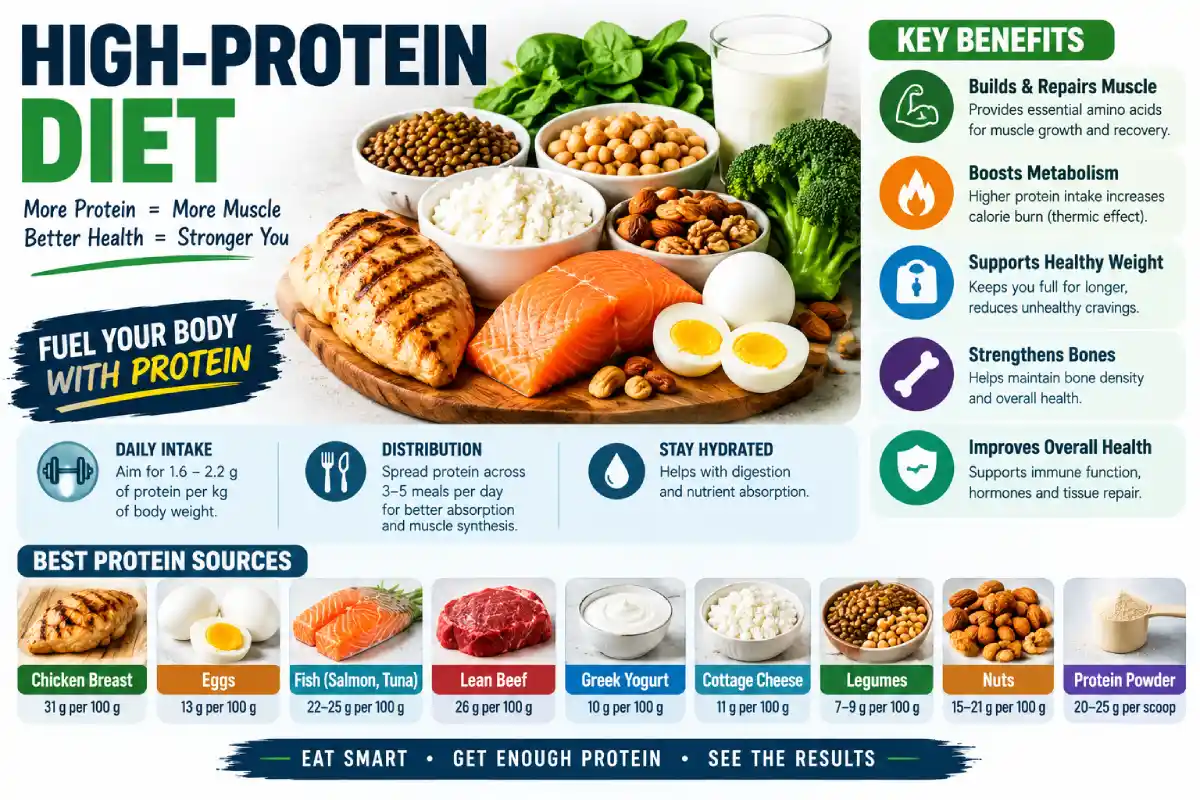
Protein won the nutrition popularity contest somewhere along the way. It’s on cereal boxes now. Yogurt companies brag about it like protein was the whole point of yogurt all along. Every third product at the store has “high protein” stamped across the front, whether the claim means anything or not.
Here’s the thing, though — most of the hype isn’t actually wrong, even when the marketing gets ridiculous. Protein does more for hunger, muscle, and metabolism than almost any other single nutrient you could adjust. The real problem is that “eat more protein” is vague, and most people underestimate — by a lot — how far short they’re actually falling. Let’s get specific.
High Protein Diet Plan
A high protein diet plan generally lands somewhere around 1.2 to 2.2 grams per kilogram of bodyweight a day, depending on the goal — lower end for general health, higher end if you’re training seriously or building muscle. Compare that to the standard baseline of 0.8 g/kg, a number set to prevent outright deficiency, not to help anyone perform or build anything, and the gap between “adequate” and “actually useful” gets obvious fast.
The structure that tends to work: spread protein across three or four meals instead of dumping it all into dinner. Research keeps landing on the same range — your body uses protein most efficiently for repair in doses of roughly 25 to 40 grams at a time. Past that, the extra mostly gets burned for energy rather than used to build anything. So something like 30 grams at breakfast, 35 at lunch, 40 at dinner, plus a protein-heavy snack somewhere in the mix — that tends to beat the same total crammed into one giant meal.
Most people don’t actually disagree with any of this. Where they trip up is serving size. One chicken breast. A scoop of protein powder. Two eggs. None of it gets close to 40 grams alone. Hitting a genuinely high-protein day usually takes more deliberate planning than people expect the first time they sit down and actually track it.
High Protein Foods
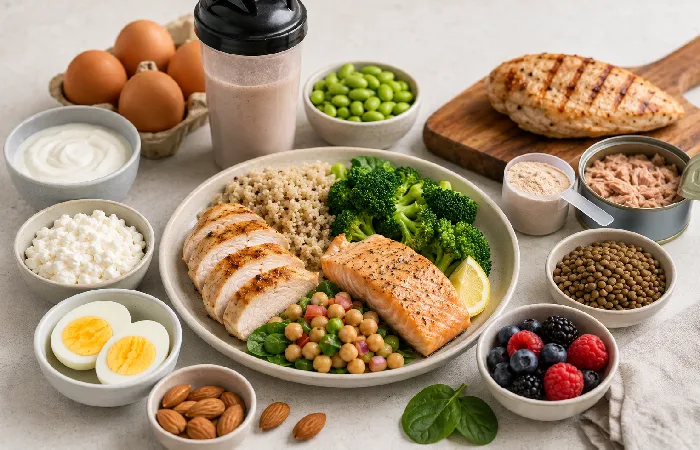
Knowing the target number matters less than knowing what actually gets you there — and protein density varies wildly across foods that all get lumped into the same vague “protein source” bucket.
Animal proteins tend to be the most efficient route. Chicken breast, lean beef, turkey, pork tenderloin — all land around 25 to 30 grams per typical serving. Fish and shellfish are similarly dense, salmon adding a favorable fat profile on top. Eggs are the reliable workhorse, roughly 6 grams each. Greek yogurt — plain, unsweetened specifically — punches well above regular yogurt, 15 to 20 grams per cup, mostly because of how it’s strained.
Plant sources get you there too. They just ask for more volume. Lentils, chickpeas, black beans — around 15 grams per cooked cup. Tofu and tempeh sit in similar territory, tempeh edging slightly higher thanks to its denser texture. Edamame’s underrated — close to 17 grams a cup, and it’s genuinely enjoyable as a snack rather than a chore. Cottage cheese deserves its own mention here too. One of the highest-protein dairy options out there, and it gets ignored constantly in favor of Greek yogurt.
The quiet letdown for a lot of people: nuts and nut butters. Marketed like protein sources, really more of a fat source with protein tagging along. A tablespoon of peanut butter, about 4 grams of protein, 100 calories — not nothing, but nowhere near the protein powerhouse the packaging implies.
Protein Diet for Weight Loss
The weight-loss case for protein comes down to a few mechanisms stacking on top of each other, all pointing the same direction. Protein is the most satiating macronutrient — keeps you fuller longer per calorie than carbs or fat, which translates fairly directly into eating less without white-knuckling hunger the whole time.
There’s a metabolic piece too, worth knowing about. Protein has a higher thermic effect than fat or carbs — your body burns more just digesting and processing it. Roughly 20 to 30% of protein’s calories go toward that process alone, versus 5 to 10% for carbs, even less for fat. Not a huge number in isolation. Stacked across a whole diet, though, it adds up to a real, if modest, edge.
The piece that matters most during actual weight loss: muscle preservation. Any sustained calorie deficit risks taking some muscle down with the fat, and higher protein intake specifically guards against that — more of what you lose ends up being fat rather than lean tissue. That’s why a lot of high-protein weight-loss plans hold protein steady, sometimes even raise it, while cutting calories from somewhere else entirely — usually refined carbs, added fats — instead of trimming protein along with everything.
None of this makes protein magic on its own. A deficit still has to exist somewhere. But protein makes that deficit far more livable, and livability is usually the actual deciding factor between a diet that works long-term and one that quietly dies by week three.
High Protein Meal Plan
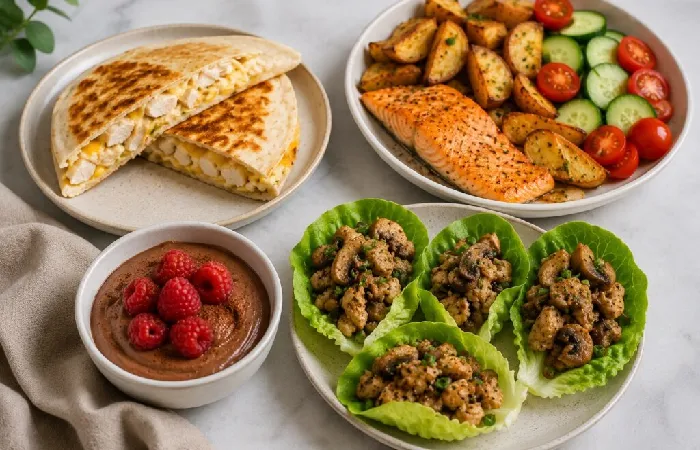
Structure beats any single recipe here. A high protein meal plan is really about building a pattern you can repeat, not memorizing a list of dishes.
Breakfasts that consistently deliver: Greek yogurt with berries and a scoop of protein powder stirred in, a three-egg omelet with cottage cheese folded through it, overnight oats made with protein powder and milk instead of water. Lunch works best built around lean protein plus volume — a big salad with grilled chicken and chickpeas, or a grain bowl where lentils and a protein source sit at the center instead of being an afterthought scattered on top.
Dinner’s usually the easiest place to hit protein targets, since it tends to be the biggest meal anyway — salmon or lean beef with vegetables and a modest starch lands in the 35 to 45 gram range without trying particularly hard. Snacks are where people leave the most protein on the table without realizing it: cottage cheese, a shake, hard-boiled eggs, edamame — all of it beats the default chips-or-granola-bar combo by a wide margin for similar or fewer calories.
The trick that actually makes this sustainable rather than exhausting: build two or three breakfasts, lunches, dinners you genuinely like, and rotate through them instead of chasing a different meal every day. Consistency wins here. Chase novelty and you’ll burn out before the habit even forms.
Diet for Muscle Gain
A diet for muscle gain shares most of its DNA with general high-protein eating, minus one key difference — it needs a calorie surplus, not a deficit. Building new tissue takes more energy coming in than going out, no way around that.
Protein needs actually creep a bit higher during a muscle-building phase, usually toward 1.6 to 2.2 g/kg, since the goal shifts from preserving what’s there to maximizing the signal for building more. Timing gets slightly more attention here too — a solid protein dose within a couple hours of training takes advantage of the window when muscle is most receptive to rebuilding, though total daily intake still outweighs nailing that window perfectly.
Carbs matter more in a muscle-gain context than they do for weight loss. They fuel the actual training sessions creating the stimulus for growth in the first place, and they refill glycogen so the next workout doesn’t start from empty. A reasonable structure leans on rice, oats, potatoes, fruit specifically around workouts, protein and vegetables anchoring everything else.
The trap a lot of people fall into trying to build muscle: assuming protein alone does the job, without the surplus or the actual training behind it. Protein makes the case for growth. It can’t manufacture the demand for it. That still has to come from training that gets progressively harder over time — no supplement substitutes for that part.
The Bottom Line
High protein diet plan, high protein foods, protein for weight loss, meal planning around protein, eating to build muscle — five angles on one underlying idea, really, not five separate strategies. Protein does more for satiety, muscle preservation, and metabolic efficiency than almost anything else sitting on your plate. Where they actually diverge is calorie balance and timing — deficit for weight loss, surplus for muscle gain, protein staying elevated through either direction regardless.
Start by figuring out how much protein you’re actually getting on a normal day — most people are surprised, once they track it honestly, by how far short they land. Build meals around a real protein source first, fill in the rest around it, adjust total calories depending on whether the goal is losing weight or putting on muscle. The number matters less than the habit of hitting it, meal after meal, without having to think too hard about it six months in.