
Hydration powders have become more widely used by athletes, those to maintain healthy fluid intakes, and by business/traveling audiences. Hydration powders work by providing hydration for the fluid intake of the users. Having some knowledge of how to use the hydration powder responsibly is a desirable thing as people may not get enough of the hydration powders benefits or not enough of the electrolyte if they have too much. Hydration powders The hydration powders (electrolytes) hydration powders mostly contain electrolytes such as sodium or potassium, magnesium and even carbs to aid in maintaining the flow of fluids through your body. When used sparingly these single use hydration powders are an effective means of keeping you hydrated when working out, in warm weather, suffering from illnesses or when shedding a lot of sweat.
What Is Hydration Powder?
Hydration powder The purpose of this is to be a powder supplement which is added to water. more often it is used to replace nutrients which support regular fluid balances.
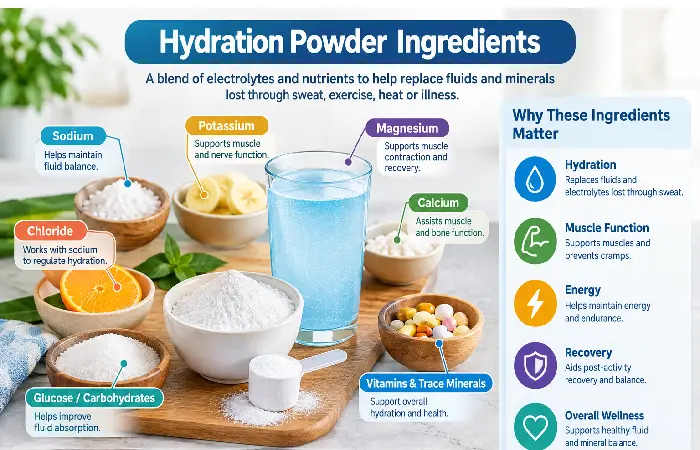
Common ingredients include:
- Sodium
- Potassium
- Magnesium
- Calcium
- Chloride
- Glucose or carbohydrates (in some formulas)
- Vitamins and trace minerals
Some products are designed for different functions: sports, general, travel, replacement, endurance.
Hydration Powder Ingredients
| Ingredient | Purpose |
| Sodium | Helps maintain fluid balance |
| Potassium | Supports muscle and nerve function |
| Magnesium | Supports muscle contraction and recovery |
| Calcium | Assists muscle and bone function |
| Glucose | Helps improve fluid absorption |
| Chloride | Works with sodium to regulate hydration |
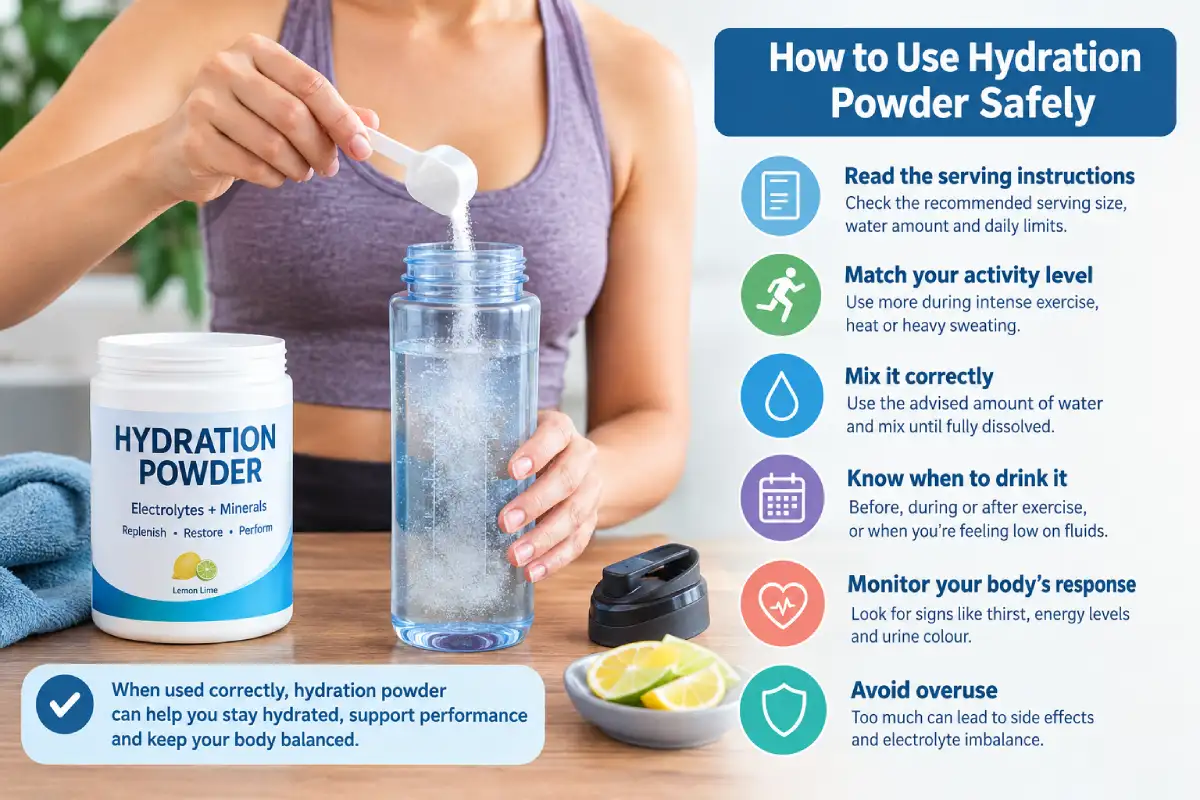
How to Use Hydration Powder Safely
Using Hydration Powder Safely. The first step in understanding why you may need to use hydration powder and in knowing how much to use is.
Step 1: Read the Serving Instructions
Different brands contain varying electrolyte levels. Always check:
- Recommended serving size
- Water mixing instructions
- Daily usage recommendations
- Sodium content per serving
Step 2: Match Intake to Activity Level
A person completing a moderate, short walk does not need the level of electrolytes a marathon may require.
General examples:
| Activity Level | Typical Need |
| Sedentary lifestyle | Water is usually sufficient |
| Light exercise | Occasional hydration powder |
| Moderate exercise | Useful during or after activity |
| Endurance sports | Often beneficial before, during, and after exercise |
| Heavy sweating jobs | May help replace electrolyte losses |
Step 3: Mix Correctly
Adding too little water can create an overly concentrated drink.
Best practice:
- Measure the recommended serving.
- Add the advised amount of water.
- Mix thoroughly.
- Consume according to activity level.
Step 4: Monitor Your Response
Pay attention to:
- Thirst levels
- Urine colour
- Energy during exercise
- Digestive comfort
When to Drink Hydration Powder
One of the most common questions is when to drink hydration powder.
Hydration needs vary based on climate, exercise intensity, and individual sweat rates.
Before Exercise
Drinking hydration powder before training may help support fluid levels if:
- You exercise in hot conditions
- You sweat heavily
- Sessions last longer than 60 minutes
During Exercise
It may be useful during:
- Endurance running
- Cycling
- Team sports
- Extended outdoor activities
After Exercise
Recovery hydration may help replace fluids and electrolytes lost through sweat.
Other Situations
Hydration powders are sometimes used during:
- Travel
- Hot weather
- Outdoor work
- Mild dehydration caused by illness
Electrolytes Before or After Workout?
The answer depends on training duration and intensity.
| Timing | Potential Benefit |
| Before workout | Supports hydration status before exercise |
| During workout | Helps replace ongoing losses |
| After workout | Supports recovery and fluid replacement |
For most recreational exercisers, using electrolytes before or after a workout may be sufficient. Endurance athletes may benefit from consuming them during activity as well.
How Much Hydration Powder Per Day?
Many people wonder how much hydration powder per day is appropriate.
There is no universal amount because needs vary based on:
- Body size
- Sweat rate
- Activity level
- Weather conditions
- Overall diet
General guidance:
| Situation | Typical Usage |
| Everyday hydration | 0–1 serving |
| Moderate exercise | 1–2 servings |
| Heavy sweating | Follow product instructions |
| Endurance events | May require multiple servings |
Avoid assuming that more electrolytes automatically provide better hydration.
Can You Drink Electrolytes Every Day?
A common question is can you drink electrolytes every day?
For many healthy adults, occasional daily use may be reasonable, particularly when:
- Living in hot climates
- Exercising regularly
- Working outdoors
- Experiencing high sweat losses
However using it every day might not be needed by everyone. People who are already getting electrolytes, from their food and drink might not need to take more.
Those who have kidney disease, heart problems or specific diet rules should talk to a doctor before using it.
Hydration Powder Side Effects
Most people tolerate hydration powders well when used as directed. However, excessive intake can contribute to unwanted effects.
Potential Hydration Powder Side Effects
- Stomach discomfort
- Bloating
- Nausea
- Diarrhoea
- Increased thirst
- Temporary fluid retention
Some products contain significant sodium levels, which may not be suitable for every individual.
Too Many Electrolytes Symptoms
Understanding too many electrolytes symptoms can help prevent overconsumption.
Possible signs include:
- Persistent nausea
- Stomach upset
- Swelling or puffiness
- Excessive thirst
- Headaches
- Muscle weakness
- Irregular heartbeat in severe cases
These symptoms can be caused by a variety of conditions and can not be assumed to be due to electrolyte intake. Continued symptoms should be investigated by a doctor.
Hydration Powder Safety Workflow
Simple Safe-Use Workflow
Assess Need → Choose Product → Read Label → Mix Correctly → Monitor Hydration → Adjust Intake
- Determine hydration requirements.
- Select an appropriate product.
- Follow serving directions.
- Drink according to activity demands.
- Monitor hydration indicators.
- Avoid unnecessary overuse.
Benefits and Limitations of Hydration Powders
| Potential Benefits | Limitations |
| Convenient hydration support | Not always necessary |
| Replaces electrolytes lost in sweat | Some products contain high sodium |
| Portable and easy to use | Can be overused |
| Useful during endurance activity | May cause digestive discomfort in some people |
Who May Benefit Most?
Hydration powders may be suitable for:
- Athletes
- Runners
- Cyclists
- Outdoor workers
- Frequent travellers
- Individuals exercising in hot climates
Who Should Be More Cautious?
People with:
- Kidney disease
- Heart disease
- Sodium-restricted diets
- Certain blood pressure conditions
Alternatives to Hydration Powders
Other hydration options include:
| Alternative | Notes |
| Plain water | Suitable for most daily hydration needs |
| Coconut water | Naturally contains electrolytes |
| Milk | Provides fluid and minerals |
| Oral rehydration solutions | Used in specific hydration situations |
| Electrolyte tablets | Alternative portable option |
Conclusion
Knowing what you can and cannot do with hydration powder will allow you to make educated choices about hydration for exercise, travel, hot weather, or even any-day situations. As long as you intakes them according to your hydration requirements, using the recommended servings, and not touting extra electrolytes as being inherently superior, They are ultimately a great and easy way to Stay hydrating. They should be used as part of an integrated system of responsible water consumption, balanced nutrition, and health consideration.