
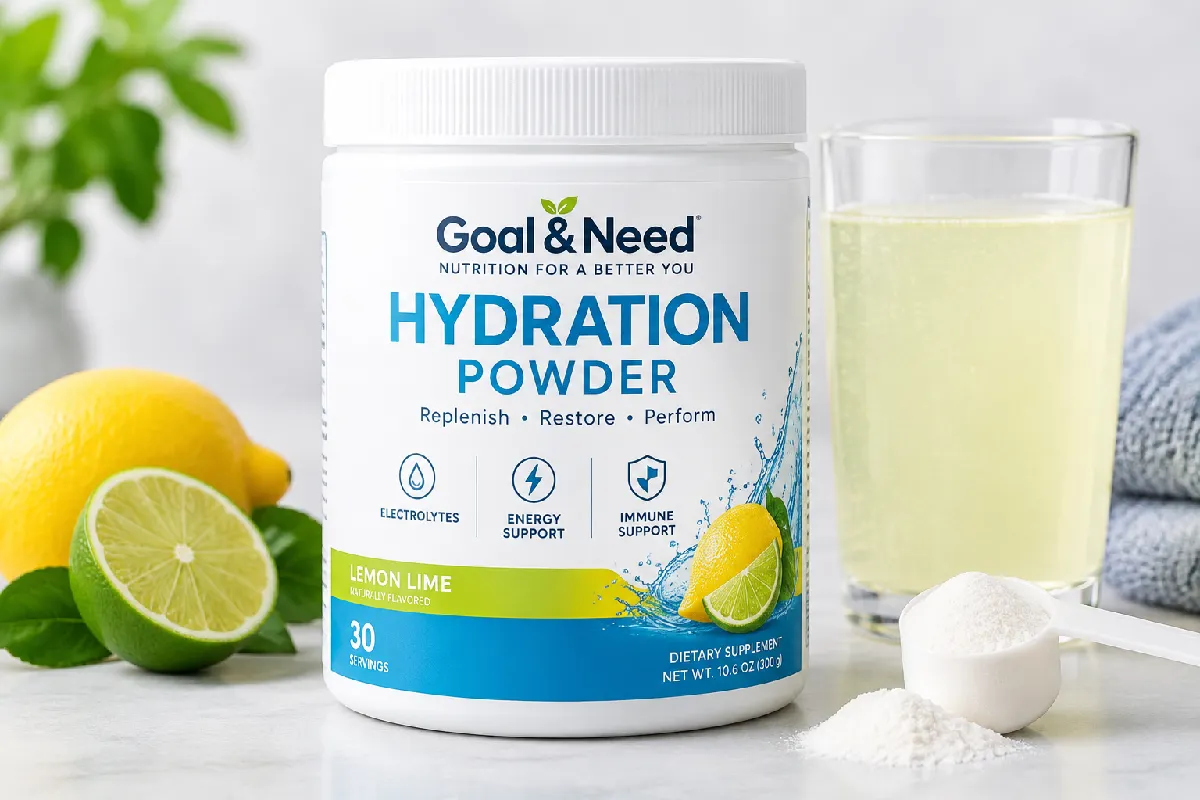
Open any supplement aisle and you’ll see the same problem: shelf after shelf of hydration powders, each one claiming to be the smartest choice for “better energy” or “next-level hydration.” Most of that is noise. What actually matters is much narrower — does this particular formula match what your body needs right now?
That’s really what hydration powder by goal and need comes down to. Not brand, not packaging, not flavour marketing. A marathon runner and someone who just forgets to drink water at their desk are solving two completely different problems, and no single tub of powder solves both well.
A hydration powder works best when it’s matched to your situation — your sweat rate, how much sodium you’re losing, and the gap between what you drink and what you actually need. Training hard in the heat calls for something different than topping up your water intake on an ordinary Tuesday.
Hydration Powder for Dehydration — What Actually Helps
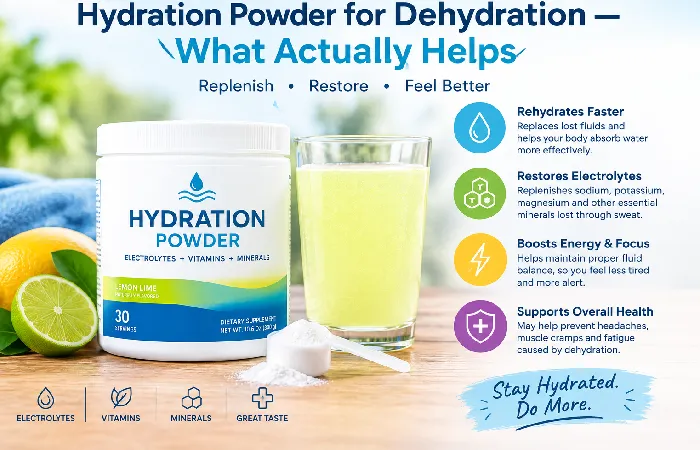
Dehydration from illness, heat, or simply under-drinking responds better to a formula with a specific sodium-to-glucose balance than it does to a sugary sports drink. This is closer to what’s used in oral rehydration solutions — the ratio matters more than the flavour.
A few things worth checking on the label:
- Sodium somewhere around 300–500mg per serving
- Enough sugar to help absorption, without it tasting like a milkshake
- Potassium alongside the sodium, not instead of it
One thing worth being honest about: a hydration powder is genuinely useful for everyday dehydration — after a stomach bug, a hot day, forgetting to drink for hours — but it isn’t a treatment for severe dehydration. If someone, especially a child or an older adult, seems seriously unwell, that’s a medical situation, not a supplement one.
Hydration Powder for Endurance Training
Anyone doing long training sessions — running, cycling, triathlon — loses sodium steadily, not just water. Formulas built for endurance tend to run higher in sodium than a general wellness mix, and some include a bit of carbohydrate too, mostly for sustained energy over a long effort.
| Feature | General Hydration Mix | Endurance-Focused Mix |
| Sodium per serving | 150–250mg | 300–500mg+ |
| Carbohydrate | Minimal or none | 5–15g in some formulas |
| Typical use | Everyday fluid top-up | Sessions over roughly 60–90 minutes |
| Flavour strength | Milder | Often stronger, meant for more water |
Take a 90-minute run on a warm afternoon as an example. Sweat losses climb quickly in that scenario, and a low-sodium daily blend just won’t keep pace the way an endurance-specific one will.
Hydration Powder for Recovery
Recovery blends often add amino acids or a touch of protein on top of the usual electrolytes, aimed at the window after training rather than during it. It’s worth keeping expectations grounded here — no powder replaces actual protein intake, sleep, or rest days. What it does do is help put back the fluid and sodium lost during a session, which supports recovery without being the main driver of it.
Hydration Powder for Hot Weather
Heat changes the maths. Sweat rate goes up, sodium loss goes up with it, and a formula that’s fine on a mild spring day can fall short in a heatwave or heavy humidity.
What tends to actually help:
- More sodium per serving than you’d use normally
- Smaller, more frequent doses rather than one big hit
- Using it alongside plain water, not as a replacement for it
It’s also worth saying plainly: no hydration powder prevents heat illness on its own. Shade, pacing yourself, and easing off during the hottest part of the day still do more heavy lifting than anything you mix into a bottle.
Hydration Powder for Travel
Long-haul flights, jet lag, unfamiliar food and water — travel throws a few specific hydration challenges at you. Powders made for travel usually prioritise convenience over intensity: single sachets, no need for refrigeration, and generally lower in sodium since the goal is steady fluid support rather than replacing heavy sweat losses.
Where this tends to come up in practice: on long flights, where the cabin air is drier than most people realise; adjusting to a hotter or more humid destination; or as a backup where you’re not confident about local water quality — alongside proper filtering or bottled water, not in place of it.
Daily Hydration Powder for General Use
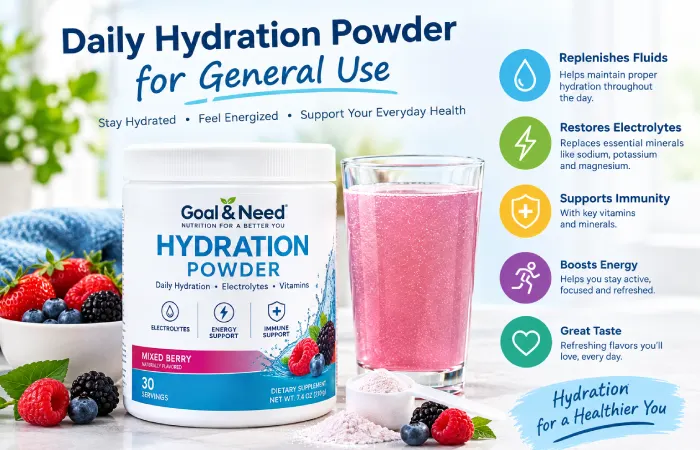
For people who aren’t training intensively, a daily hydration powder is a mild top-up more than anything else — a way to drink more water consistently, without leaning on sugary drinks to make it palatable.
This tends to suit office workers, people trying to build a better water habit, or anyone who finds plain water dull enough that they end up under-drinking because of it. On the flip side, someone eating a varied diet and already drinking enough water probably doesn’t need this. It’s a convenience, not something the body is missing.
Quick Comparison by Goal
| Goal | Sodium Focus | Sugar/Carb Content | Best Time of Use |
| Dehydration recovery | High, balanced ratio | Low-moderate | As needed; medical care if severe |
| Endurance training | High | Moderate | During or after long sessions |
| Post-workout recovery | Moderate-high | Low-moderate | Within 1–2 hours after training |
| Hot weather | High | Low-moderate | Little and often, throughout activity |
| Travel | Low-moderate | Low | Flight days, adjusting to destination |
| Daily use | Low-moderate | Low | Morning, or spread across the day |
A Simple Way to Choose
- Work out what’s actually driving your need — exercise, heat, illness, travel, or just low daily intake.
- Match the sodium level to that trigger. More for sweat-heavy activity, less for general use.
- Check sugar and carbs against your goal — this matters far more for endurance than for daily hydration.
- Give one product a proper two-week trial before switching, so you can judge taste and tolerance fairly.
- Revisit the choice by season. What works in summer often isn’t what you need in winter.
Being Realistic About What This Does
Hydration powders help, but they’re a support, not a shortcut. They won’t undo a poor training plan, fix a fluid deficit that’s built up over several days, or make up for chronically low water intake by themselves. Matched properly to the situation, though, they do make staying hydrated a bit easier and more consistent — and for a lot of people, that consistency is the actual win.
FAQs
What is the best hydration powder by goal and need?
There’s no single answer — the right hydration powder by goal and need depends on your sodium losses, how long you’re active for, and the climate you’re in. An endurance athlete needs considerably more sodium than someone using a mild daily blend.
Can I use an endurance hydration powder every day?
You can, though it’s likely more sodium than a low-activity day actually calls for. It’s not harmful for most healthy adults, just not necessary either.
Is hydration powder safe for people with high blood pressure?
Some formulas run high in sodium, so it’s worth checking the label and having a word with a GP or pharmacist before using one regularly if blood pressure is a concern.
Do hydration powders replace water intake?
No — they’re built to go into water, not stand in for it. Most are meant as a mix-in, not a standalone fluid source.
Conclusion
Picking the right hydration powder by goal and need really is about matching the formula to what’s actually going on — hard training, hot weather, travel, or just trying to drink more water day to day. There’s rarely one “best” option overall, but there’s usually one that fits your situation noticeably better than the rest. Start with the goal, check the sodium and sugar against it, and adjust as your activity or environment shifts.