
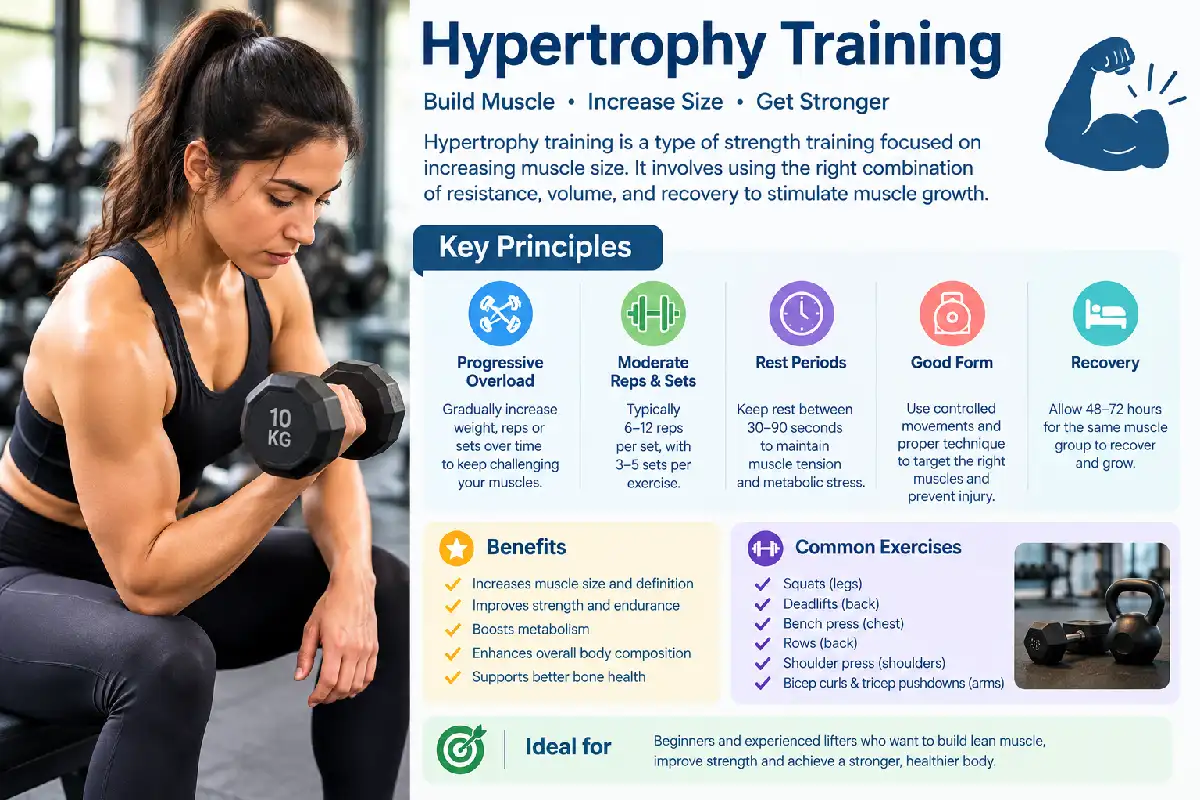
If your primary goal in the gym is to be bigger, rather than stronger or healthier, hypertrophy training is what will help you to achieve that goal. It is an umbrella term for a broad range of different training strategies that are used with specific intent to create the physiological environment necessary to drive muscular growth through appropriate mechanical tension, metabolic stress, and overall volume.
There is not a single right way to train for hypertrophy, though, and different methods have been developed to favor training with moderate reps using heavier weights or emphasize the “pump” that comes from working muscles with higher reps. Understanding the principles and practical differences that distinguish popular approaches will allow you to devise a plan that fits your current experience, recovery ability, and time constraints.
What Is Hypertrophy Training?
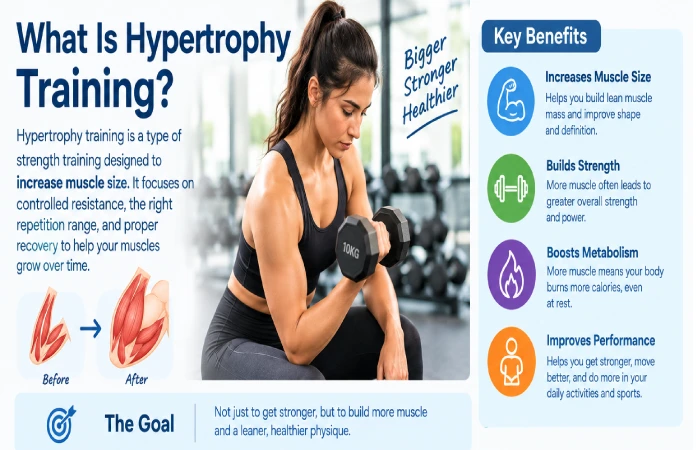
Hypertrophy training is a catch-all term for any resistance training program that specifically emphasizes building the size of the muscles. Such programs typically take a backseat to those focused primarily on maximal strength, although there might be a significant overlap in the techniques used to accomplish the goals of both.
Muscle growth is driven by a combination of mechanical tension, metabolic stress, and muscle damage. Most approaches attempt to favor one of these mechanisms, and this is what leads to the emergence of the most commonly used training styles.
There is no single best way to train for muscle growth, as the choice between the methods should be informed by individual factors such as the level of training, available time and equipment, and personal preferences.
How to Choose Between Different Hypertrophy Training Approaches
Before choosing the specific method to follow, it is important to assess which of the listed goals align with your personal objectives in the gym:
- building overall size
- catching up lagging muscles
- building muscle while being strong
- training in the limited amount of time
- training with limited equipment
- accommodation of joint stress
- combining with fat loss
It is also important to realistically evaluate your ability to perform the required number of sets per week and the overall volume. The choice of training style will be informed by the ability to complete six sets per week for a given muscle group or run five days per week.
Traditional Bodybuilding Style Hypertrophy Training
This is the go-to approach for most people who train in hypertrophy to gain size. It typically calls for moderate reps and weight, and a blend of isolation and compound movements performed in a bodybuilding split that prioritizes the development of individual muscles.
The approach typically calls for:
- a rep range between 8 and 12 with a moderate to heavy load
- 3 to 5 sets per exercise
- 60 to 90 s of rest between sets
- a combination of compound and isolation movements
- training each muscle group once or twice per week
A chest and triceps day in a bodybuilding split, for example, will include a barbell bench press for 8 reps performed in 4 sets followed with incline dumbbell press, flyes, and a couple of triceps isolation exercises.
Traditional Bodybuilding Style Pros and Cons
Pros:
- widely used and understood
- allows to specifically target individual muscles
Cons:
- more time needed in the gym
- lower training frequency
High-Volume Hypertrophy Training
This approach is similar to the traditional bodybuilding split but aims to increase overall training volume by increasing the number of sets performed per muscle group per week and/or the frequency of training.
Such programs typically call for:
- moderate to high training volume (15 to 20 sets or more per muscle group per week)
- higher frequency (two or more times per week for each muscle)
- moderate weights to allow higher volume to be used
- increased emphasis on recovery, nutrition, and sleep
High-Volume Pros and Cons
Pros:
- higher training frequency and volume that can be beneficial for most
Cons:
- the higher volume typically requires more recovery and can lead to overtraining if not balanced
High Intensity, Low Volume Training (HIT)
This approach is focused on maximizing the growth per set by performing an exercise with a heavy load close to muscular failure and taking a long break before the next set. These principles are applied to a reduced number of exercises with lower overall volume performed per week.
Such a program typically includes:
- one or two working sets per exercise performed close or at muscular failure
- longer rest between sets
- a reduced number of exercises and overall sets per week
- emphasis on maximal intensity per set with moderate to high load
HIT Pros and Cons
Pros:
- time-efficient
- reduced stress on the joints due to overall lower volume
Cons:
- lower overall volume may limit hypertrophy potential
- training to failure may increase recovery needs
Metabolic and Pump-Focused Hypertrophy Training

This approach is focused on emphasizing the metabolic stress and the “pump” that occurs when training with higher reps and reduced rest between sets, and employing special techniques to increase time under tension.
The program typically calls for:
- higher reps (15 to 25 or more)
- short rests between sets (30 to 60 s or more)
- special techniques to accentuate the metabolic stress
- emphasis on the pump as a sign of a productive workout
Metabolic and Pump-Focused Pros and Cons
Pros:
- excellent way to add variety to a regular routine
- can be used to target individual muscles and accommodate joint stress
Cons:
- may not be sufficient on its own to drive hypertrophy due to the lack of mechanical tension
- can be exhausting to do
Powerbuilding: Combining Hypertrophy and Strength Training
This is a hybrid approach that combines the elements of strength and hypertrophy training. Powerbuilding calls for using higher weight and lower reps to develop strength with an emphasis on the big three lifts (squat, bench, and deadlift), and using moderate to high reps for the accessory work to build size.
It typically has:
- a heavy compound movement at the beginning of a workout to build strength
- hypertrophy-focused accessory work to build size
- an emphasis on overall volume and progressive overload to increase both strength and size
Pros:
- allows to build both size and strength
- popular among intermediate lifters due to the appeal of this combination
Cons:
- progression in either may be slower due to increased overall volume and the need to balance the goals
Comparing Different Styles of Hypertrophy Training
- Training style
- Main focus
- Typical Rep Range
- Potential advantage
- Common limitation
- Traditional bodybuilding
- Balanced muscle building
- 8–12 reps
- Approachable and well researched
- More time in the gym and lower frequency
High-volume
- Maximizing volume
- 8–15 reps
- Increased stimulus for advanced lifters
- Higher recovery demands
- High-intensity, low volume
Efficiency
- 6–12 reps to failure
- Shorter workouts
- Lower overall volume
- Metabolic/ pump focused
- Metabolic stress
- 15–25+ reps
- Good for variety and some joints
- Less mechanical tension
Powerbuilding
- Strength + size
- Varying (3–15 reps)
- Can be good for overall development
- Higher volume to accommodate both
All of these approaches can be combined in a single plan, as most programs that successfully build muscle utilize elements of different styles.
What Should a Good Hypertrophy Workout Plan Include?
Rather than focusing on the specific list of exercises, it is more useful to examine the broad principles that constitute a productive plan for muscle growth.
An adequate weekly volume: This refers to the total number of working sets performed for a given muscle per week, and it typically falls between 10 and 20 sets per week depending on the experience and recovery ability of a lifter.
A realistic training frequency: It typically refers to the number of times a muscle is trained per week, and it should be at least two times per week for most intermediate lifters.
A blend of rep ranges: Most productive plans will include a blend of lower, moderate, and higher reps ranges.
A progressive overload: It calls for making the workouts harder over time by increasing the weight, reps, or sets to provide an increased stimulus for muscle growth.
Appropriate recovery: Plans should include appropriate rest between sets, days, and weeks to allow for growth and adaptation.
Hypertrophy Rep Range: Why It Matters
Due to the prevalence of training for size, the discussion around the best rep range for hypertrophy is a popular topic that has been going on for years. Due to the nuances involved, this is a subject that will have a dedicated section later in the article.
One of the popular beliefs was that 8–12 reps was the best range for building muscle size due to the combination of mechanical tension, while lower and higher rep ranges would emphasize strength and endurance. The more recent research indicates that a large range of rep ranges – from approximately 5 to 30+ – can be effective for building muscle as long as the other variables (volume and time under tension) are accounted for.
Despite the fact that any range can be potentially effective for building muscle, most lifters will find that the different rep ranges affect the perceived difficulty of the exercises, the load on the joints, and the overall recovery needed.
- Rep range category
- Reps per set
- Weight per set
- Time under tension
- Primary focus
- Lower reps (5–8)
- Higher
- Time under tension is lower due to faster contraction
- Mechanical tension
Metabolic stress
It is not necessary to pick a single rep range for all exercises, as most individuals will benefit from using a rep range that suits the qualities of an exercise and the goals of the phase. Using a rep range that is somewhat lower for compound movements and higher for isolation exercises is one of the viable options.
Progressive Overload For Hypertrophy: Why It Matters
Progressive overload is one of the most important concepts in resistance training, and its application is the primary differentiator between programs that effectively build muscle and the ones that do not.
The principle is relatively straightforward – it calls for a gradual increase in training demand to stimulate continuous adaptation. There are several ways to do this, including adding more weight, performing additional sets and reps, or changing the angle of the movement.
Without progressive overload, a body that has adapted to a given stimulus will stop responding to it, which is one of the primary reasons why most beginner programs stop delivering results after a few weeks. It is important to note that progressive overload does not have to be applied every week – a more viable approach for most is to gradually increase the demand in a given set, or over the course of a block of training.
Hypertrophy Training Selection Workflow: How to Pick the Right Approach for You
Developing a personal plan for hypertrophy training is easier when following a systematic process.
1: Pick the training style based on your experience
Beginners typically perform best with full-body or upper/lower splits at a moderate volume, while more advanced lifters may benefit from emphasizing either higher volume or a more split-specific approach.
2: Pick the rep range based on your goals
Decide whether you want to use a singular moderate rep range or vary the range by exercises.
3: Pick a progression system
It can be anything from a spreadsheet to a simple notebook that will be used to track and increase the demand.
4: Decide on the training frequency and volume based on the chosen style
5: Add recovery days and deload weeks
They should be included from the beginning to avoid overtraining.
6: Track the progress
Use appropriate metrics (body measurements, pictures, weight on the bar, etc.) to determine whether a given plan is effective.
7: Adjust the plan if necessary
If a certain volume or frequency left you sore and unable to perform well in the next training session, it may be necessary to adjust it.
What to Expect When Starting Hypertrophy Training
When starting to train for hypertrophy, it is important to remember that most of the visible changes to the body will be seen after a few months of consistent training. In the beginning, most of the increases in strength will be due to neural adaptations, while the actual muscle growth will be visible after more time under tension.
The rate at which someone will be gaining weight and muscle depends on a number of factors, including training age, genetics, nutrition, sleep, consistency, and stress levels.
Pros and Limitations Of Popular Hypertrophy Training Styles
Traditional Bodybuilding Splits
Pros:
- widely used and understood
- allows to specifically target individual muscles
Cons:
- more time needed in the gym
- lower training frequency
High-Volume
Pros:
- higher training frequency and volume that can be beneficial for most
Cons:
- the higher volume typically requires more recovery and can lead to overtraining if not balanced
High Intensity, Low Volume Training (HIT)
Pros:
- time-efficient
- reduced stress on the joints due to overall lower volume
Cons:
- lower overall volume may limit hypertrophy potential
- training to failure may increase recovery needs
Metabolic and Pump-Focused
Pros:
- excellent way to add variety to a regular routine
- can be used to target individual muscles and accommodate joint stress
Cons:
- may not be sufficient on its own to drive hypertrophy due to the lack of mechanical tension
- can be exhausting to do
Powerbuilding
Pros:
- allows to build both size and strength
- popular among intermediate lifters due to the appeal of this combination
Cons:
- progression in either may be slower due to increased overall volume and the need to balance the goals
Common Mistakes When Starting Hypertrophy Training for Beginners
Chasing soreness
Extremely sore muscles after a workout are not a sign that a person has performed a productive workout. Many first-time trainees report that they felt that their workouts had been effective because they were very sore after them.
Program hopping
Switching programs every few weeks rarely delivers good results because it prevents the application of progressive overload.
Not accounting for progressive overload
The Not changing the weight, reps, or sets over time is an almost guaranteed way to fail when trying to build muscle.
Not accounting for recovery
Trying to train with a high volume and intensity without giving the body enough time to recover between workouts will lead to overtraining instead of muscle growth.
Not giving the right attention to diet and nutrition
Getting sufficient calories and protein is critical for muscle growth, and trying to eat clean while limiting overall calories will negatively affect the results.
Trying to follow an advanced training program
Someone with a few months of consistent training will not be able to recover from the high volume and intensity of exercises recommended for advanced lifters.
Hypertrophy Diet: What To Eat To Support Building Muscle
While training is needed to stimulate muscle growth, proper nutrition is required to allow the muscles to actually grow. A diet that supports a hypertrophy training program should have sufficient calories, protein, carbohydrates, and fats to support the demands of training.
Calories
The ability to build muscle depends on whether a person is in a calorie surplus or not. Gaining weight is only possible when the overall caloric intake exceeds the expenditure.
Protein
While the amount of protein needed to build muscle can vary, a reasonable starting point is to consume between 0,7 and 1 g of protein per pound of body weight. The distribution of protein throughout the day is also important, as consuming it in divided portions appears to support muscle growth better than eating it all at once.
Carbohydrates
Carbohydrates play an important role in a hypertrophy diet, as they supply the body with the energy needed to perform during workouts.
Fat
Healthy fats are an important component of a balanced diet because they support the production of hormones in the body. They should not be consumed in extreme amounts, however, to provide an adequate calorie surplus.
Timing
While it is not necessary to eat at specific times of the day, it is a good idea to spread out protein consumption throughout the day to support continued muscle growth.
Hypertrophy Supplementation: Can Supplements Help You Build More Muscle?
While developing a good nutrition plan is critical to support muscle growth, it can be difficult to obtain the necessary micronutrients through whole foods. The use of supplements can help to fill in the gaps and support the building of muscle.
Creatine monohydrate is one of the most researched supplements and has been shown to consistently support muscle growth while improving strength and power output.
Other supplements, including protein, whey, and casein, can support muscle growth by delivering an adequate amount of protein and calories to the body.
Sleep and Recovery Strategies for Hypertrophy Training
When building muscle, sleep and recovery play an equally important role in the process as training and nutrition. There are a number of different things that can be done to optimize them, including:
Getting enough quality sleep
Sleep allows the body to recover, and the recommended amount of it is between 7 and 9 hours per night.
Active recovery
Light resistance training or cardio on a day off can support muscle recovery.
Foam rolling
It can help to reduce the soreness and tension in the muscles after a workout.
Stretching
It is important to stretch both large and small muscles after a training session to improve flexibility.
Hypertrophy Training For Women
A training program for women interested in gaining muscle is not different in any meaningful way from the same program for men. It is based on the same principles of training, diet, and supplementation.
Women, however, may have some amount of an advantage in training for hypertrophy due to the reduced levels of testosterone, which reduces the chances of them bulking up considerably.
The Role Of Estrogen In Hypertrophy Training For Women
Estrogen is one of the primary female sex hormones that affects a number of different bodily functions, including the female reproductive system.
When it comes to the role of estrogen in muscle growth, scientific research suggests that estrogen receptors are present in the muscles, and that they can influence the development of muscle mass.
The main ways in which estrogen affects the growth of the muscles are:
- increasing the production of nitric oxide (NO), which can improve blood flow and oxygenation of the muscles
- supporting the release of growth hormone (GH), which can have an anabolic effect
- increasing the secretion of insulin-like growth factor (IGF-1)
As a result of these physiological changes, estrogen can promote muscle growth, especially when combined with the appropriate training and nutrition.
Although estrogen can contribute to muscle growth, the levels of estrogen in the muscles should not be extremely high due to the negative effects that it can have on the overall health.
The Different Types Of Growth Hormones
- Growth hormone (GH) is a peptide hormone that plays an integral role in the development and maintenance of the musculoskeletal system.
- There are a number of different GHs, each of which has a slightly different effect on the body.
- Growth Hormone Releasing Hormone (GHRH)
- This hormone stimulates the release of GH by the pituitary gland, and it is involved in the processes of linear growth, regulation of metabolism, and the normal functioning of the cardiovascular system.
- Growth Hormone-Releasing Peptide (GHRP)
- This hormone has a similar effect, but it also has an additional function of stimulating appetite. It plays a role in the development of the cardiovascular and gastrointestinal systems.
Somatostatin
Unlike the two previous hormones, this one inhibits the release of GH by the pituitary gland. It also affects the release of other hormones, including TSH, ACTH, and prolactin.
The Similarities and Differences Between Testosterone, Estrogen, and Estriol
Testosterone, estrogen, and estriol are three different types of sex hormones. While they have some similarities, they also have some important differences.
All of them have similar chemical structures that consist of four interconnected carbon rings with various functional groups attached to them. As for the differences, they are primarily expressed in the different effects that the hormones have on the body.
Testosterone, as mentioned above, is primarily found in men and has androgenic properties that influence the development of the male reproductive system and the appearance of secondary sexual characteristics.
Estrogen, on the other hand, is primarily found in women and has similar properties, but in this case, they influence the development of the female reproductive system.
Estriol is another sex hormone, but it is only present in pregnant women. It plays a major role in the development of the reproductive system of a fetus.
The Similarities and Differences Between Hypertrophy and Bodybuilding
Hypertrophy and bodybuilding are closely related, but they are also different in that hypertrophy refers to the physiological process of growing the individual muscles, and bodybuilding is a sport that involves building hypertrophy to develop the muscles over the entire body.
Both hypertrophy and bodybuilding involve the use of resistance training to stimulate the growth of muscle size, but in bodybuilding, the process is taken to an extreme to produce a shredded aesthetic look that requires extensive training, dieting, and supplementation.
The Similarities and Differences Between Hypertrophy and Bulking
Hypertrophy and bulking are similar in that they both involve the process of gaining muscle. However, they are different in that bulking is an extreme form of hypertrophy in which a person gains a significant amount of weight in a short amount of time.
Bulking typically involves consuming a calorie surplus, whereas hypertrophy does not necessarily require it. It also calls for a higher amount of protein to be consumed, and a higher ratio of protein to calories to be maintained.
Bulking is primarily done by men, whereas hypertrophy can be done by women as well. It also requires more time and effort to be put into the training, dieting, and supplementation.
The Similarities and Differences Between Hypertrophy and Strength Training
As discussed earlier, hypertrophy and strength training are similar in that they both use resistance training to stimulate the growth of the muscles. They are different in the way that hypertrophy focuses on increasing the size of a muscle, whereas strength training focuses on increasing the amount of force that a muscle can produce.
Strength training can be achieved by doing higher load exercises in a lower rep range, whereas hypertrophy can be achieved by doing moderate load exercises in a moderate rep range.
The Similarities and Differences Between Hypertrophy and Plyometrics
Hypertrophy and plyometrics are similar in that they both use resistance training exercises to stimulate the growth of the muscles. However, they are different in that plyometrics focuses on training the muscles to produce power, whereas hypertrophy focuses on training the muscles to increase in size.
Plyometrics involves doing exercises that cause the muscles to stretch and shorten rapidly by using either the legs or the arms. Some examples of these exercises are box jumps and push-ups.Consistent Meal Timing: While not as critical as total daily intake, spreading protein fairly evenly across the day appears to support muscle protein synthesis more effectively than consuming it in one large meal.
A hypertrophy diet doesn’t need to be complicated or highly restrictive to be effective. Consistency in hitting overall calorie and protein targets tends to matter more than precise meal timing or food choice within reasonable limits.
Is Hypertrophy Training Suitable for Everyone?
Not automatically, no.
People with certain joint conditions, recent injuries, or specific medical concerns may need modified programming, reduced loading, or professional guidance from a physical therapist or qualified coach before beginning a hypertrophy-focused program.
Older adults and complete beginners generally benefit from starting with lower volume and a longer period focused on learning proper technique before progressing to higher-intensity or higher-volume approaches.
Anyone managing a cardiovascular condition or other relevant health concern should get individual guidance from a healthcare provider before beginning an intensive resistance training program, particularly one involving training close to failure.
The goal shouldn’t be to copy the most extreme or advanced program available. It should be to find a hypertrophy training approach that’s appropriate and sustainable for your current experience level and health status.
Final Thoughts
Hypertrophy training isn’t a single rigid formula — it’s a set of principles (adequate volume, a workable rep range, progressive overload, and enough recovery) that can be applied through several different training styles, from traditional bodybuilding splits to high-volume training, low-volume high-intensity work, metabolic pump-focused sessions, or a powerbuilding hybrid.
The right approach for you depends on your training experience, how much time and recovery capacity you actually have, and which style you’ll realistically stay consistent with over the months it takes to see meaningful results. Diet matters just as much as the training itself, since muscle growth ultimately depends on providing your body with enough calories and protein to build new tissue.
If you have a specific injury, medical condition, or other individual health concern, it’s worth getting guidance from a physical therapist, qualified coach, or physician before starting or significantly changing a hypertrophy training program.