
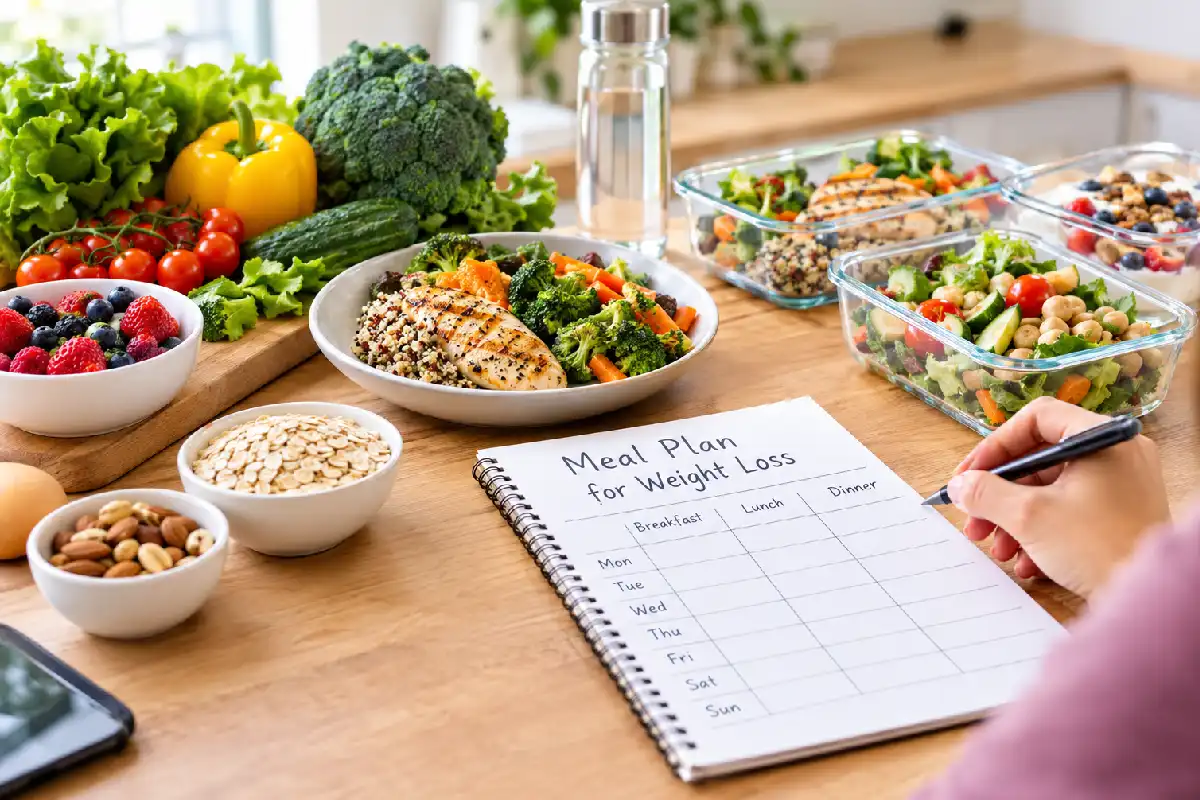
Eating healthy every day, while trying to lose weight? Genuinely hard. Planning meals ahead changes that, though. Control over the type and size of what you eat. Healthier options, picked before the cravings even show up. Before life gets too hectic and you just grab whatever’s around. No strict diet required. Foods you actually love still fit in, and that’s how the habit actually sticks.
What Is Meal Planning for Weight Loss?
Meal prep comes down to three things. What you’ll eat. A shopping list. Food ready ahead of time.
Trying to lose weight comes down to balance, calorie intake and good nutrition together. NIDDK backs this up, vegetables, fruits, grains, lean protein, dairy or substitutes in the right amounts, all of it fits into a healthy weight-control plan. But sustainable looks different for everyone. Food preferences. Activity level. Budget. Culture. Health considerations. All of it shapes what actually sticks long-term.
Healthy Meal Planning Ideas for Weight Loss
A few principles, honestly, that’s most of what a simple meal plan needs:
- Include a source of protein in main meals.
- Vegetables or fruit belong in most meals too.
- Fit in whole grains where you can. High-fibre carbs, generally, count too.
- The calorie-dense stuff, oils, nuts, sauces, keep it light.
- Snacks that are actually nutritious, kept somewhere convenient.
- Your real schedule, not some idealised version of one, that’s what meals should plan around.
Carbs don’t have to go. Fats don’t either. Treats still fit in, sometimes. Bend the plan a little and it tends to actually last.
How to Build a Balanced Meal Plan
Range matters here. A long-term menu built on the same one or two foods, over and over, just doesn’t hold up. Picture a plate instead. Vegetable or fruit. Protein. A carb. A bit of fat to round it out. Exact amounts depend on the person, their calorie needs, their nutrient needs. Weekday lunch, say. Chicken, grilled, mixed vegetables, brown rice on the side, works fine as-is. Or swap in lentils, or Tofutti, going vegetarian or vegan. Bad meal happen? It happens. No spiraling needed. Diets shift slowly. Whether the rest of it holds together isn’t down to one meal.
Nutritious Meal Prep Ideas
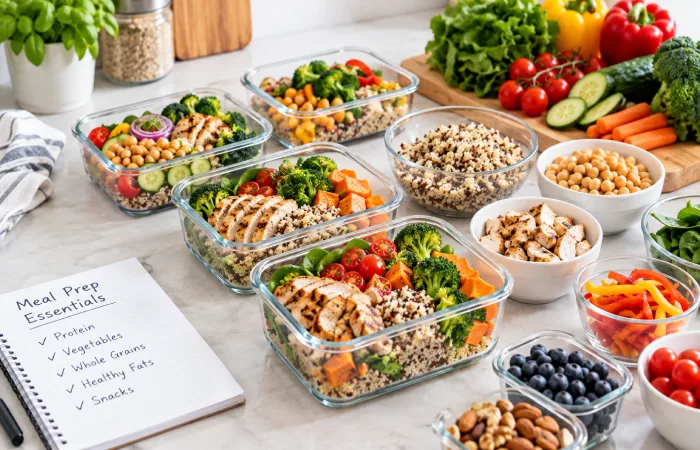
Meal prep, despite what people assume, isn’t seven identical meals every Sunday. Better move: versatile ingredients, ones that combine differently depending on the day.
Whatever you’ll actually eat, chicken, beans, tofu, lentils, cook a batch of it.
- Vegetables, washed and chopped, sitting ready to go.
- A grain prepped ahead, brown rice, oats, quinoa, your call.
- Fruit and yoghurt, portioned out for fast snacks.
- A few no-cook ingredients on standby too, for the nights cooking just isn’t happening.
Fewer takeaway orders at the last minute. Nothing rigid about it.
Clean Eating Meal Plan: Does It Help With Weight Loss?
Clean eating is likely to involve a meal plan based around wholefoods, preferably those that are least processed, including vegetables and fruit, egg, fish, nuts, seed, grains, pulses and poultry. These foods may achieve a place within a healthy eating pattern; however, the term “clean eating” does not have a single standardised, nutritional classification. Food does not become “less suitable” for general weight loss as a result of being processed or packaged. For instance, frozen vegetables can be easy to prepare and also provide a healthy choice, whereas a homemade pudding also can include within a overall balanced diet.
Meal Planning Workflow for Weight Loss
A simple weekly workflow can make the process easier:
- Check your schedule
Identify workdays, exercise sessions, social meals and days when you have less time to cook. - Choose meals
Select several breakfasts, lunches and dinners rather than planning something completely different every day. - Build your shopping list
Group ingredients by category and check what you already have. - Prepare key ingredients
Cook proteins and grains, wash vegetables and portion convenient snacks. - Monitor portions
Use hunger, fullness and your overall weight-management goals to determine whether portions need adjusting. - Review the week
Notice which meals were convenient and which created problems. Adjust the next week’s plan accordingly.
Example Healthy Weekly Meal Plan
A healthy weekly meal plan can flex around personal preference.
| Day | Breakfast | Lunch | Dinner |
|---|---|---|---|
| Monday | Oats, some berries, yoghurt on top | Grain bowl, chicken, a mix of vegetables | Salmon, potatoes on the side, vegetables too |
| Tuesday | Whole-grain toast, eggs alongside | Lentil vegetable soup | Chicken stir-fry, served over rice |
| Wednesday | Fruit and oats, Greek yoghurt mixed in | Rather have tuna? Bean salad works too | Loaded with vegetables, turkey chilli |
| Thursday | Omelette, vegetables folded in | Wrap it, chicken and salad | Tofu noodles, vegetables mixed through |
| Friday | Oats made overnight, fruit on top | Grain bowl built around lentils | Tacos, fish, salad alongside |
| Saturday | Toast, eggs, fruit | Whatever protein and vegetables are left over | Chicken curry, homemade, with rice |
| Sunday | Yoghurt, some fruit, a handful of nuts | Bean bowl, vegetables stirred in | Chicken roasted, potatoes and vegetables on the side |
Not a prescription, just an example to work from. Portion it out to fit your own energy needs.
What Results Should You Expect?
Meal planning can make healthy eating more organised, but it does not guarantee a particular rate of weight loss.
The CDC lists a gradual, consistent weight loss of about 1 to 2 pounds per week as a rate that many people are able to sustain better than more rapid weight loss. Results vary from person to person, however, and medications, health issues, stress, age, genetics and other factors can affect weight control.
A better measure of success is whether your eating pattern is becoming more consistent and manageable over time.
Getting moving-Exercise can also support changes in your eating habits. The CDC’s current recommendation is for adults to perform at least 150 minutes of moderate intensity aerobic activity each week with muscle-strengthening activities two days or more each week. can vary.
Pros and Limitations of Meal Planning
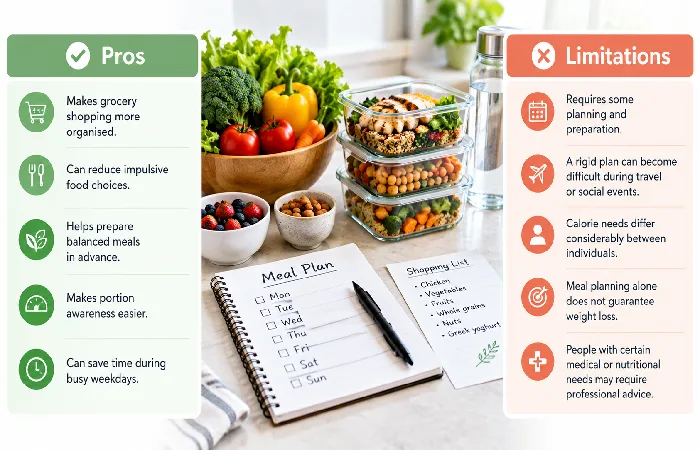
Pros
- Makes grocery shopping more organised.
- Can reduce impulsive food choices.
- Helps prepare balanced meals in advance.
- Makes portion awareness easier.
- Can save time during busy weekdays.
Limitations
- Requires some planning and preparation.
- A rigid plan can become difficult during travel or social events.
- Calorie needs differ considerably between individuals.
- Meal planning alone does not guarantee weight loss.
- People with certain medical or nutritional needs may require individual professional advice.
Who Can Benefit From Meal Planning?
I have discovered that meal planning can assist adults who experience heavily rushed eating routines, take away foods or irregular eating patterns. Meal planning may be especially useful for those who want a structure without a very strict diet.. If you have a medical condition, a history of disordered eating or special dietary needs you should talk about major diet changes, with a qualified health professional.
Conclusion
Meal Planning for Weight Loss is not about sticking to a menu every single day. More ‘about creating an achievable eating habit. Opt for nutrient-dense foods from fruits, vegetables, lean proteins, whole grains and other nutrient-rich foods. Be careful about how much you eat. Watch how much you eat. Don’t stress over exact numbers. Prep ingredients ahead of time so meals are easy to put. And allow yourself to enjoy flexibility—some days will be better, than others. The real success comes from habits you can keep going for months or even years. That kind of progress is what lasts.