
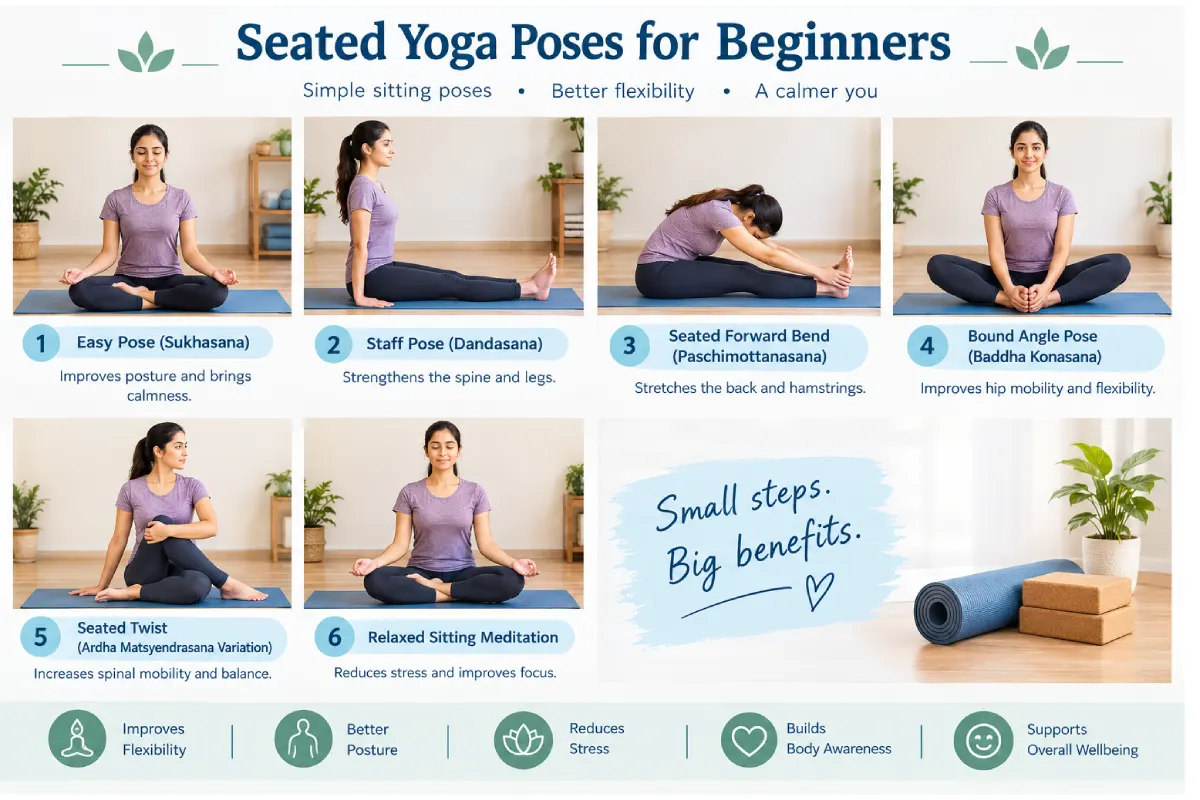
Yoga isn‘t always about standing on one leg or doing some moving about. When you are new a lot of people find Seated Yoga Poses for Beginners can be a good place to start.Sitting positions let you concentrate on your breathing being aware of your body stretching and moving gently without worrying about staying balanced.
No matter if you are just starting with yoga coming back after some time away or wanting a type of exercise that’s not hard, on the body sitting yoga can help you feel more sure of yourself while helping your general health.
Benefits of Sitting Yoga Poses for Beginners
Many newcomers start with sitting yoga poses because they are approachable and adaptable.
Some potential benefits include:
- Improved flexibility
- Better posture awareness
- Gentle hip and hamstring mobility
- Reduced muscle tension
- Enhanced breathing control
- Increased body awareness
- Suitable for many fitness levels
It is important to keep in mind that results are different, for every person. Practicing regularly over time usually leads to results than doing it once in a while.
Seated vs Standing Yoga for Beginners
| Feature | Seated Yoga Poses | Standing Yoga Poses |
| Balance requirement | Low | Moderate to high |
| Beginner friendliness | High | Moderate |
| Joint impact | Generally low | Moderate |
| Flexibility focus | High | Moderate |
| Strength development | Moderate | Higher |
| Suitable for limited mobility | Often yes | Sometimes |
| Fall risk | Lower | Higher |
Essential Beginner Seated Yoga Poses
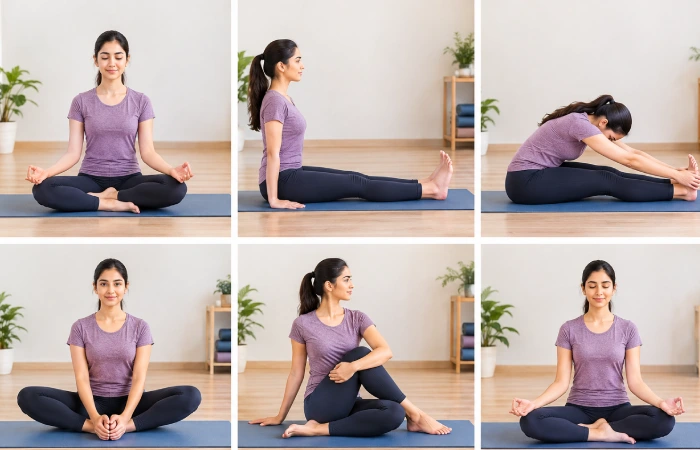
1. Easy Pose (Sukhasana)
The usual and easy to sit in yoga position is called Easy Pose and creates the sit and feel of normal breathing.
How to perform:
- Sit cross-legged on the floor.
- Lengthen your spine.
- Relax your shoulders.
- Place your hands on your knees.
- Breathe slowly and evenly.
Primary focus:
- Posture
- Relaxation
- Breathing awareness
2. Staff Pose (Dandasana)
Staff Pose forms the foundation for many basic seated yoga poses.
How to perform:
- Sit with both legs extended forward.
- Keep your back straight.
- Flex your feet gently.
- Rest your hands beside your hips.
Primary focus:
- Core engagement
- Posture
- Leg awareness
3. Seated Forward Bend (Paschimottanasana)
It opens up the back of the body, and bring awareness to the body movement.
How to perform:
- Begin in Staff Pose.
- Inhale and lengthen the spine.
- Exhale and fold forward from the hips.
- Reach toward your feet comfortably.
Primary focus:
- Hamstring flexibility
- Lower back mobility
- Relaxation
Tip: I think you should not pull the stretch hard. A mild stretch is better. Mild tension is better, than discomfort.
4. Bound Angle Pose (Baddha Konasana)
Bound Angle Pose is a staple, in beginner yoga classes. A Bound Angle Pose helps to open the hips and calm the mind.
How to perform:
- Sit upright.
- Bring the soles of your feet together.
- Allow your knees to move outward naturally.
- Hold your feet gently.
Primary focus:
- Hip mobility
- Inner thigh flexibility
- Postural awareness
5. Seated Twist (Ardha Matsyendrasana Variation)
Twisting postures help improve spinal mobility.
How to perform:
- Sit comfortably.
- Place one hand behind you.
- Rotate your upper body gently.
- Keep the spine tall while breathing steadily.
Primary focus:
- Spinal mobility
- Core awareness
- Gentle stretching
Beginner Seated Yoga Poses Routine
The following routine combines several beginner seated yoga poses into a simple sequence.
| Pose | Duration |
| Easy Pose | 1 minute |
| Staff Pose | 1 minute |
| Bound Angle Pose | 1 minute |
| Seated Forward Bend | 1 minute |
| Seated Twist (each side) | 30 seconds |
| Relaxed Sitting Meditation | 2 minutes |
Total session time: approximately 7–8 minutes.
Sitting Yoga Exercises for Daily Practice
These sitting yoga exercises can fit easily into a daily routine:
Morning Practice
- Easy Pose breathing
- Staff Pose
- Gentle seated twist
Midday Break
- Shoulder rolls
- Neck stretches
- Seated Forward Bend
Evening Relaxation
- Bound Angle Pose
- Gentle breathing exercises
- Seated meditation
Expectations: What Results Can Beginners Realistically Expect?
Many people begin yoga expecting rapid improvements. In reality, progress usually occurs gradually.
Within the First Few Weeks
You may notice:
- Improved comfort while sitting
- Better awareness of posture
- Reduced stiffness
After Several Weeks of Consistent Practice
Some people experience:
- Increased flexibility
- Better mobility
- Improved relaxation habits
Common Mistakes to Avoid
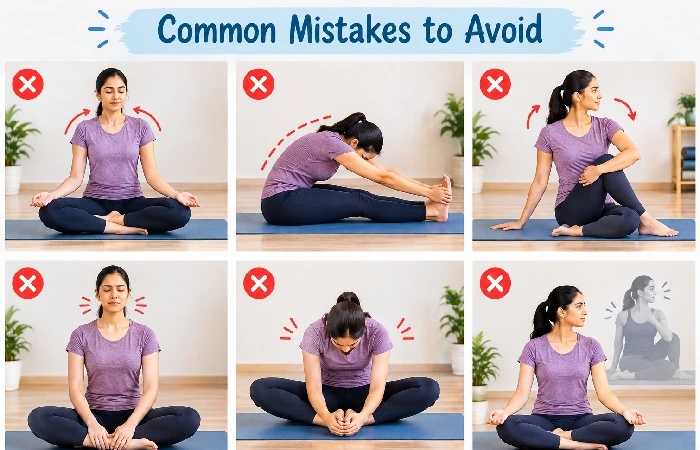
Holding Your Breath
Breathing should remain steady throughout each pose.
Forcing Flexibility
Progressive improvement is generally safer than aggressive stretching.
Rounding the Back Excessively
I find that focusing on lengthening the spine is more important, than reaching
Comparing Yourself to Others
I find that flexibility varies significantly between individuals.
Who Should Try Basic Seated Yoga Poses?
Seated yoga may be suitable for:
- Beginners
- Older adults
- People seeking low-impact movement
- Office workers with prolonged sitting habits
- Individuals starting a flexibility routine
Who Should Use Extra Caution?
- People with recent injuries
- Individuals with severe joint conditions
-
If you are experiencing pain you might want to consider professional medical guidance.
Professional medical guidance may be appropriate, in situations involving pain.
Conclusion
Seated Yoga Poses, for Beginners give an easy start to yoga. These postures help build flexibility improve posture increase mobility and bring breathing awareness. They also provide a choice compared to many standing poses. Paying attention to technique moving in steps and practicing regularly helps beginners grow confidence. With this approach beginners can build a lasting yoga routine. A lasting yoga routine supports long‑term well‑being. I believe that focusing on technique and steady practice leads to progress in yoga.