
Last Updated: September 14, 2026
Home Strength Training With Equipment – Forget the Gym! Exercise Equipment is easier to find and more affordable than ever so there’s no excuse not to begin strength training at home. Whether you use a couple of dumbbells, resistance bands, kettlebells or a whole home gym, the perfect equipment will allow you to get in a workout. This advice will show the most effective equipment, how to organize a workout and what expectations are realistic for your results.
What Is Home Strength Training With Equipment?
Home strength training with equipment refers to resistance-based exercise performed at home using fitness tools that challenge muscles and encourage adaptation.
Common equipment includes:
- Dumbbells
- Resistance bands
- Kettlebells
- Adjustable benches
- Pull-up bars
- Suspension trainers
- Home gym machines
The same as gym-based strength training, to progressively overload on a daily basis.
Why More People Are Training at Home
Several factors have increased the popularity of home workouts:
- Greater convenience
- Flexible scheduling
- Reduced travel time
- Long-term cost savings
- Privacy during workouts
- Ability to customise training space
For many people, a simple setup can provide enough resistance for years of productive training.
Dumbbell Strength Training at Home
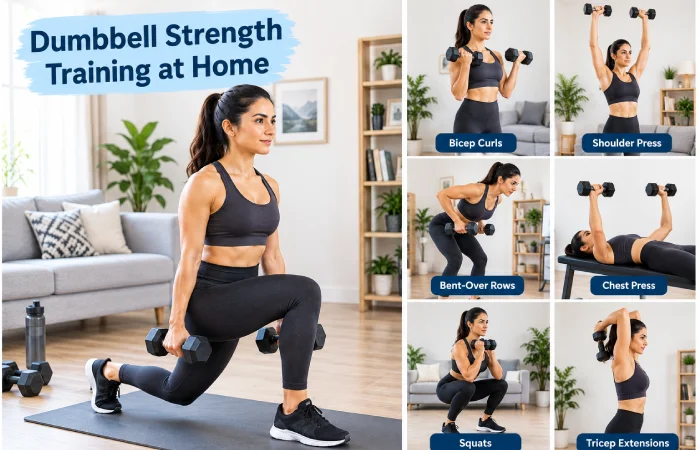
Dumbbells remain one of the most versatile pieces of fitness equipment available.
Benefits of Dumbbells
- Suitable for beginners and advanced users
- Allow natural movement patterns
- Train one side of the body independently
- Support hundreds of exercise variations
Popular Dumbbell Exercises
Upper Body
- Dumbbell Shoulder Press
- Chest Press
- Bent-Over Rows
- Bicep Curls
- Tricep Extensions
Lower Body
- Goblet Squats
- Romanian Deadlifts
- Reverse Lunges
- Step-Ups
Core
- Russian Twists
- Weighted Sit-Ups
- Farmer’s Carries
Strength Training With Dumbbells
Two adjustable dumbbells will replace multiple fixed-weight sets and take up very little space
Resistance Band Strength Training
Resistance bands are lightweight, affordable and surprisingly effective.
Advantages of Resistance Bands
- Portable
- Joint-friendly
- Suitable for rehabilitation
- Ideal for beginners
- Easy to store
Strength Training With Resistance Bands
Variable Resistance bands oppose you more as you extend them.
Common exercises include:
- Band Squats
- Band Rows
- Band Chest Presses
- Band Pull-Aparts
- Band Deadlifts
Limitations of Resistance Bands
While highly effective, resistance bands may not provide enough resistance for advanced strength athletes performing heavy compound movements.
However, they remain excellent for accessory exercises and home training programmes.
Kettlebell Strength Workout at Home
kettlebells bring together strength, coordination and conditioning into one training tool. Kettlebells make it easy to train all those areas, at once.
Benefits of Kettlebells
- Compact design
- Full-body training
- Functional movement patterns
- Improved grip strength
- Cardiovascular benefits
Common Kettlebell Exercises
- Kettlebell Swings
- Goblet Squats
- Turkish Get-Ups
- Kettlebell Deadlifts
- Single-Arm Presses
Many trainers appreciate kettlebells because they can improve both strength and work capacity simultaneously.
Home Gym Strength Workout Equipment Comparison
| Equipment | Space Needed | Beginner Friendly | Versatility | Cost Range |
| Resistance Bands | Very Low | Excellent | High | Low |
| Dumbbells | Moderate | Excellent | Very High | Moderate |
| Kettlebells | Moderate | Good | High | Moderate |
| Adjustable Bench | Moderate | Good | Medium | Moderate |
| Home Gym Machine | High | Good | High | High |
| Pull-Up Bar | Low | Moderate | Medium | Low |
Dumbbells & Resistance Bands They are by far the most budget-friendly and versatile workout gear for beginners.
How to Build an Effective Home Gym Strength Workout
How to Build a Great Home Gym Workout. A good workout plan for a home gym can make a home gym shine and buying equipment may not help as much, as a home gym plan.
Step 1: Choose Core Exercises
Focus on major movement patterns:
- Squat
- Push
- Pull
- Hinge
- Carry
- Core
Step 2: Train the Entire Body
A balanced programme should include:
Upper Body
- Rows
- Presses
- Pull-Ups (if available)
Lower Body
- Squats
- Lunges
- Deadlift variations
Core
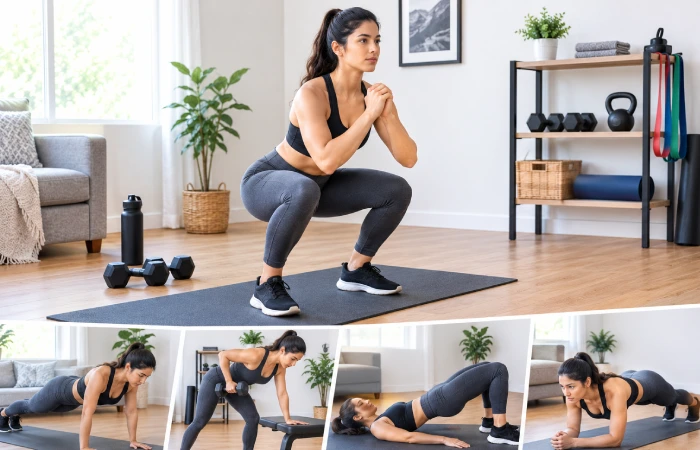
- Planks
- Carries
- Rotational exercises
Step 3: Track Progress
Record:
- Weight used
- Repetitions completed
- Number of sets
- Training frequency
Progressive overload remains the key driver of strength improvements.
What Results Can You Realistically Expect?
During the First Month
You may notice:
- Better exercise technique
- Improved coordination
- Increased energy
- Greater confidence
After Two to Three Months
Many people experience:
- Noticeable strength improvements
- Better muscular endurance
- Increased training capacity
Long-Term Progress
Results depend on:
- Consistency
- Nutrition
- Sleep quality
- Recovery
- Training intensity
Equipment alone does not create results. Consistent effort remains the most important factor.
Pros and Cons of Home Strength Training With Equipment
| Pros | Cons |
| Convenient | Limited equipment variety |
| No commuting | Space requirements |
| Flexible schedule | Potential motivation challenges |
| Long-term savings | Self-guided learning curve |
| Private training environment | Equipment purchase costs |
Understanding both benefits and limitations helps set realistic expectations.
Who Should Consider Home Strength Training?
Home strength training may be ideal for:
- Beginners
- Busy professionals
- Parents
- Students
- Remote workers
- People without easy gym access
It can also complement gym-based training for those wanting additional workouts throughout the week.
Buying Tips for Home Strength Equipment
Start Small
Avoid purchasing large amounts of equipment immediately.
A beginner setup may include:
- Adjustable dumbbells
- Resistance band set
- Exercise mat
Prioritise Quality
Quality equipment tends to last longer and is more reliable.
Consider Available Space
Measure your workout area before purchasing larger items such as benches or home gym stations.
Match Equipment to Goals
Suit Equipment to Goals For most general strength and fitness goals, dumbbells and resistance bands are enough.
Common Mistakes to Avoid
Buying Too Much Equipment
More equipment does not automatically create better results.
Ignoring Recovery
Strength improvements occur during recovery, not only during workouts.
Skipping Warm-Ups
A proper warm-up prepares muscles and joints for training.
Poor Exercise Technique
Learning correct form should always come before increasing weight.
Inconsistent Training
The best workout programme is the one you can follow consistently.
Conclusion
Home Strength Training With Equipment From SNG Right for You? Working out at a commercial gym isn’t a prerequisite for gaining strength. In fact, you can build strength at home with dumbbells, resistance bands, kettlebells and even a more advanced home gym setup. The fundamentals of home equipment strength training remain the same: train consistently, overload and technique.