
Staying hydrated is important for health for energy and for how well the body performs. Water that has no flavor is still the choice for staying hydrated.. Many people also drink drinks that have flavor or extra ingredients, like Vitamin Water. Before comparing different Vitamin Water products, it’s helpful to understand their overall nutritional value and intended use. Explore our Vitamin Water Nutrition for a complete overview.
This Article is Part of The Vitamin And Nutrition
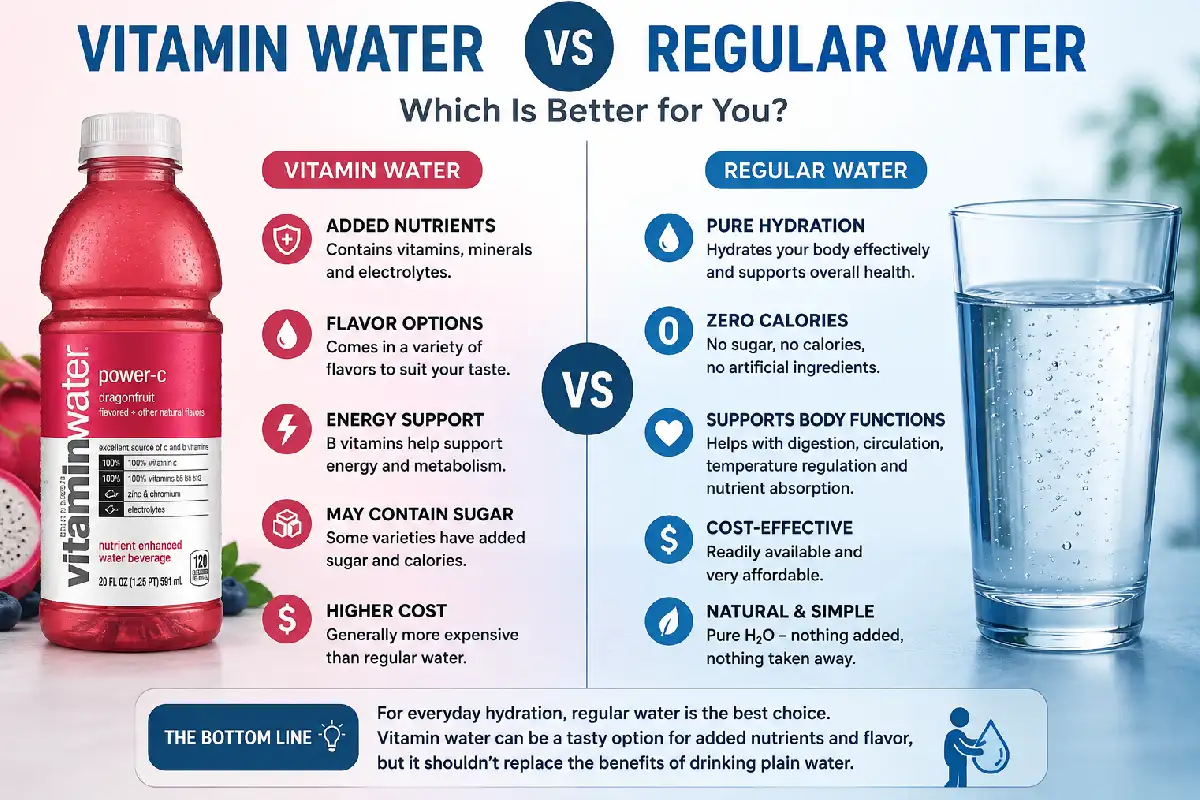
Vitamin Water vs regular water—which one is actually better?
Regular water is usually the choice for staying hydrated every day. It has no calories, no sugar and no artificial things. It helps the body do things and keeps you fresh all day long. Vitamin Water has vitamins, extra minerals and nice flavors. That makes it nice for some people.. Some kinds of Vitamin Water have added sugar and more calories. For people plain water is the healthiest choice. Vitamin Water can be fun to drink now and, as a tasty way to stay hydrated.
What Is Vitamin Water?
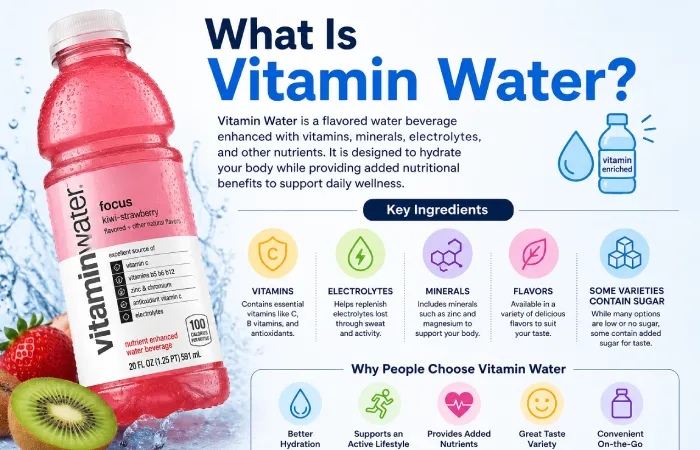
Vitamin Water is a flavored beverage that contains added vitamins, minerals, and electrolytes. Depending on the variety, it may include:
- Vitamin C
- B Vitamins
- Zinc
- Magnesium
- Electrolytes
- Natural or artificial flavors
Some forms include extra sugar, whereas others are marketed as zero-sugar. The appeal The main benefit of Vitamin Water would be that you’re hydrating while consuming added nutrients and getting some sort of flavor-useful for those who have trouble getting adequate amounts of plain water down. One of the most important parts of any beverage comparison is reviewing the calorie, sugar, and vitamin content. Learn more in our Vitamin Water Nutrition Facts Guide.
What Is Regular Water?
Normal Water comes with no added ingredients, it is basic HO. When this is delivered it hydrating the body, helping digestion, controlling temperature and transports what’s needed for overall well being and can be part of a daily routine and assist in getting things back on track again.
Water contains:
- Zero calories
- Zero sugar
- No artificial ingredients
- No added vitamins or minerals
To most healthy people, everyday water is what gets people through the day for their beverage intake.
Vitamin Water vs Water: The Main Differences
When comparing vitamin water vs water, several key differences stand out.
| Feature | Vitamin Water | Regular Water |
| Calories | May contain calories | Zero calories |
| Sugar | Some varieties contain sugar | No sugar |
| Vitamins | Added vitamins and minerals | None naturally added |
| Flavor | Flavored | Neutral |
| Cost | Higher | Usually lower |
| Hydration | Good | Excellent |
Simple, regular water is the easiest, healthiest way to drink. Vitamin water may give you more vitamins, but they’re usually available through proper nutrition. Differences in ingredients can significantly affect taste, nutrition, and overall product quality. Explore our Vitamin Water Ingredients Guide to better understand what’s inside each formula.
Which Hydrates Better?
For everyday hydration, regular water performs exceptionally well.
Vitamin Water is hydrating is because of what it is (water), it typically has electrolytes. The one caveat about sodas with a little sugar may not always be beneficial when consuming many times a day.
Most experts recommend:
- Plain water for daily hydration
- Electrolyte drink during intense exercise or prolonged sweating
- Vitamin Water occasionally if you enjoy the taste and added nutrients
Benefits of Vitamin Water
Vitamin Water may offer certain advantages in specific situations.
- Added Vitamins
Some products provide Vitamin C, B and antioxidants that can boost health and wellness.
- Improved Taste
People who unlike plain water may drink more fluids when using flavored drink.
- Electrolyte Support
Certain varieties contain electrolytes that can help refresh minerals lost through sweat.
- Convenience
Vitamin Water combines hydration and nutrient supplementation in a single beverage.
Benefits of Regular Water
Even so water is still the healthiest drink if you’re drinking adequate amounts per day.
- No Added Sugar
Water contains no sugar, making it ideal for maintaining healthy calorie intake.
- Supports Weight Management
Because water has zero calories, it can help support weight-loss and weight-maintenance goals.
- Cost-Effective
Tap water and filtered water are significantly cheaper than specialty beverages.
- No Artificial Ingredients
Water is free from additives, sweeteners, and preservatives.
Comparing potential wellness advantages can help determine which option better supports your goals. Read our Vitamin Water Health Benefits Guide for more insights.
Potential Drawbacks of Vitamin Water
Before making Vitamin Water your primary hydration source, consider a few drawbacks.
Added Sugar
Some varieties contain significant amounts of sugar, which can increase calorie intake.
Higher Cost
Vitamin Water is considerably more expensive than regular water.
Nutrient Overlap
Most people already obtain vitamins through food and supplements and also making extra fortified beverages unnecessary.
Not a Substitute for Healthy Eating
aVitamin Water should not replace fruits, vegetables, and also nutrient-rich meals.
Vitamin Water vs Gatorade
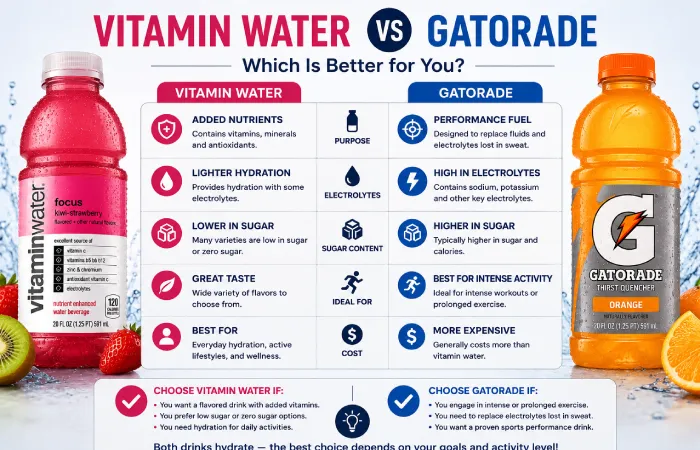
Vitamin Water
Pros:
- Added vitamins
- Lighter taste
- Available in low-sugar options
Cons:
- Not specifically designed for intense athletic performance
Gatorade
Pros:
- Formulated for athletes
- Contains electrolytes that replace sweat losses
- Useful during continue exercise
Cons:
- Often contains substantial amounts of sugar
Vitamin Water vs Powerade
Another common comparison is vitamin water vs Powerade.
Vitamin Water
- Focuses on added vitamins
- Offers multiple flavor options
- May contain fewer sports-performance ingredients
Powerade
- Developed primarily as a sports drink
- Contains electrolytes such as sodium and potassium
- Designed to support hydration during exercise
Vitamin Water vs Coconut Water
Vitamin Water
- Fortified with vitamins
- Wide variety of flavors
- May contain added sweeteners
Coconut Water
- Naturally contains potassium
- Derived from young coconuts
- Typically contains fewer artificial ingredients
When Should You Choose Vitamin Water?
Vitamin Water may be appropriate when:
- You dislike plain water and need motivation to hydrate.
- You want a flavored beverage with added nutrients.
- You need a convenient source of vitamins during a busy day.
- You’re looking for an alternative to sugary sodas.
However, choosing lower-sugar or zero-sugar varieties is often the healthier option. Athletes and active individuals often compare hydration beverages based on performance and recovery benefits. Explore our Vitamin Water for Workout Nutrition Guide.
When Should You Choose Regular Water?
Regular water is usually the best option when:
- You need everyday hydration.
- You’re managing calorie intake.
- You want a budget-friendly beverage.
- Therefore prefer avoiding added sugars and artificial ingredients.
For most adults, water should remain the primary source of hydration the day.
Quick Hydration Comparison
Hydration Beverage Comparison
General comparison of common hydration options based on calories and added nutrients.
036912WaterVitamin Water Coconut Water Gatorade Powerade
Final Verdict
Overall between vitamin water vs. Plain water; the latter still offers the health benefit you’d seek, in a most direct form and best price. Plain water is sugar free, calorie free, hydrating; the perfect and safest form of hydration you can get.
Vitamin water can be a good supplement option; particularly for those who find boring to drink the water all the day and have the interest of including an additional dose of minerals and vitamins in it. Calories, sweeteners, and nutrient content can influence how a beverage fits into a healthy eating plan. Learn more in our Vitamin Water and Diet Guide.