
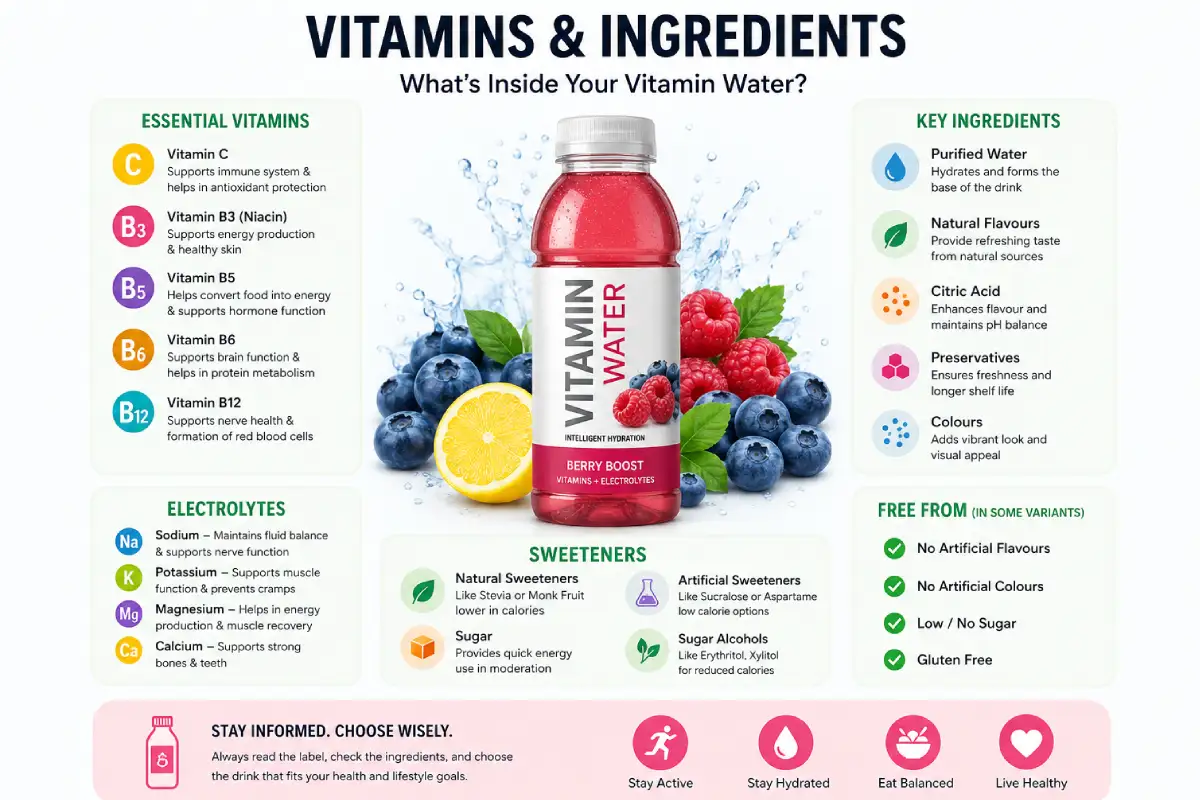
When considering drinks for everyday life, consumers often consider calories and flavour, yet what actually matters most-the vitamins and other ingredients of drinks- is not often explored in detail on the drinks packaging. New and improved Vitamin enhanced drinks on shelves in the supermarket currently aim to tempt your hydration desires with offers, electrolytes, colouring and flavouring additives to them, as well as certain vitamins they add. Being knowledgeable of what all goes into the drinks we may be considering to drink will enable us to come to a conclusion if that drink fits our lifestyle, our body’s nutritional requirements or fitness objectives in our day. The ingredient list provides valuable insight into the overall nutritional quality of a beverage. For a complete overview, explore our Vitamin Water Nutrition.
This Article is Part of The Vitamin And Nutrition
What Are Vitamins & Ingredients?
Vitamins are small amounts of nutritional substances vital for the healthy functioning of the body for normal growth and metabolism. And also Ingredients are all elements that make up a product; this can be water, vitamins, minerals, sweeteners, flavourings, colourings, or preservatives. Examining a drink with its ingredients list and a list of vitamins can provide a more accurate insight into the actual product than the front of pack claims alone.
What Are Vitamin Water Drinks?
Vitamin water beverages are flavoured drinks fortified with vitamins and minerals. They are designed to provide hydration while also supplying selected nutrients.
Many products contain:
- Vitamin C
- Vitamin B3 (Niacin)
- Vitamin B5 (Pantothenic Acid)
- Vitamin B6
- Vitamin B12
- Electrolytes
- Natural or artificial flavourings
- Sweeteners
Typically, those beverages are usually taken post-exercise, taken during travelling and in some cases, to substitute regular water for any drink.
Key Features
| Feature | Description |
| Hydration | Water-based beverage |
| Added Vitamins | Often includes B vitamins and vitamin C |
| Flavoured Options | Multiple fruit-inspired flavours |
| Convenience | Ready-to-drink packaging |
| Electrolytes | Present in selected products |
| Low-Calorie Options | Available in some formulations |
Vitamin Water Vitamins: Understanding the Nutrient Content
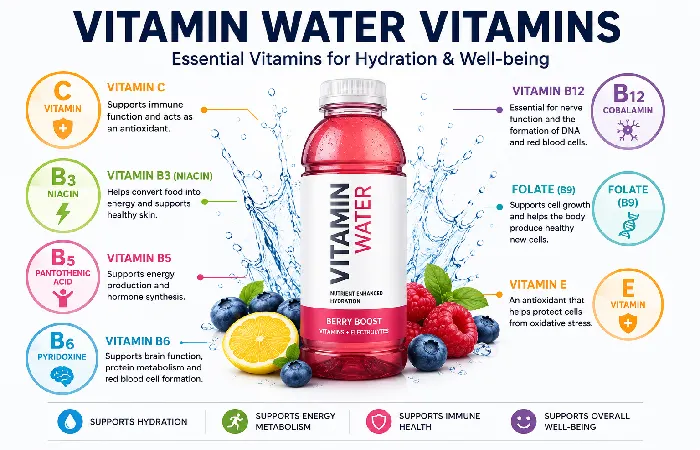
One of the biggest selling points of vitamin water products is their vitamin content. Understanding the ingredients becomes easier when you also review the calorie, sugar, and vitamin content. Learn more in our Vitamin Water Nutrition Facts.
Common Vitamins Found in Vitamin Water
| Vitamin | Role in the Body |
| Vitamin C | Supports immune function |
| Vitamin B3 | Helps energy metabolism |
| Vitamin B5 | Supports cellular processes |
| Vitamin B6 | Important for brain development |
| Vitamin B12 | Supports nerve health |
| Folate | Supports cell growth |
These vitamins have important functions in the human body. Consuming larger than the recommended daily amounts does not automatically enhance benefits or your body’s functionality.
Performance Expectations
Vitamin water Can Help You Meet Your Daily Vitamin needs It can add to your daily vitamins but does not replace a healthy diet of:
- Fruits
- Vegetables
- Whole grains
- Lean proteins
- Healthy fats
Vitamin Water Electrolytes: Why They Matter
Electrolytes is a salt or other substance with properties like it that helps manage Your body’s fluid balance. And also It’s important for how muscles work and how nerves send signals.
Common electrolytes found in enhanced beverages include:
- Potassium
- Sodium
- Magnesium
- Calcium
How Electrolytes Support Hydration
Electrolytes help the body:
- Maintain fluid balance
- Support muscle contractions
- Prevent excessive dehydration
- Assist nerve communication
Hydration Workflow
| Step | Purpose |
| Drink Fluid | Replaces lost water |
| Absorb Electrolytes | Supports hydration balance |
| Restore Minerals | Replenishes nutrients lost through sweat |
| Maintain Function | Supports muscles and nerves |
Realistic Expectations
However, for post intense training or sweat, then may have some use. Otherwise, the use of pure water on a daily basis will serve all purposes for a normal, healthy adult. Many of the potential benefits of Vitamin Water are linked to the vitamins, minerals, and functional ingredients it contains. Discover more in our Vitamin Water Health Benefits.
Vitamin Water Sweeteners: Understanding Sugar and Alternative Sweeteners
Sweeteners significantly influence both flavour are nutritional profile.
Common Sweeteners Used
| Sweetener Type | Examples |
| Sugar-Based | Cane sugar, fructose |
| Natural Alternatives | Stevia, monk fruit |
| Artificial Sweeteners | Sucralose, aspartame |
| Sugar Alcohols | Erythritol, xylitol |
Benefits of Sweeteners
- Improve taste
- Increase consumer acceptance
- Reduce bitterness from vitamins
Potential Limitations
- Added sugars increase calorie content
- Some individuals prefer avoiding artificial sweeteners
- Excessive consumption may contribute to higher sugar intake
Artificial Ingredients in Vitamin Water
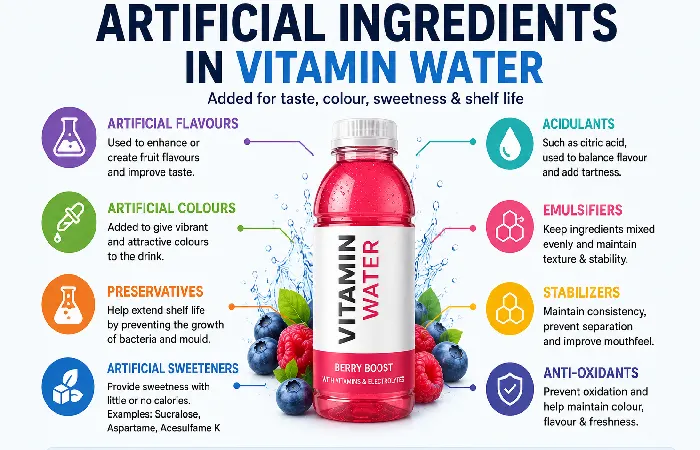
Artificial ingredients are fake composites used for flavour, and also colour, protection or sweetness. The ingredients in a hydration beverage can influence exercise performance and recovery. Explore our Vitamin Water for Workout Nutrition Guide to see how these nutrients may support active lifestyles.
Common Artificial Ingredients
| Ingredient Type | Purpose |
| Artificial Flavours | Enhance taste |
| Artificial Colours | Improve appearance |
| Preservatives | Extend shelf life |
| Artificial Sweeteners | Reduce calories |
Are Artificial Ingredients Safe?
Approved food additives is vetted before use. Consumers, like food products themselves have their favorites or their offshoots.
Some people prefer products containing:
- Fewer additives
- Natural flavourings
- Minimal processing
Others prioritise:
- Longer shelf life
- Lower calories
- Consistent flavour
Both approaches can fit within a balanced diet depending on our individual preferences.
Vitamins & Ingredients Comparison
| Feature | Plain Water | Vitamin Water | Sports Drink |
| Calories | None | Varies | Moderate |
| Vitamins | None | Added vitamins | Usually limited |
| Electrolytes | None | Some products | Often higher |
| Sweeteners | None | Often present | Frequently present |
| Artificial Ingredients | None | Product dependent | Product dependent |
| Everyday Use | Excellent | Moderate | Activity-specific |
Pros and Cons of Vitamin-Enhanced Drinks
Pros
- Convenient source of vitamins
- Available in many flavours
- May contain useful electrolytes
- Easy to carry and consume
Cons
- Can contain added sugars
- May include artificial ingredients
- More expensive than plain water
- Not a replacement for nutritious foods
Who Should Buy Vitamin Water Products?
Vitamin-enhanced beverages may suit:
- Active individuals
- People seeking flavoured hydration
- Travellers
- Consumers wanting convenient nutrient supplementation
Who Should Avoid Frequent Use?
Some individuals may wish to limit intake:
- People monitoring sugar consumption
- Individuals preferring minimally processed foods
- Those already consuming sufficient vitamins through diet
Personal dietary needs should guide purchasing decisions.
Legitimacy and Nutrition Considerations
Vitamin waters sold at certified retailers meet the criteria for food labeling.
Before purchasing, consumers should:
- Read ingredient lists.
- Check serving sizes.
- Compare sugar content.
- Review vitamin percentages.
- Consider overall dietary intake.
A product being fortified with vitamins does not automatically make it healthier than every alternative.
Alternative Hydration Options
Consumers seeking different hydration choices may consider:
| Alternative | Benefits |
| Plain Water | Calorie-free hydration |
| Coconut Water | Naturally occurring electrolytes |
| Fruit-Infused Water | Natural flavour without excess additives |
| Herbal Tea | Variety and hydration |
| Homemade Electrolyte Drinks | Ingredient control |
These options may suit individuals looking for different nutritional profiles. Reviewing ingredient quality is an important step when deciding whether a beverage fits your dietary goals. Read our Vitamin Water and Diet for additional insights.
Buying Tips for Vitamin Water and Similar Drinks
Before purchasing, consider the following:
Check the Label
Look for:
- Total sugar
- Calories
- Added vitamins
- Artificial ingredients
- Electrolyte content
Compare Serving Sizes
Others multiple of it all comes with extra calories and sugar intake to make you eat them.
Match the Product to Your Needs
Choose products based on:
- Exercise level
- Hydration requirements
- Taste preferences
- Dietary goals
A product marketed for athletes may not be necessary for everyday sedentary use. Comparing ingredient lists can help you identify differences between products and formulas. Check out our Vitamin Water vs Regular Vitamin Water Guide for a detailed comparison.
Conclusion
When you pick a drink you should think about what’s in it. People who care about what they put in their body can make a choice if they look at the vitamins and ingredients. Some drinks have vitamins and flavor that might taste good but you should also look at the other stuff that is in them like sweeteners and other ingredients because vitamin-enhanced drinks can have things in them that are not so good, for you. It’s never to much to compare lables, keep your expectations reasonable when it comes to any drink that promises health and wellness. As a beverage option for some of us, some vitamin waters are simply more suitable in the context of an overall healthy dietary intake than a plain old water replacement or a replacement for healthy, whole foods