
Last Updated: July 22, 2026
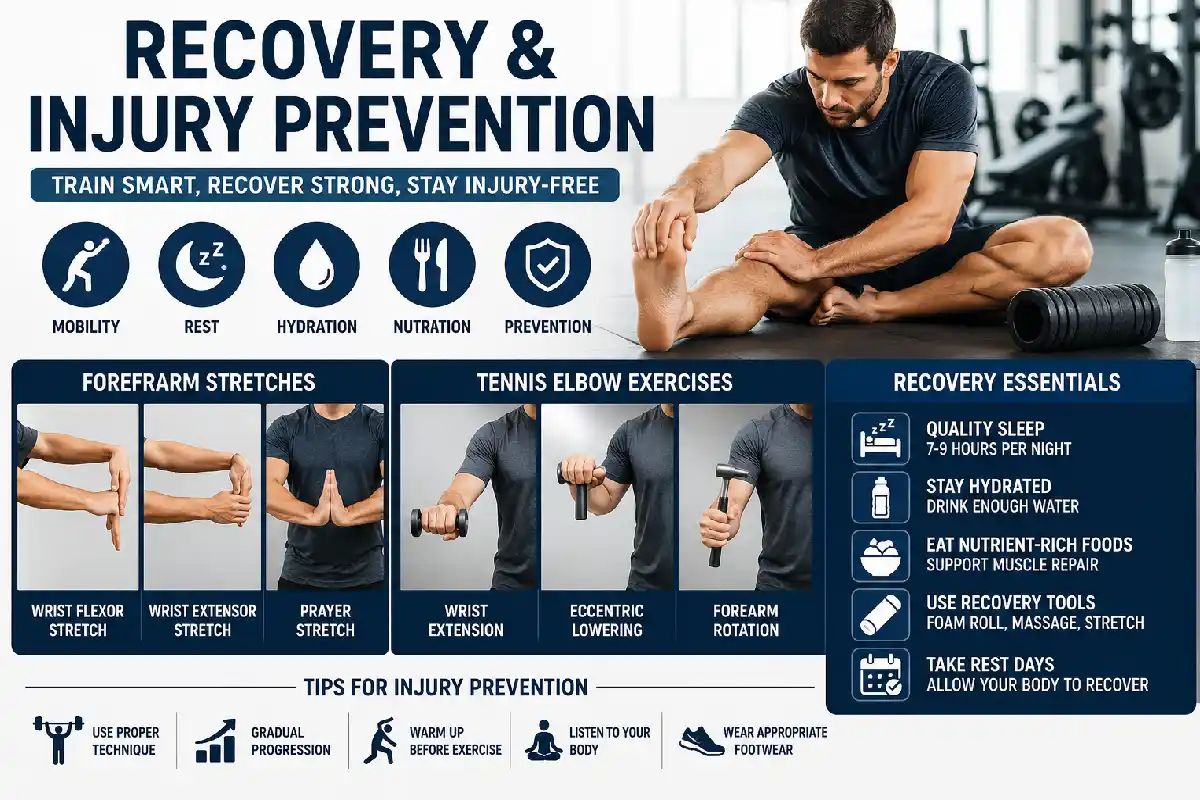
Regular exercise is good for building strength, endurance and overall health.. Recovery is just as important as training. A good plan for Recovery and Injury Prevention helps your muscles get better keeps your joints healthy and reduces the chances of setbacks from training.
Whether you are new to exercise or a seasoned athlete knowing how recovery works can help you make progress and avoid common injuries, from overuse. Recovery is just one part of long-term progress. For a complete training strategy that includes strength, muscle growth, grip development, and recovery, explore our Forearm Workouts.
This Article is part of the Workout Plans
Why Recovery Matters After Exercise
When you do exercise it puts a bit of stress on your muscles and the tissues that connect them. After you are done exercising your body fixes the damage that was done. This is how your body becomes stronger over time. Exercise is what helps your body get stronger, by fixing the amounts of stress that exercise creates.
Benefits of proper recovery include:
- Reduced muscle soreness
- Improved athletic performance
- Better joint mobility
- Lower injury risk
- Enhanced sleep quality
- Improved training consistency
- Reduced mental fatigue
Common Workout Injuries and Their Causes
Most of the injuries we sustain when exercising develop over a period of time rather than occur as the result of a single event.
| Injury Type | Common Cause | Affected Area |
| Muscle strain | Excessive loading | Muscles |
| Tendonitis | Repetitive movements | Tendons |
| Tennis elbow | Overuse of forearm muscles | Elbow |
| Shoulder impingement | Poor movement patterns | Shoulder |
| Shin splints | Sudden training increases | Lower leg |
| Lower back pain | Weak core or poor lifting technique | Back |
The first thing we have to consider in order to make an effort to prevent it is how the injuries occurred. Understanding the muscles, tendons, and joints of the forearm can help you identify potential injury risks and improve recovery outcomes. Learn more in our Forearm Anatomy.
Forearm Recovery: Why It Deserves Attention
Understanding Forearm Recovery
The forearm muscles are very important, for these activities because they help us grip and lift things properly. The forearm muscles are used a lot when we climb or play racket sports so they can get very tired.
Proper forearm recovery can help:
- Maintain grip strength
- Reduce muscle tightness
- Support tendon health
- Improve training performance
- Lower the risk of elbow discomfort
Forearm Pain After Workout: What Is Normal?
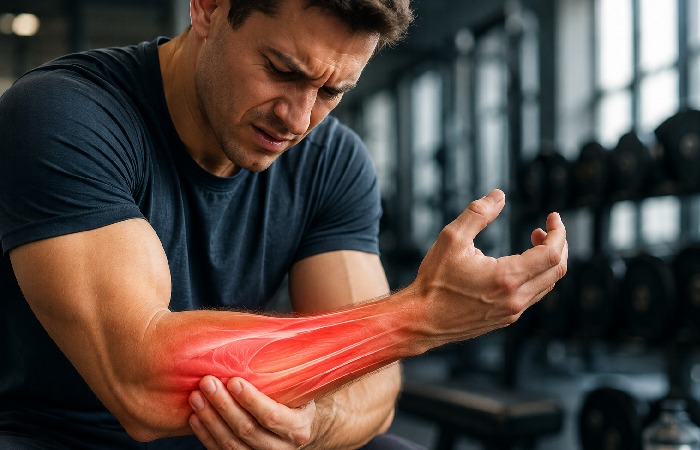
Normal Post-Workout Symptoms
- Mild muscle tenderness
- Temporary stiffness
- Slight reduction in strength for 24–48 hours
Signs That Need Attention
- Sharp pain
- Swelling
- Persistent discomfort beyond several days
- Numbness or tingling
- Pain that worsens during activity
Medical consultation may be advised should the signs or symptoms not abate. Using proper exercise form is one of the most effective ways to reduce strain and prevent overuse injuries. Explore our collection of Forearm Exercises for safe and effective training.
Best Forearm Stretches for Recovery
Wrist Flexor Stretch
This drill strengthens muscle used regularly for grip work.
How to perform:
- Extend one arm forward.
- Keep the elbow straight.
- Pull the fingers back gently with the opposite hand.
- Hold for 20–30 seconds.
Wrist Extensor Stretch
Useful for reducing tension in the outer forearm.
Steps:
- Extend the arm in front.
- Bend the wrist downward.
- Use opposite hand to apply gentle pressure.
- Hold for 20–30 seconds.
Prayer Stretch
A simple mobility exercise for wrists and forearms.
Steps:
- Place palms together.
- Slowly lower hands while keeping and palms touching.
- Hold for 20 seconds.
Tennis Elbow Exercises for Injury Prevention
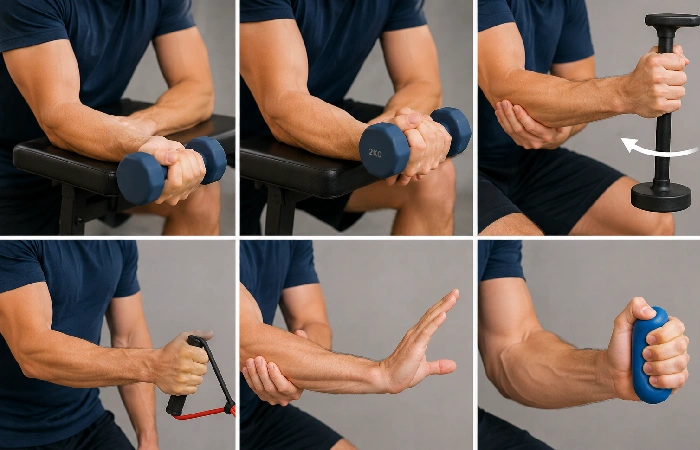
Tennis elbow is a problem that a lot of people have. It happens when the tendons, on the outside of the elbow get used much. This can happen to athletes and people who go to the gym. It can also happen to office workers and anyone who does things that involve gripping something over. Tennis elbow occurs to the tendons on the outer part of your elbow. Even when training at home, recovery remains essential for avoiding fatigue and maintaining consistent progress. Follow our Home Forearm Training for practical workout recommendations.
Wrist Extension Exercise
- Hold a light dumbbell.
- Rest forearm on a bench.
- Slowly lift the wrist upward.
- Lower under control.
Perform 2–3 sets of 10–15 repetitions.
Eccentric Wrist Lowering
There is research to suggest eccentric movements may be beneficial in the healing of tendons.
- Use both hands to raise the weight.
- Lower using only the affected arm.
- Move slowly and with control.
Forearm Rotation Exercise
- Hold a light hammer or dumbbell.
- Rotate the forearm inward and outward.
- Perform controlled repetitions.
These tennis elbow exercises should be performed gradually and stopped if pain increases and significantly. Weighted exercises can place additional stress on the wrists and forearms, making proper recovery even more important. Learn more in our Equipment-Based Forearm Workouts.
Recovery Workflow for Active Individuals
Step 1: Cool Down Properly
Spend 5–10 minutes walking, cycling lightly, or performing gentle movement.
Step 2: Hydrate
Replace fluids lost during exercise.
Step 3: Consume Recovery Nutrition
Aim for balanced meals containing:
- Protein
- Complex carbohydrates
- Healthy fats
- Fruits and vegetables
Step 4: Perform Mobility Work
Target commonly stressed areas including:
- Forearms
- Shoulders
- Hips
- Ankles
Step 5: Prioritise Sleep
Most recovery processes occur during sleep.
Adults should generally aim for 7–9 hours per night.
Recovery Methods Comparison
| Recovery Method | Benefits | Limitations |
| Sleep | Supports full-body recovery | Requires consistency |
| Stretching | Improves flexibility | Not a complete recovery solution |
| Massage | May reduce soreness | Temporary effects |
| Foam Rolling | Improves mobility | Can be uncomfortable |
| Hydration | Supports bodily functions | Must be maintained daily |
| Active Recovery | Encourages blood flow | Intensity must remain low |
A combination of methods generally provides the best results. Grip-intensive exercises can lead to fatigue if recovery is neglected. Improve performance and reduce injury risk with our Grip Strength Training.
Realistic Recovery Expectations
Recovery is highly individual. Factors affecting recovery speed include:
- Age
- Training intensity
- Sleep quality
- Nutrition
- Stress levels
- Previous injuries
What to Expect
24 Hours
- Reduced fatigue
- Improved movement
48–72 Hours
- Most muscle soreness begins to improve
Several Weeks
- Better movement quality
- Reduced injury risk
- Improved training consistency
I think people must have a positive attitude towards this, recovery has no clear end. Muscle growth occurs during recovery, making rest and nutrition essential parts of any hypertrophy program. Discover proven strategies in our Forearm Muscle Building.
Practical Injury Prevention Strategies
Focus on Progressive Overload
Try to scale up the difficulty by small increments instead of in a large leap.
Use Proper Technique
Correct form reduces unnecessary stress on joints and tendons.
Include Mobility Training
Mobility work helps maintain healthy movement patterns.
Take Recovery Days
Rest days allow tissues to repair and adapt.
Listen to Early Warning Signs
Address discomfort before it develops and also into a more serious issue.
Who Benefits Most from Recovery & Injury Prevention?
Recovery strategies can support:
- Strength athletes
- Recreational gym users
- Runners
- Cyclists
- Tennis players
- Arm wrestlers
- Cross-training enthusiasts
- Older adults maintaining fitness
Nearly every active individual can benefit from structured recovery habits. Athletes place significant demands on their forearms during training and competition. Explore our Sports and Functional Forearm Training to support performance while reducing injury risk.
Conclusion
A good fitness program is not about working out hard. You also need to think about how to help your body get better and not get hurt. This is where things, like getting sleep and drinking plenty of water come in. If you do all these things you will get better at your sport. You will not get hurt as much. The key is to keep doing these things all the time because this what really works in the long run not just doing one thing to help you recover.