
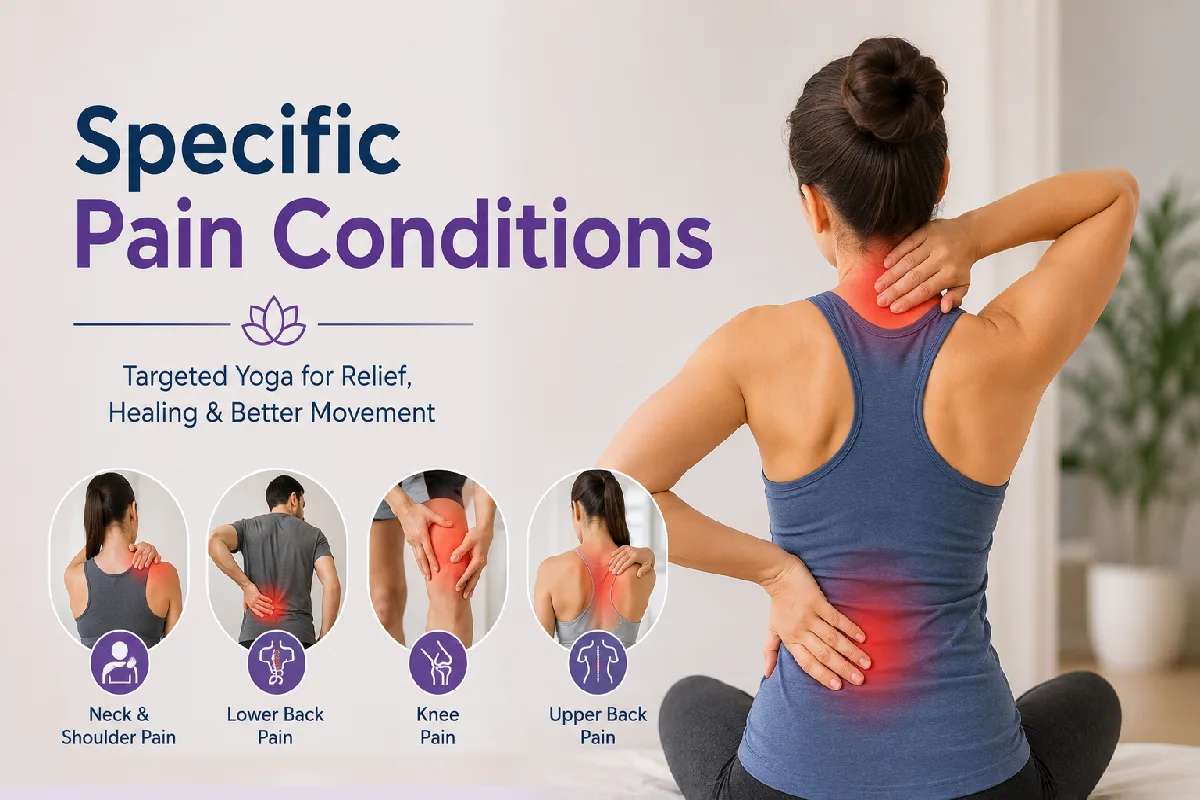
Back pain is something that a lot of people have. They look for ways to feel using yoga. Sitting at a desk for a time, not sitting up straight lifting heavy things being stressed and not moving around much can all cause tension in the back and the muscles, around it. The good thing is that doing the kind of yoga can help make you more flexible reduce stiffness make your posture better and help you move around more easily every day.
If you have sciatica, a stiff neck, poor posture or your back hurts from sitting long yoga can help you know your body better and take some pressure off your back and spine.
The main best yoga poses for back pain page provides a broader overview before you focus on specific pain-related conditions.
This Article is a Part of Yoga For Back Pain
Yoga for Sciatica Pain
Sciatica is a problem that happens when the sciatic nerve gets upset or squeezed. This can cause pain that starts in the back and then moves through the hips and the glutes and sometimes it even goes down the leg. The sciatic nerve is what gets upset. That is why we call it sciatica. For some people it feels sharp. For others it feels like burning, tingling, or tightness.
Yoga for sciatica pain focuses on:
- relieving hip tension
- improving flexibility
- reducing lower back stiffness
- easing pressure around the pelvis
- supporting spinal alignment
Child’s Pose
A gentle starting pose.
Benefits:
- relaxes lower back muscles
- stretches hips
- reduces pressure in the spine
- calming for pain flare-ups
How:
- Kneel on the mat
- Sit hips toward heels
- Reach arms forward
- Rest forehead down
- Hold for 30 seconds
Supine Figure Four Stretch
Great for glutes and piriformis.
Benefits:
- releases hip tension
- helps reduce sciatic nerve pressure
How:
- Lie on your back
- Cross ankle over opposite knee
- Pull leg gently toward chest
- Hold 20–30 seconds
Cat-Cow Stretch
Benefits:
- improves spine mobility
- reduces stiffness
- encourages gentle movement
Yoga for Herniated Disc
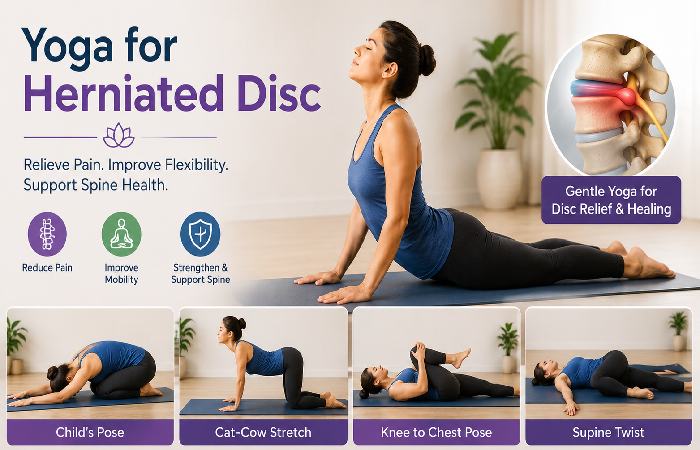
A herniated disc can happen when the spinal discs put pressure on the nerves. This usually causes pain. Sometimes it causes stiffness or weakness. It can also cause discomfort when you are bending. For lumbar-focused discomfort, you can explore the lower back pain relief section designed specifically for that area.
Yoga for herniated disc needs extra care.
The goal is:
- gentle movement
- spinal support
- posture awareness
- reducing tension
- improving stability
Cobra Pose (Gentle Version)
Helpful for spinal extension.
Benefits:
- opens chest
- supports posture
- encourages controlled spinal movement
How:
- Lie face down
- Hands beside shoulders
- Lift chest slightly
- Keep elbows soft
- Hold briefly
Do not force.
Bridge Pose
Benefits:
- strengthens glutes
- supports lower back
- improves spinal stability
How:
- Lie down
- Bend knees
- Feet flat
- Lift hips gently
Hold for a few breaths.
Knees-to-Chest Stretch
Benefits:
- gentle release
- relaxes lower back
- improves comfort
Safety tip:
When you have a disc it is really important to move slowly. Moving slowly is more important than trying to stretch deeply.
Yoga for Neck and Back Pain
Neck and back pain often happen together.
Common causes:
- screen time
- stress
- poor posture
- driving
- sleeping position
- desk work
Yoga helps improve posture and reduces muscular tightness.
Cat-Cow
One of the best yoga poses for neck and back pain.
Benefits:
- mobilises spine
- loosens shoulders
- reduces stiffness
Thread the Needle
Benefits:
- stretches upper back
- releases shoulders
- helps neck tension
How:
- Begin on hands and knees
- Slide one arm under body
- Rest shoulder and head
- Hold gently
Seated Neck Stretch
Benefits:
- reduces tightness
- helps posture
How:
- Sit upright
- Drop ear toward shoulder
- Hold gently
- Switch sides
Downward Dog (Modified)
Benefits:
- lengthens spine
- stretches shoulders
- improves posture
Keep knees bent if needed.
Practising even 10 minutes daily can help neck and upper back tension improve over time.
Yoga for Office Workers
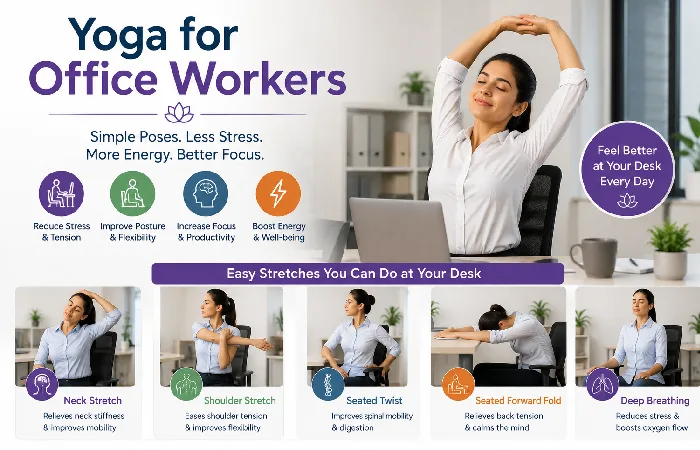
Desk jobs often mean sitting for hours.
That can lead to:
- tight hips
- rounded shoulders
- lower back stiffness
- neck pain
- posture fatigue
Yoga for office workers helps reset the body.
Seated Forward Fold
Benefits:
- stretches spine
- relaxes back
- helps after sitting
Standing Side Stretch
Benefits:
- opens torso
- reduces desk tension
- improves breathing
Chest Opener
Benefits:
- counters rounded shoulders
- improves posture
How:
- Stand tall
- Clasp hands behind back
- Open chest
Low Lunge
Benefits:
- stretches hip flexors
- helpful after long sitting
Simple desk yoga tip:
Take a short movement break every 45–60 minutes.
Even a few stretches can reduce stiffness.
Office workers often feel improvement in:
- posture
- focus
- flexibility
- reduced afternoon back pain
Yoga for Posture Correction
Posture affects everything:
- neck alignment
- shoulder position
- breathing
- back tension
- walking
- overall comfort
Poor posture can slowly create pain.
Yoga for posture correction focuses on:
- strengthening weak muscles
- opening tight areas
- improving alignment
Mountain Pose
Looks simple but builds awareness.
Benefits:
- improves posture
- teaches balance
- supports spinal alignment
How:
- Stand tall
- Feet grounded
- Shoulders relaxed
- Spine long
Warrior II
Benefits:
- strengthens legs
- improves balance
- supports posture muscles
Bridge Pose
Great for posture support.
Benefits:
- opens chest
- strengthens glutes
- supports lower back
Child’s Pose
A reset pose.
Benefits:
- relaxes spine
- improves breathing
- helps release tension
Posture improves best with consistency.
Small daily practice often works better than occasional long sessions. To understand each posture in detail, the individual yoga pose guides help you learn proper alignment, breathing, and step-by-step instructions.
Daily yoga tips for pain relief
A few simple habits help yoga feel safer and more effective.
Start slowly
You do not need advanced poses.
Gentle movement works well.
Focus on breathing
Breathing helps relax muscles.
Move with inhale and exhale.
Avoid pushing pain
Stretching should feel manageable.
Sharp pain is a signal to stop.
Stay consistent
10–15 minutes daily often feels better than one long weekly session.
Use props
Blocks, pillows, or folded blankets can help.
Support makes poses more comfortable.
Which yoga is best for your condition?
| Pain condition | Helpful yoga focus |
| Sciatica | Hip opening + gentle lower back mobility |
| Herniated disc | Controlled spinal support |
| Neck pain | Upper back and neck stretches |
| Office stiffness | Hips + shoulders |
| Poor posture | Strength + alignment |
Conclusion
Yoga is a way to deal with the pain we feel every day and to stand up straight. If you have sciatica or a herniated disc or if your neck is stiff or you sit at a desk for a time yoga can help. The right yoga poses can make you feel better by reducing tension and making you more flexible. They can also help your spine. You should start with easy movements and do them every day and pay attention to what your body is telling you. Doing a bit of yoga every day can make a big difference after some time. Yoga can really help with pain and improve your posture.