
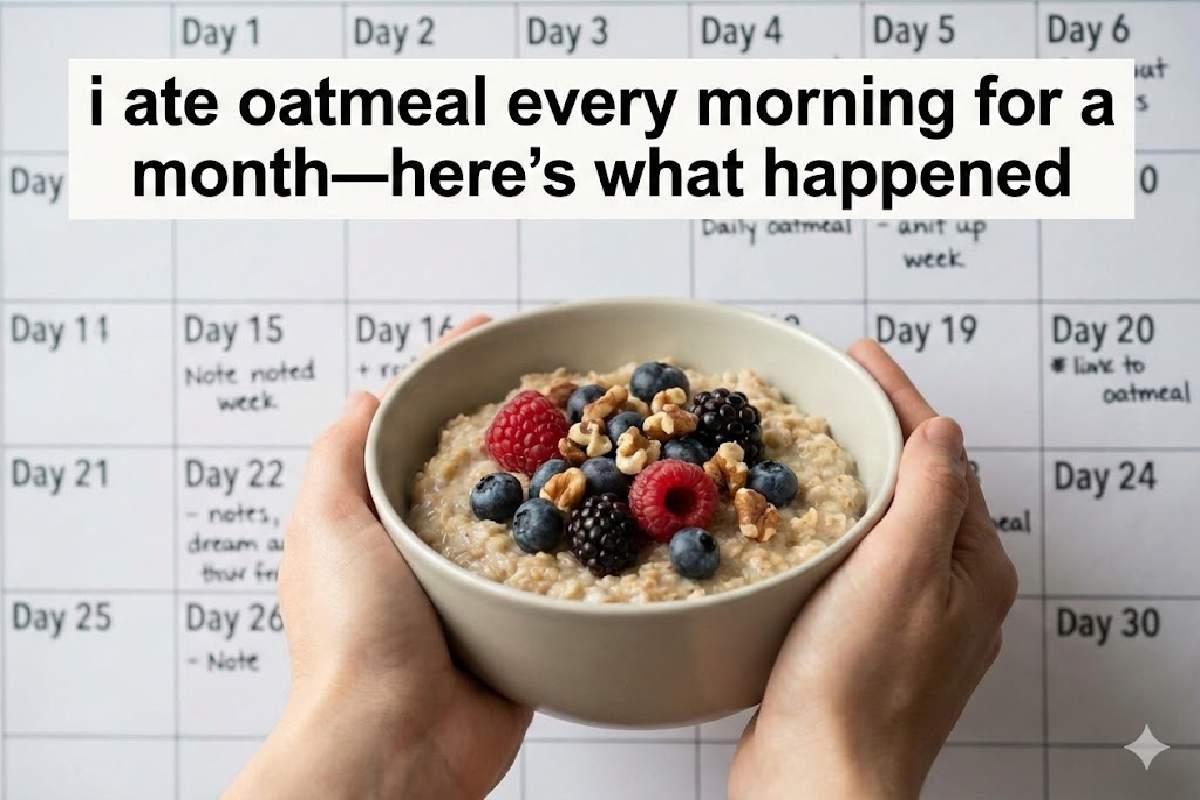
Introduction to My Oatmeal Challenge
Starting an oatmeal challenge is a simple yet powerful way to improve your health and daily routine. Oatmeal, made from oats, is one of the most nutritious and versatile breakfast options available.
In this challenge, the goal is to eat oatmeal every morning for a certain period—usually 7, 14, or 30 days—and observe the changes in your body, energy levels, and overall well-being.
Overview
Oatmeal is a whole-grain food packed with essential nutrients like fiber, vitamins, and minerals. It is especially rich in a type of soluble fiber called beta-glucan, which plays a key role in improving heart health and digestion.
Because it is easy to prepare, affordable, and customizable with fruits, nuts, or milk, oatmeal has become a popular breakfast choice worldwide.
What Are the Potential Benefits of Eating Oats?
| Benefit | Description |
| Heart Health | Helps reduce bad cholesterol (LDL) |
| Weight Management | Keeps you full for longer, reducing overeating |
| Digestive Health | High fiber improves digestion |
| Blood Sugar Control | Stabilizes sugar levels |
| Energy Boost | Provides long-lasting energy |
| Nutrient-Rich | Contains iron, magnesium, and vitamins |
Benefits of Eating Oatmeal Every Morning
| Daily Benefit | How It Helps |
| Better Digestion | Fiber supports smooth bowel movement |
| Improved Skin | Nutrients promote healthy skin |
| Steady Energy | Prevents sudden energy crashes |
| Healthy Heart | Supports cardiovascular health |
| Weight Control | Reduces cravings and snacking |
| Gut Health | Feeds healthy gut bacteria |
Eating Oatmeal Every Day: Before vs After
Before adding oatmeal (made from oats) to your daily routine, many people experience:
| Area | Before Eating Oatmeal Daily |
| Energy Levels | Frequent tiredness, energy crashes |
| Hunger | Feel hungry quickly after meals |
| Digestion | Constipation or irregular digestion |
| Weight | Difficulty managing weight |
| Heart Health | Higher cholesterol levels |
| Blood Sugar | Sudden spikes and drops |
How Oatmeal Is Made
Oatmeal comes from oats, a healthy whole grain. The process includes both industrial preparation and home cooking.
Step 1: From Farm to Factory
- Harvesting
Oats are grown in fields and harvested when fully mature. - Cleaning
The grains are cleaned to remove dirt, stones, and impurities. - Removing the Husk
The outer shell (called the hull) is removed, leaving oat groats. - Heating (Kilning)
The groats are heated to improve flavor and shelf life.
Step 2: Processing into Different Types
The oat groats are processed into different forms:
| Type of Oatmeal | How It’s Made |
| Steel-cut oats | Groats are chopped into small pieces |
| Rolled oats | Groats are steamed and flattened |
| Instant oats | Pre-cooked, dried, and rolled very thin |
Step 3: How to Make Oatmeal at Home
Basic Recipe
Ingredients:
- ½ cup oats
- 1 cup water or milk
- Pinch of salt (optional)
Steps:
- Boil water or milk
- Add oats and reduce heat
- Cook for 5–10 minutes (depends on type)
- Stir occasionally until soft
- Serve warm
Oatmeal Cost Worldwide
Global Raw Oats Price (Bulk Market)
- USA: ~$1376 per metric ton
- Europe (Germany/France/UK): ~$1700–1800 per metric ton
- China: ~$800 per metric ton
Converted:
- $0.8 – $1.8 per kg (₹65 – ₹150 per kg approx.)
This is the wholesale price (before packaging, branding, transport).
Retail Price in Different Countries
| Country | Price per kg | Approx in ₹ | Notes |
| USA | $1 – $3 | ₹80 – ₹250 | Cheapest due to large production (Selina Wamucii) |
| India | $9 – $14 | ₹800 – ₹1200 | Packaged & imported costs higher (Selina Wamucii) |
| China | $0.8 – $1 | ₹65 – ₹85 | Lower due to local supply (IMARC Group) |
| Europe | $1.7 – $1.8 | ₹140 – ₹160 | Higher demand & costs (IMARC Group) |
| Global Avg | $1 – $5 | ₹80 – ₹400 | Depends on brand & quality |
Is It Safe to Eat Oatmeal Every Day?
Yes, eating oatmeal daily is generally safe for most people. In fact, it is recommended as part of a balanced diet. However, there are a few things to keep in mind:
- Variety matters: Eating only oatmeal can lead to missing other nutrients.
- Portion control: Too much fiber at once may cause bloating.
- Add healthy toppings: Include fruits, nuts, and seeds for balanced nutrition.
- Avoid excess sugar: Flavored oatmeal may contain added sugars.
If you have specific conditions like celiac disease, make sure to choose certified gluten-free oats.
Conclusion
The oatmeal challenge is a simple and effective way to build a healthier lifestyle. By incorporating oatmeal into your daily breakfast, you can improve digestion, maintain energy levels, and support heart health.
However, balance is key—combine oatmeal with other healthy foods to get the best results. Small changes like this can lead to long-term health benefits.
FAQs
1. How long should I do the oatmeal challenge?
You can try it for 7, 14, or 30 days depending on your goal.
2. Can I eat oatmeal at night instead of morning?
Yes, oatmeal can be eaten at any time of the day.
3. What toppings are best for oatmeal?
Fruits, nuts, honey, seeds, and milk are great options.
4. Will oatmeal help in weight loss?
Yes, due to its high fiber content, it helps you feel full longer.
5. Can kids eat oatmeal daily?
Yes, oatmeal is healthy and safe for children when prepared properly.